Politics & Government
After Second Push, 4-Story American Legion Hall and Affordable Housing Project Approved
Demolition of the current building may begin in spring 2012. Construction may be completed by about the same time the next year.
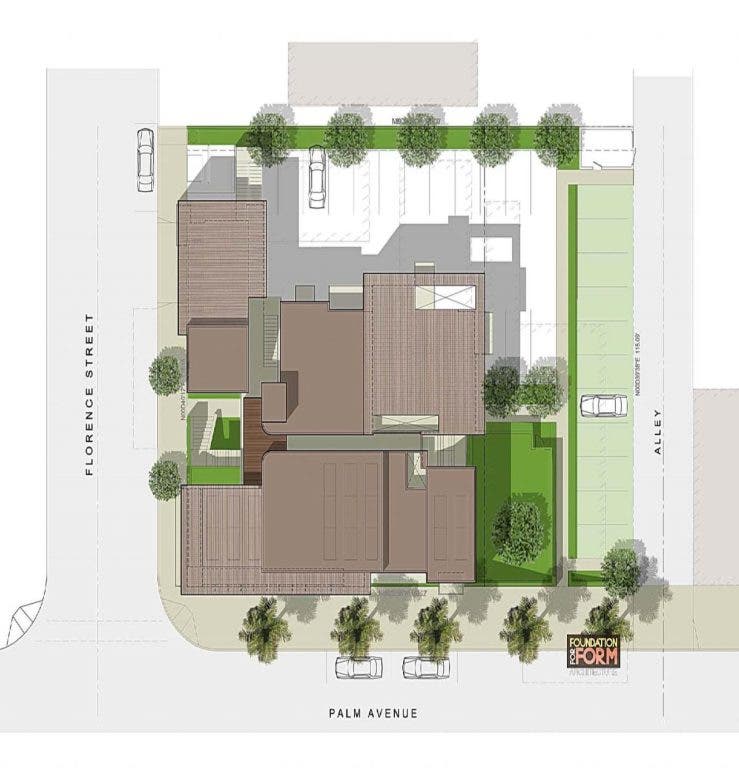


For more than two years, the American Legion 820, Hitzke Development Corporation and the Imperial Beach Redevelopment Agency have worked toward a multi-million-dollar undertaking to tear down the old one-story post and build a new four-story, mixed-use affordable-housing project.
After a long-awaited two thumbs up from legion members, the City Council, which is also the city’s Redevelopment Agency, Planning Commission and Housing Authority, unanimously approved the plan Oct. 5.
“We finally got it approved,” said Post Commander Paul Slatinsky. “If the developers do as good a job with that building as they did with us, it's gonna be an outstanding project for the city and for the Legion.”
Find out what's happening in Imperial Beachfor free with the latest updates from Patch.
Developers are working toward breaking ground by February 2012, with an estimated completion date around March 2013, said Redevelopment Agency coordinator Jerry Selby.
At the city’s eastern entry on Palm Avenue and Florence Street, the new $7.4 million project will include a 3,600-square-foot post hall and 30 veteran and senior affordable-housing units.
Find out what's happening in Imperial Beachfor free with the latest updates from Patch.
More than half of that money, $3.8 million, will come from the Imperial Beach Redevelopment Agency.
During development, staggered construction jobs will assure the post is never closed. Six tenants living on the current property will not be displaced until it is time to relocate – they will have first pick of the new facility apartments, while the remaining 24 units will be made available to Legion members, senior and veterans and then the general public.
It was a long road to approval, said Ginger Hitzke, president of HDC. The idea of a new legion was initiated by the city, Hitzke said, and first negotiations were not well received by the legion.
“First go around, the project was voted down, two to one,” she said. “It was a shock. The vote wasn’t against the entire concept, but they said there were too many things they didn’t know. We were asked to come try again, and we did.”
With time and improved communication, Legion members began to warm to the idea. It took three votes by legion members, a redevelopment committee and countless meetings, but the project finally passed 79 to 25, said Slatinsky.
Mayor Jim Janney is a member of the American Legion, though not a very involved one, he said. As mayor he is also chair of the city's redevelopment agency and housing authority.
After the first failed vote, the mayor and Hitzke developers met with the Legion's members.
"We had an open-forum meeting to explain how we got there because there were a lot of misconceptions at the time,” he said. After the meeting a vote was taken to reconsider the idea.
“It can get extremely complicated when you look at all the details,” he said. “People forgot they had a mortgage and basically the finances were hard to grasp.”
Janney said he heard members voice opposition to moving the six residents who live at the current post or shutting down during construction, but he thinks something had to be done.
“They don’t have the money to maintain what they have,” he said.
The Legion will retain ownership of the new post while Hitzke assumes ownership of the apartments. Common areas will be split between the two.
“I didn’t like change,” Slatinsky said about his initial opposition to the project. “But this is for the new veterans coming in—from the desert wars. We want a better place for them.”
Lee Church is among the 25 Legion members who voted against the new building. He expressed concern about the developer’s commitment to the legion and rising costs associated with a larger facility. Property taxes are expected to increase by $5,000, and he suspects utility costs will also rise.
“If the finances work, it would be a good deal,” he said. “But it’s the finances that scare me to death. After all the looky loos are gone, where do you get the money to pay these new bills, when it’s all said and done?”
Hitzke said her company took “a long, hard look” at possible costs to the Legion. To compensate for higher property taxes, her development company will lease parking for $5,000 a year, effectively eliminating higher payments.
With a potential Leadership in Energy and Environmental Design certification, Hitzke said the facility may reduce utility costs.
HDC also plans to pay the Legion's $250,000 mortgage and will provide a $100,000 furnishing allowance for the new location. A new building would avoid any code violations or necessary repairs the current Legion would face, which Slatinsky estimates could cost hundreds of thousands of dollars.
“Being an owner of an asset, I have an economic interest in making the post a viable neighbor,” Hitzke said. “If something financially goes wrong, it does become my problem. I do share a certain amount of responsibility. Even beyond that, I have an emotional attachment to this project.”
Hitzke is barred from selling the property for 16 years. After 16 years, the property may be sold, but the original contractual obligations listed by the legion will remain in place. She wouldn’t have it any other way, she said.
“During this second effort, I started learning more about them, their challenges,” she said of the post. “It became less about the project and transformed into a more holistic approach for the building.
“It wasn’t just about 30 rooms—we wanted to address the long-term viability of the American Legion, an institution in Imperial Beach. We wanted to ensure it remained for a new generation of veterans.”
Financing for the project comes from a conglomeration of sources, among them $3.8 million from the city’s housing authority, $2.6 million in buttressed tax credits, a $1.5 million loan and a possible rebate resulting from LEED certification.
Paul Marra with Keyser Marston Associates, a real estate advisory firm, said costs for the design are a bit high but within reason compared to similar projects in San Diego County. The city’s contribution is equivalent to just over $130,000 per affordable unit compared to a county range of $75,000 to $200,000, he told City Council.
“It is not uncommon for the local city to put in a very significant portion of the project,” Paul said.
Hitzke neglected to disclose how much her company stands to make on the project, but said those details have been shared with members of the Legion.
"I am here as a businessperson, I’m a job creator, I do need to create revenue,” she said of the deal. “There are easier ways to make a living. But I love what I do and I feel blessed to be able to make money doing it."
Expensive price tags aside, council members expressed excitement over the project moving forward.
“I have a lot of admiration for small developers like you who can have the wherewithal to hang in there and pull projects like this together,” said Councilman Ed Spriggs. “You make things happen in the face of so many obstacles and so many challenges. We’re all grateful that you’ve been able to get to this point and show the path forward.”
Bragg said the project would bring much-needed jobs to the city and increase revenue for shopping centers in the area, though few specifics have yet been offered.
“While it’s not a large project, this is going to be a very significant project that can potentially help save a lot of those smaller contractors,” said Hitzke.
HDC plans to visit city council twice more before breaking ground to deliver progress updates.
For more information, visit the Hitzke's Development Corporation’s website about the project.