Health & Fitness
Are Non-Anesthetic Dental Cleanings Good Enough For Pets?
Do non-anesthetic dental pet cleanings benefit your pet or do they provide only a false sense that you are providing the best care for your pet?
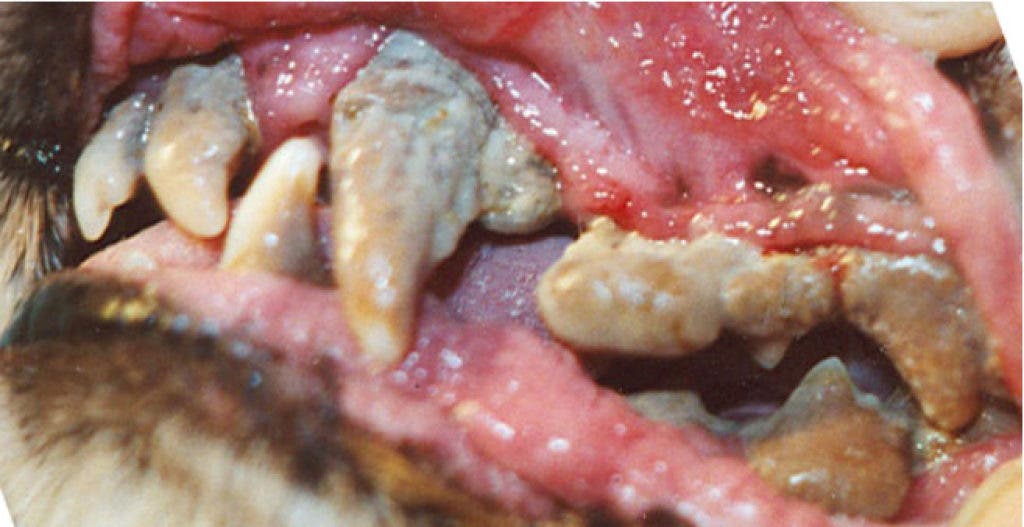


I am asked daily in my practice about “non–anesthetic dental cleaning.” I try to educate all my clients about proper dental care. Since this is a blog, I will give you my opinion and substantiate my position with data from experts in the field.
Non anesthetic dental cleaning is not an appropriate approach to managing our pet’s dental health. It has become popular for many reasons:
- Fear of anesthesia.
- The reduced cost compared to anesthetic dental cleaning and assessment.
- Heightened public awareness of the need to provide some oral care to pets.
There are multiple reasons why this procedure is not appropriate.
Find out what's happening in Laguna Niguel-Dana Pointfor free with the latest updates from Patch.
1. To properly evaluate a pet’s mouth, the veterinarian must be able to examine the entire mouth and all sides of a tooth including the small molars on the top and bottom arcades. This is absolutely impossible in any pet without anesthesia.
2. It is essential to clean the tissue below the gum line not just the crown, and measure sub gingival pocket depths. Again, this is impossible without anesthesia.
Find out what's happening in Laguna Niguel-Dana Pointfor free with the latest updates from Patch.
3. Polishing the teeth after ultrasonic scaling is mandatory to ensure a very smooth crown surface that retards tartar formation. As you might expect, this can not be done with out anesthesia.
Non anesthetic dental cleanings clean only the crown of the tooth, giving pet owners the impression that they have helped the health of the pet when in fact they have not. There have been several cases brought before the California State Board of Veterinary Examiners claiming damage caused by people struggling with pets to clean their teeth as well as using surgical instruments by lay individuals.
My clients will ask me: "If it is so ineffective and potentially harmful why do some veterinary hospitals offer this?: Here is where I might ruffle some feathers.
I think that any veterinarian that offers this service is doing so to:
- Placate consumer demand, knowing that this is not best medicine.
- Compete with other stores offering such services.
- Compensate for lost income from loss of services.
I cannot in good conscious recommend anything that I feel is unethical and wrong. I can only recommend what I think is best for the pet and be their advocate. I often ask my clients: “would you have your dental work done by your barber or hairdresser or by the people that work in the market?” It is no different than having your pet groomer or pet store perform these services.
Please read the following American Veterinary Dental College position paper on non-anesthetic dental cleaning. This is written by the specialists in the field of animal dentistry.
Companion Animal Dental Scaling Without Anesthesia
In the United States and Canada, only licensed veterinarians can practice veterinary medicine. Veterinary medicine includes veterinary surgery, medicine and dentistry. Anyone providing dental services other than a licensed veterinarian, or a supervised and trained veterinary technician, is practicing veterinary medicine without a license and shall be subject to criminal charges.
This position statement addresses dental scaling procedures performed on pets without anesthesia, often by individuals untrained in veterinary dental techniques. Although the term “Anesthesia-Free Dentistry” has been used in this context, AVDC prefers to use the more accurate term Non-Professional Dental Scaling (NPDS) to describe this combination.
Owners of pets naturally are concerned when anesthesia is required for their pet. However, performing NPDS on an unanesthetized pet is inappropriate for the following reasons:
1. Dental tartar is firmly adhered to the surface of the teeth. Scaling to remove tartar is accomplished using ultrasonic and sonic power scalers, plus hand instruments that must have a sharp working edge to be used effectively. Even slight head movement by the patient could result in injury to the oral tissues of the patient, and the operator may be bitten when the patient reacts.
2. Professional dental scaling includes scaling the surfaces of the teeth both above and below the gingival margin (gum line), followed by dental polishing.
The most critical part of a dental scaling procedure is scaling the tooth surfaces that are within the gingival pocket (the subgingival space between the gum and the root), where periodontal disease is active. Because the patient cooperates, dental scaling of human teeth performed by a professional trained in the procedures can be completed successfully without anesthesia. However, access to the subgingival area of every tooth is impossible in an unanesthetized canine or feline patient. Removal of dental tartar on the visible surfaces of the teeth has little effect on a pet’s health, and provides a false sense of accomplishment. The effect is purely cosmetic.
3. Inhalation anesthesia using a cuffed endotracheal tube provides three important advantages – the cooperation of the patient with a procedure it does not understand, elimination of pain resulting from examination and treatment of affected dental tissues during the procedure, and protection of the airway and lungs from accidental aspiration.
4. A complete oral examination, which is an important part of a professional dental scaling procedure, is not possible in an unanesthetized patient. The surfaces of the teeth facing the tongue cannot be examined, and areas of disease and discomfort are likely to be missed.
Safe use of an anesthetic or sedative in a dog or cat requires evaluation of the general health and size of the patient to determine the appropriate drug and dose, and continual monitoring of the patient. Veterinarians are trained in all of these procedures. Prescribing or administering anesthetic or sedative drugs by a nonveterinarian can be very dangerous, and is illegal.
Although anesthesia will never be 100 percent risk-free, modern anesthetic and patient evaluation techniques used in veterinary hospitals minimize the risks, and millions of dental scaling procedures are safely performed each year in veterinary hospitals.
To minimize the need for professional dental scaling procedures and to maintain optimal oral health, the AVDC recommends daily dental home care from an early age. This should include brushing or use of other effective techniques to retard accumulation of dental plaque, such as dental diets and chew materials. This, combined with periodic examination of the patient by a veterinarian and with dental scaling under anesthesia when indicated, will optimize life-long oral health for dogs and cats. For general information on performance of dental procedures on veterinary patients, please read the AVDC Position Statement on Veterinary Dental Healthcare Providers, which is available on the AVDC web site (AVDC.org). For information on effective oral hygiene products for dogs and cats, visit the Veterinary Oral Health Council web site (www.VOHC.org).
For further information, send an e-mail message to the AVDC Executive
Secretary (ExecSec@AVDC.org).
Statement adopted by the AVDC Board of Directors, April 10, 2004