Politics & Government
Affordable Housing Can Be Expensive - Part 4
Will this City Council make the same mistake as previous Councils?

Ten of the most feared words in the English language are –
“I’m from the Government and I’m here to help you”
Today we conclude a 4-part series “Affordable Homes are Expensive”, the title taken from a comment made by Asst. City Manager Dave Belmer at a recent Council meeting where the final votes were taken on a 4+ year $1.5 million project that created 4 affordable homes in Lake Forest. Had the City Government stayed out of the process and simply allowed the developers to build affordable homes on site, this same $1.5 million could have created 30 affordable homes in a year or so. Instead the City jumped in, messed up the process, diluted the capital, and spent more than 4 years and a lot of energy and in the end, came up with a mere 4 affordable homes.
Mayor Pro Tem Hamilton bemoaned “allowing the tentacles of the State” to befoul this project, but his remark was off target. The State had not jumped in to mess up this project – the City invited them in. It was the “tentacles of the City” that are to be blamed for strangling the market place, wasting money, and giving us this ludicrous deal.
Find out what's happening in Lake Forestfor free with the latest updates from Patch.
Yet there is no malicious City spirit responsible for bewitching the Council and the staff. No one started out to make this a terrible deal, or to show how badly they can spend taxpayer money, or what a poor job the City does trying to manage real estate.
Instead, the tentacles of which Mayor Pro Tem Hamilton speak come not from the government, but from developers who sought to maximize their profits by deploying their capital building homes that do not qualify as affordable, and paying off the City to allow them to do this.
Find out what's happening in Lake Forestfor free with the latest updates from Patch.
In this case the public has been poorly served, although the developers have achieved their goal of maximizing profits. Why didn’t the City staff warn the City Council that by allowing them to escape their duty of building affordable homes onsite, the result would be much fewer affordable homes being built? Why didn’t the City Council insist on accurate projections so that the significant differences were obvious?
The sad fact is that for the entire lifetime of the City, developers have been giving City Council members thousands upon thousands of dollars to get themselves elected so that they could in turn allow developers to earn billions of dollars. In recent years we can trace more than $100,000 that was spent by developers and their associates to influence City Council elections in both respects. They have spent money to promote their followers and also spent money to attack anyone who threatened their inviolate position at the feeding troth of the City. In 2012 they attacked City Council woman Rudolph and Planning Commissioner Anderson, and in 2014 they attacked me. Similarly, with the exception of me, every other member of the Council right now received directly or indirectly, massive support from developers. And the campaigns of Voigts, Robinson, and Hamilton would not have been possible without developer and builder support.
My colleagues claim that it is “freedom of speech” that allows developers to give them money, and similarly “freedom of speech” that allows them to accept the money. Councilman Robinson assures us that he would never base his vote on the fact that someone gave him money, and yet if you compare his votes against the people who gave him money, you’ll find 100% correspondence. His campaign took money from CR&R and he voted for CR&R. He took money from Brookfield and Trumark and voted for Brookfield and Trumark. He took money from the Mobile Home owners and voted in their favor against the interests of the residents (who didn’t give him any money).
Going forward it’s important to look back. We now know that the “in lieu” way of creating affordable homes is a poor choice when compared to requiring that developers build the affordable homes on site. By allowing developers to pay in lieu fees, not only do we get fewer homes, that require more time and energy to complete, but we also defeat the spirit of the affordable home requirement, which was to create heterogeneous neighborhoods.
The Baker Ranch proposal that comes before the Council Tuesday night follows the model used by Brookfield and Trumark. Baker does not want to build affordable homes on site but rather to give the City “in lieu” fees. Based on what we now know, the City can probably create 4 or 5 homes with the “in lieu” fees, but if we insist that Baker build the homes on site, we can probably get more than 30 affordable homes. The choice seems obvious.
ABOUT THE AUTHOR
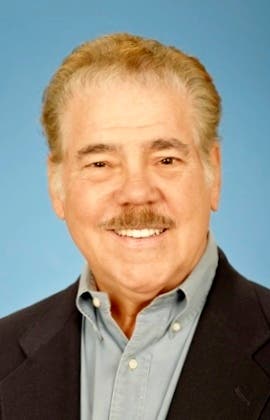
Dr. Jim Gardner is on the City Council for Lake Forest. You can check him out on LinkedIn and/or Facebook and you can share your thoughts about the City at Lake Forest Town Square on Facebook. His comments are not meant to reflect official City Policy.
Dr. Gardner has office hours every Tuesday from 3 pm to 5 pm at the City Hall. In addition, he holds a mini town meeting every other month. The next meeting will be on May 16 at 2 pm at the Foothill Ranch Public Library.
ts_V��?K��