Homelessness is now a recognized challenge facing the County, State, Nation, and countries such as Australia, England, Canada, France, and Germany. The purpose of this series is to educate people about the nature of homelessness in 2019. We’ll begin with some general observations and slowly focus in on the State and then Orange County and then individual cities.
What Does it Mean to be Homeless?
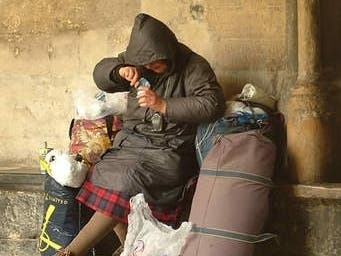
There are all kinds of definitions of homelessness, used by different organizations for different purposes. Some have a narrow definition and look only at those people who are unsheltered. We see them in their cars, in parks, alleyways, and by riverbeds. Others include people in emergency shelters, and still others include those people in more established housing arrangements, such as rapid re-housing and permanent housing. Still others include those people who were previously homeless and are now in jail.
There is another set of people, usually overlooked, but they also can be included in a definition of homelessness. These are the people who are “doubled up”, sleeping on couches, in back rooms, and even in the yards of friends and relatives. Their current status is tentative and they often end up on the streets.
Find out what's happening in Lake Forestfor free with the latest updates from Patch.
Depending on which definition of homelessness you use, the numbers can grow exponentially.
How Are the Homeless?
There are basically three groups of homeless people – the life style, the chronic, and the temporary.
Find out what's happening in Lake Forestfor free with the latest updates from Patch.
Life-Style – In other days and times we called them “tramps”, “hobos”, and “bums”. They are the people who were alienated from normal life and chose to be unencumbered. Charlie Chaplin's "tramp" was such a character.
Chronic – These folks ended up being homeless as a result of severe disabilities (e.g., substance abuse, mental illness, etc.) and the realities of being homeless only exacerbated their conditions.
Temporary – The sad truth is that many people are only a few paychecks away from homelessness. Some disturbing research indicates there might be as many as 30% of the population who fall into this category. Job loss and/or unexpectedly large medical bills are the proverbial straws that break the camel’s back. Loss of a spouse (e.g., divorce, arrest, abandonment) is also a cause.
Though there are differences in different parts of the country, and differences over time, generally speaking, at the moment about one third of the homeless population falls into one of these three groups.
The New Face of Homeless
People facing homelessness today are very different from the people who were homeless a few years ago as a result of the dramatic increase in people with disabilities and the temporary homeless.
Increase in Temporary Homeless
In the past 20 years, the face of homelessness has changed as a greater percent of the homeless population comes from the temporary group. Among the most likely causes of this change is believed to be the high cost of housing in many parts of the country. In areas like New York, Los Angeles, Seattle, San Diego, San Jose, and Honolulu the high costs of housing have made it more likely that a negative event (job loss, big medical bill, divorce) will put a family on the street.
FWIW – it’s not the “high cost of housing” per se which is a culprit in creating so many homeless people, but rather it is the cost of housing as a percent of household income. By itself, the cost of housing is meaningless without understanding what percent of the household income is needed to cover the cost. For example, consider two cities – Santa Ana and Lake Forest.
Santa Ana is the #1 city in Orange County in terms of homeless people. According to the County’s 2019 Point-in-Time survey, they had 1,769 homeless people, with 830 unsheltered and 939 sheltered. By contrast Lake Forest had only 112 homeless people, 76 unsheltered and 36 sheltered. So Santa Ana has more than 10 times as many homeless people compared to Lake Forest, yet the cost of housing in Lake Forest is much higher than in Santa Ana.
Santa Ana has an average rent of $1,438 per month, while Lake Forest has an average rent of $1,954 per month. Not only is it much more expensive to rent in Lake Forest, the median cost of buying a house/condo is $606,500 in Lake Forest vs. $461,600 for Santa Ana. But here’s the rub - the median household income in Lake Forest is $100,557 vs. $61,895.
Doing the math, in Santa Ana, rent consumes 28% of monthly household income vs. only 23% in Lake Forest. Similarly, it takes 7.5 years of income to buy a home in Santa Ana but only 6 years to buy a home in Lake Forest. Thus, the cost of housing per se tells us very little. The more important figure is what percent of household income goes toward housing.
Increase in Homeless Mentally Ill
Beginning in the later part of the 20th Century, mental hospitals began closing down. In theory, treatment was transferred to community homes, but in fact, many of the people released from the hospitals never made their way to the group homes. The result was to add tens of thousands of mentally ill people to the homeless population.
Summary
- Homelessness changes depending on your definition, from very narrow to very broad.
- There are three main groups of homeless people – (1) people who chose to be homeless, (2) people whose disabilities create/contribute to homelessness, and (3) people who experience a major negative event which propels them into homelessness.
- The life style homeless basically want to be left alone. The temporary homeless are looking for help to return them to their normal life. The chronic homeless have such disabling conditions they are the most difficult to reach and to help.
- In recent years, a greater percent of the homeless are coming from the temporary group, fueled largely by the high cost of housing in relationship to their income. In addition, closing the mental hospitals added tens of thousands of mentally ill people to the list of the homeless.
Next time we'll look at how many homeless people there are.
About the Author
Dr. Jim Gardner is the former Mayor of Lake Forest. A Clinical Psychologist, he is a former University Professor and Department Head. He authored several reports about homelessness.