This is the third in a multi-part series about homelessness. Previously we noted that
- Homelessness changes depending on your definition, from very narrow to very broad.
- There are three main groups of homeless people – (1) people who chose to be homeless, (2) people whose disabilities create/contribute to homelessness, and (3) people who experience a major negative event which propels them into homelessness.
- The life style homeless basically want to be left alone. The temporary homeless are looking for help to return them to their normal life. The chronic homeless have such disabling conditions they are the most difficult to reach and to help.
- In recent years, a greater percent of the homeless are coming from the temporary group, fueled largely by the high cost of housing in relationship to their income.
- There are over a million homeless people nationwide, 250,000 in California and between 10,000 and 15,000 in Orange County.
Last time we saw how the federal (HUD) figures on homelessness are misleading and consistently under-count the numbers of homeless. Today we’ll take a little time to explain why.
Snapshot Gives a Distorted View
Even those people who defend the HUD figures admit that the figures are merely a snapshot. It’s a count done on a single night, referred to as “point-in-time” or “PIT”, so it can’t possibly hope to capture all the people. Some counties extend the count to two nights, but the point remains.
Find out what's happening in Lake Forestfor free with the latest updates from Patch.
January effect Lowers the Count
Of the 12 months of the year you could pick to do a count, January is probably the worst month in terms of weather. Imagine the same count done on a warm July evening, rather than a cold January night. Even in a State like California, January is the second coldest month and has average temperatures in the 40s. Similarly, January has the second highest chances of being rained.
Self-report has Questionable Validity
The federal survey relies on self-report. People are asked whether or not they think of themselves as being homeless, mentally ill, developmentally disabled, a drug user, a veteran, etc. etc. Everyone knows that self-report is notoriously unreliable.
Find out what's happening in Lake Forestfor free with the latest updates from Patch.
Definition defines the Numbers
As discussed earlier, the definition of homelessness is very narrow. Among other groups, people in jails or “doubled up” are not counted. Butte County (2017) found over 500 additional homeless people by expanding the definition in their survey, accounting for 25% of their total count
Hidden Homeless not Counted
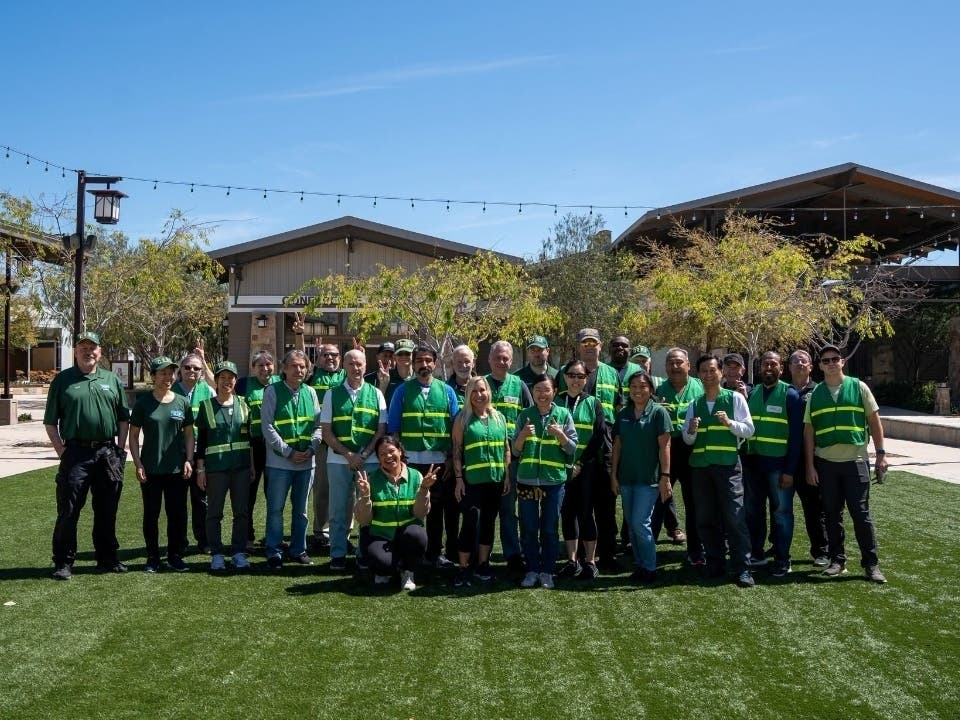
Volunteers go walking around with a clipboard looking to interact with homeless people, but many homeless people, especially the one third of the homeless who chose homelessness as a life style, really don’t want to interact with “the man”. Many homeless people avoid being counted.
Beyond those people who actively avoid being contacted, many homeless people are hidden away as a means of protection. Their choice of bedding down is often in obscure, hand-to-find locations. Most of these people will be missed. Hopper et. al. (2008) found that 31% of 293 unsheltered service users in New York slept in places classified as “not-visible” (e.g., stairwells, boiler rooms) the night of the count, and a further 10% were considered “uncertain” in visibility (e.g., poorly lit parks). Previously, Laska and Meisner (1993) employing the same methodology reported that of 127 decoys, only 41% were actually counted. The San Mateo 2011 PIT survey did an after-survey and found 9% additional homeless who weren’t counted because they “lived in places that would not be visible…”
Inadequately trained Volunteers Limits the Count
Guidelines change over time and don’t necessarily get updated uniformly. Only 77% of the volunteers from the 2017 OC PIT survey reported that their training prepared them for the event. Snow et. al., 1994 reported that lack of training and brief encounters were problems in getting accurate counts.
Lack of Uniformity Creates Problems
Every county has its own definition of homelessness, its own methods for surveying, and its own definitions for each condition. For example, “mental illness” may be called “mental illness”, “serious mental illness”, “psychiatric or emotional condition”, “mental health challenge”, “mental health issue”, “serious mental health problem”, etc.
Summary
HUD (i.e., federal) statistics under-count the homeless for a variety of reasons - narrow definition, low count in January, snapshot methodology, unable to find hidden homeless, untrained volunteers, reliance on self-report, and lack of uniformity. Putting this all together, it’s a wonder that the federal government continues to use this “point in time” strategy. The take-away is that when you see the numbers for just how many homeless people there are, and you see the source is the federal (HUD) survey, you know you are looking at an under-count.
Next time we’ll get some statewide perspective on the extent of homelessness by county. We can do this because all the counties use the same "point-in-time" system, so however flawed the system is, they are all using it.
About the Author
Dr. Jim Gardner is the former Mayor of Lake Forest. A Clinical Psychologist, he is a former University Professor and Department Head. He authored several reports about homelessness.