Politics & Government
Homeless in Orange County - Part 2
The choice to put a 400 bed homeless shelter is deeply flawed. Here's why.



Yesterday we discussed the efficacy of the model adopted by the County of Orange to deal with the homeless population. History clearly informs us that the large warehousing of people at risk is neither efficient nor effective, and that programs in which people are distributed through the community in group homes, halfway houses, and other transitional living situations is preferable.
On Thursday I attended a meeting of the Mayors of South County and it included Irvine as well. Our mission was to find a way to handle the large numbers of homeless people that have been allowed to accumulate in central Orange County and for whom the federal court has now ordered the County to find shelter. The estimates for just how many of these people there are varies from day to day, but the figure most banded about at the meeting was 400 that would come here.
The solution chosen by the Mayors at the meeting was to house as many as 400 people, previously homeless but now in temporary housing, in the Library of the Canyons property which is on East Santiago Canyon Rd. I was the only Mayor opposed to this plan.
Find out what's happening in Lake Forestfor free with the latest updates from Patch.
THE SITE
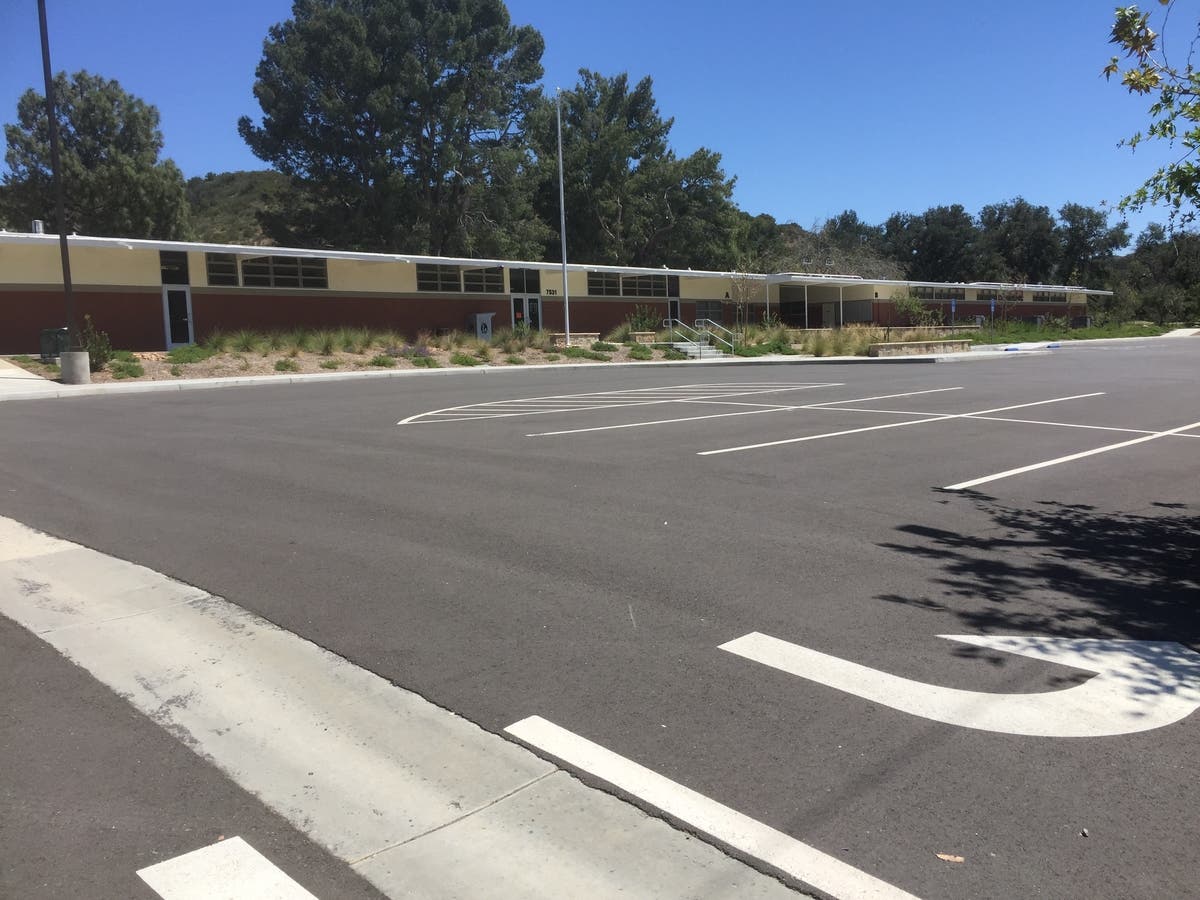
The Library of the Canyons sits on 11 acres in rural OC approachable by a single winding road (Santiago Canyon) which is among the most treacherous roads in the County. The Library itself consists of 3 rooms and is adjacent to a preschool that serves 37 children, separated from the Library by a small fence. Both the library and the preschool are the only such amenities for the people who live in the surrounding area.
The Library was once the Silverado Elementary School, but because of declining enrollment, the County closed the school and at an expense of $3 million plus re-modeled the facility, for a total investment of more than $6 million.
Find out what's happening in Lake Forestfor free with the latest updates from Patch.
The preschool, right next door, has 5 teachers, 37 students, and also has a petting zoo. There is a community garden that was recently created. Both the preschool and the Library back up to trails that go into the hills nearby.
It is truly a rural setting with no services or amenities nearby.
THE PROBLEMS
Since the publicity about the selection came out, and since Mayor Pro Tem Leah Basile and I visited the site on Friday, many people reached out to me to share their concerns; concerns I had already when I voted against the project, and were reinforced two-fold in recent days. Here they are –
FIRE HAZARD
The site sits in an area the state designated “Very High Fire Hazard Severity Zone” and on more than one occasion has been threatened with near extinction. The winds here are strong and continual and the rural nature of the open fields lends itself to fire spreading rapidly.
Now imagine 400 homeless people, many of whom smoke, and some of whom may not have all their faculties intact, roaming this area.
TRAFFIC HAZARD
Santiago Canyon Road is notorious for speeders, especially motorcyclists, who go roaring up and down. While I was there, trying to film a video, it was impossible to get 30 seconds without the noise of speeding vehicles interfering.
The site where the Library sits has no sidewalks and there are no street lights on the road. There is a drainage ditch that runs alongside the roadway into which you could go if you needed to avoid getting hit either by the speeding cars or by the many bicyclists who also frequent this stretch of road.
Now imagine what a hazard it will be for the 400 people who live there, some of whom suffer from drug and/or alcohol problems, some of whom are confused, some of whom have physical disabilities. In a smaller setting in would be possible to monitor them and provide for their safety, but in such a large congregate setting, spread out over a mile of road frontage, how can we be sure that they won’t get hurt? And it’s not only the homeless people who are at risk. What about the drivers who can get into accidents, either hitting the people or trying to avoid hitting them?
PRACTICALITY
There are no sewer lines to this site or even any sewer lines in the area. All waste goes into a septic system at the library. Can the septic system at the Silverado library handle 400 people? It also has no shower facilities and no laundry facilities. Even if you brought in a lot of portable toilets, it still doesn’t deal with the laundry and shower issue. Even if you plumbed in laundry and shower facilities, they still have no place to drain. To re-build the place to warehouse 400 people will be an enormous expense and take months.
WASTED RESOURCES
The Library and the Preschool are precious resources to a community that generally speaking lacks the resources that other communities have. In Lake Forest we have two libraries and dozens of preschools for a service area of 15 square miles. In the Canyons they have only 1 preschool and 1 library for a service area substantially larger.
A lot of time, energy, and money went into remodeling both the Library and the Preschool.
Now imagine the Library gone, filled with cots, and the preschool closed because parents are worried about the safety of their children. The Library might eventually re-open, but if the preschool closes down, it may never be able to re-open.
The impact that this homeless shelter will have on this small community is enormous, and it’s all in a negative direction.
SERVICE DELIVERY
I spoke with one man who had a recent emergency, and it took an hour before he was picked up and transported to Kaiser Hospital in Irvine. Among the 400 homeless people placed at this site, many will have physical problems and some will have drug and/or alcohol related problems. Do we really want them so far from the nearest health service provider?
Apart from emergency health services, many from this group of people will need counseling, vocational training, and assistance with social services. The nearest agencies for any of these services are miles away, and there is no public transportation.
LOCATION, LOCATION, LOCATION
The task given to the Mayors was to see how 400 homeless people currently living in temporary housing could be accommodated in South Orange County, while people in Central and North Orange County did the same. You would have thought, even if they had the mistaken idea of congregating the projected 400 people in one place, the place would be centrally located so that everyone could help out in equal measure and all the resources of the area could come to bear on the problem. Instead they came up with a site that isn't even in South Orange County - it doesn't even sit in South County District Supervisor's district - and it isn't centrally located by any measure.
IDLE HANDS
What do 400 people do all day when there is nothing to do and nowhere to go? This site has no amenities and no attractions. You could take a walk, if you’re in good shape and not afraid of the rattlesnakes, but otherwise there is little to do.
SUMMARY
The model chosen by the County to deal with the surplus of homeless people allowed to accumulate in central OC is to warehouse them in large numbers in three centers, one of which was supposed to be in South Orange County. The model is deeply flawed, as history shows. But even if you accept this flawed model, the site chosen by almost all of the Mayors of South OC cities is as flawed as the model itself. They will congregate hundreds of people in a rural area, away from any possible services or amenities, on a site in a “very high fire hazard zone” and on a winding unlit road known for being treacherous. The proposed shelter will eliminate a much needed library and a preschool that serve the local community, with no replacements for either service. Could anyone possible come up with a worse site?
SIGN THE PETITION
The good people of the Canyons have started a petition calling upon the authorities to find a different site. Click Here to sign and voice your opinion.
Next time I want to talk about what the County should be doing and where they should be looking.
ABOUT THE AUTHOR
Dr. Jim Gardner is Mayor of Lake Forest, however, his comments here are not official City Policy. Dr. Gardner was a licensed Clinical Psychologist, former University Professor, and worked with drug abusers, mentally ill, and developmentally disabled individuals. He had experience working in private practice, group home settings and large institutions. During Hurricane Katrina he lived in homeless and displaced persons shelters in New Orleans where he went to rescue animals.