Politics & Government
Lake Forest Animal Network - Part 1- OCAC
First in a week long series about proposal to move away from County animal services

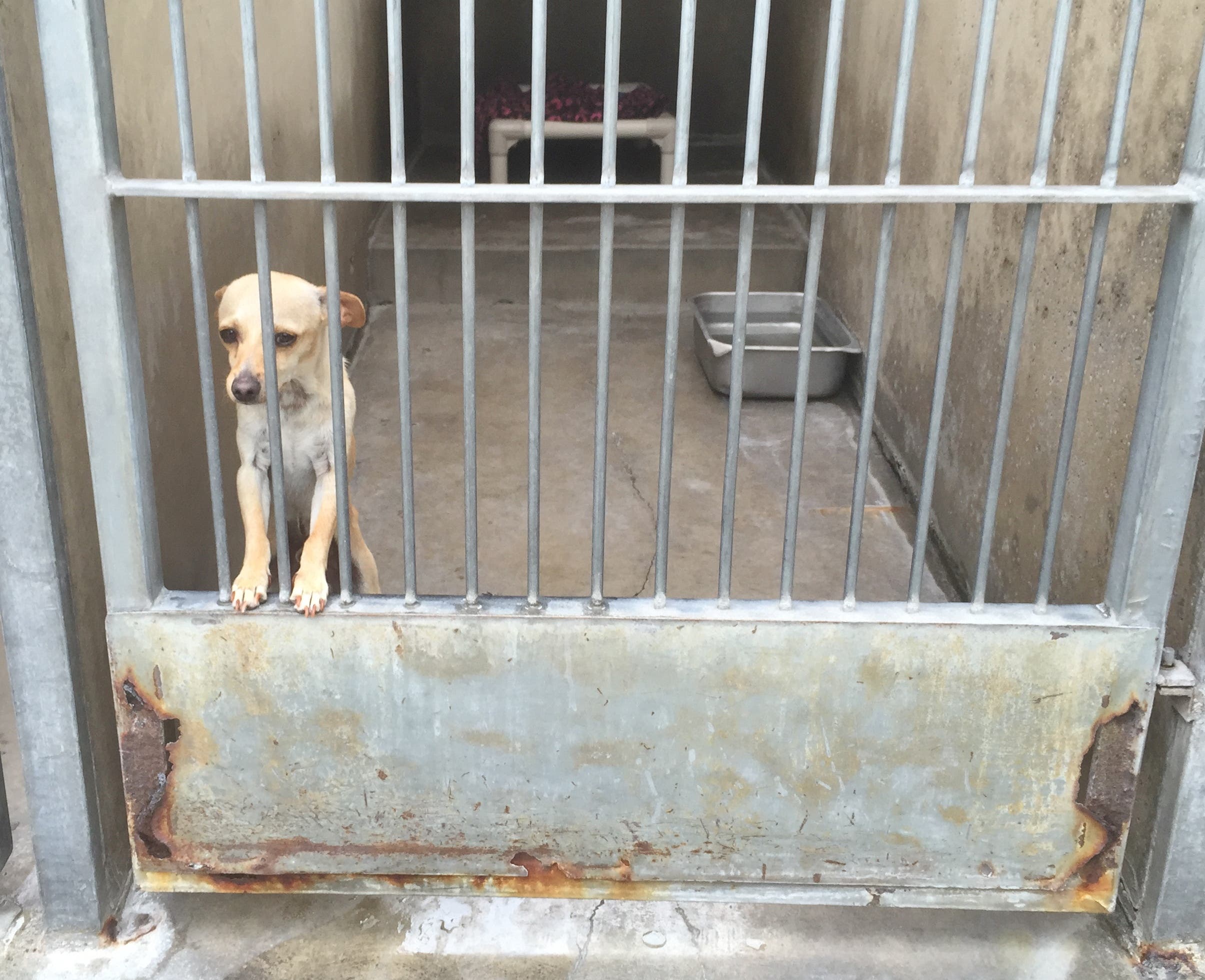
Next week, on March 15, the City Council will consider an alternative to using the Orange County Animal Care Service (OCAC). This week I will present an entire series devoted to describing the alternative.
CURRENT SITUATION
At present Lake Forest contracts with OCAC for our animal care services. This includes picking up dead animals, picking up strays and bringing them to the Shelter in Orange, investigating barking dog complaints, etc.
Find out what's happening in Lake Forestfor free with the latest updates from Patch.
Based on 2014 data, approximately 600 animals go through the system, about 200 of which die between the time they are picked up and they arrive at the Shelter. Of the 400+ remaining animals there are
· 200 dogs
Find out what's happening in Lake Forestfor free with the latest updates from Patch.
· 117 cats
· 65 birds
· 89 “other” (raccoons, possums, turtles)
Of the 200 dogs, nearly half were strays most of whom got returned to their owners. There were also 50 dogs surrendered to the shelter, most of whom were euthanized. On average, there were fewer than 4 dogs in the system on any one day, although the range could go from 0 to 8
Among cats, about half were strays and another 25 came in as part of a Trap-Neuter-Release (TNR) program. Owners surrendered 39 cats, most of whom were euthanized. On average, there were fewer than 1 cat in the system on any one day, although the range was 0 to 11. Interesting enough, cat admissions were seasonal, peaking in January and March, with very few admitted between April and November.
Over 60 birds and 89 “other” animals came through the system. Nearly half were injured and euthanized shortly after admission. Of the remaining animals, most were taken by rescue groups. On average, there were fewer than 1 bird and 1 other in the system on any one day, although the range was 0 to 2.
Looked at collectively, on an average day, there were 4 dogs and 1 cat in residence, and occasionally a bird or a raccoon or possum would show up. At any one time, the number of Lake Forest animals requiring attention is a mere handful. In fact, at one time I had 3 dogs, 4 cats, and 4 birds living in my house, which represented more animal care than the entire City of Lake Forest required.
OCAC PROVIDES
For their service, OCAC charges the City about $600,000 a year. About $400,000 of this comes from licensing and other fees and the other $200,000 comes from the City’s General Fund. What do we get for the service?
High Percent Euthanized
In recent years, OCAC euthanized between 20% and 28% of the dogs, 44% and 61% of the cats, and 39% to 45% of the others. The overall rate is about 41%. Contrast that with Mission Viejo and Irvine where the euthanasia rates have been below 10% during the same time.
Poor Service
OCAC has one Animal Control Officer in South County. If you report a dead animal, it can take more than a week for someone to come by and pick it up. If you report a wild animal, OCAC will not get there before the animal has been long gone. If your pet is picked up, he/she will spend 8 hours in the truck before being returned to the Shelter in Orange
Poor Care
OCAC has been investigated by the Orange County Grand Jury 5 times in recent years, and twice last year. The findings are deeply upsetting. In their first report in 2015 the Grand Jury criticized the County for the poor conditions of the shelter, their failure to build a new shelter, and their insistence on maintaining a single massive shelter instead of two or three regional shelters – the model used by almost every other County of any size. In the second report, the Grand Jury noted.
“The 2014-2015 OCGJ received written and verbal complaints from current and former employees, including veterinarians, and from various humane organizations. Many of these alleged problems were the same as those discussed in the 1999-2000, 2003-2004, and 2007-2008 OCGJ reports: organizational malfunctions relative to poor morale, unfair hiring and promotion practices; and, mistreatment and mishandling of the animals.
Among their findings:
· “There are serious morale issues among Animal Shelter staff, many of which can be attributed to poor management practices and lack of effective leadership.
· The trap, neuter, and return practice is reportedly delaying the spaying, neutering, and treatment of domestic dogs and cats awaiting adoption and is evidence that the domestic animals have been assigned a lower priority for surgery than the spaying, neutering, and micro-chipping of the feral cats.
· Feral cats have been allowed to roam freely in and around the Animal Shelter and have been fed by Animal Shelter staff, possibly contributing to human and animal exposure to zoonotic diseases.
· Animal Control Officers do not have effective equipment or appropriate procedural options to deal with unique, emergency circumstances that may require special procedures such as tranquilizing and euthanizing in the field.
· OC Animal Care is currently operating with a shortage of personnel, including Animal Control Officers (ACOs), thereby making it much more difficult for them to respond to calls in a timely manner throughout such a large county, especially since there is only one shelter to serve all of Orange County.
· There is little evidence that the Feral Free Program has been successful in reducing the feral cat population, which could be a contributing factor to the spread of zoonotic diseases.
· Kennels are hosed down with dogs still present in the kennels, resulting in the dogs getting soaked and becoming more susceptible to disease
· Kennel attendants were observed leaving the large water hoses running when not being used for cleaning purposes, thereby wasting large quantities of water.
· There is limited airflow and no air conditioning in the cat trailers. The conditions in these trailers increase the vulnerability to disease.
· There is a rodent problem, creating additional risk of humans and animals contracting zoonotic diseases.”
Summary
As a City that contracts with OCAC, we get poor service, poor care, and pay a relatively high price.
FUTURE WITH OCAC
OCAC has been promising to build a new shelter for the past 50 years. They are still promising to build a new shelter, but this time it looks like they may actually go ahead and build one, in Tustin, that will be completed late in 2017.
A new shelter will solve some of the problems facing OCAC, but it will not make a dent in the main problems. As noted by the Grand Jury reports, there are major deficiencies in
- · Leadership
- · Management
- · Training
- · Personnel shortages
- · Unlawful actions
To these we can add inaccurate reporting. Click Here for more information on this issue.
So, while a new shelter is a good step, it will not address the poor service or many of the poor care problems.
In order to build this new shelter, the County is taking the unprecedented step of insisting that the contract cities pay for the costs. No other county has ever required their cities to build the county shelter. For Lake Forest, this means we may be forced to pay as much as $900,000 toward the new building.
Tomorrow we’ll look at an alternate model.
ABOUT THE AUTHOR
Dr. Jim Gardner is on the City Council for Lake Forest. You can check him out on LinkedIn and/or Facebook and you can share your thoughts about the City at Lake Forest Town Square on Facebook. His comments are not meant to reflect official City Policy.
Dr. Gardner has office hours every Tuesday from 4 pm to 6 pm at the City Hall. In addition, he holds a Town Hall meeting every quarter. The next meeting will be on March 26 at 2 pm at the Foothill Ranch Public Library.
{C='