Politics & Government
More Thoughts on District Elections
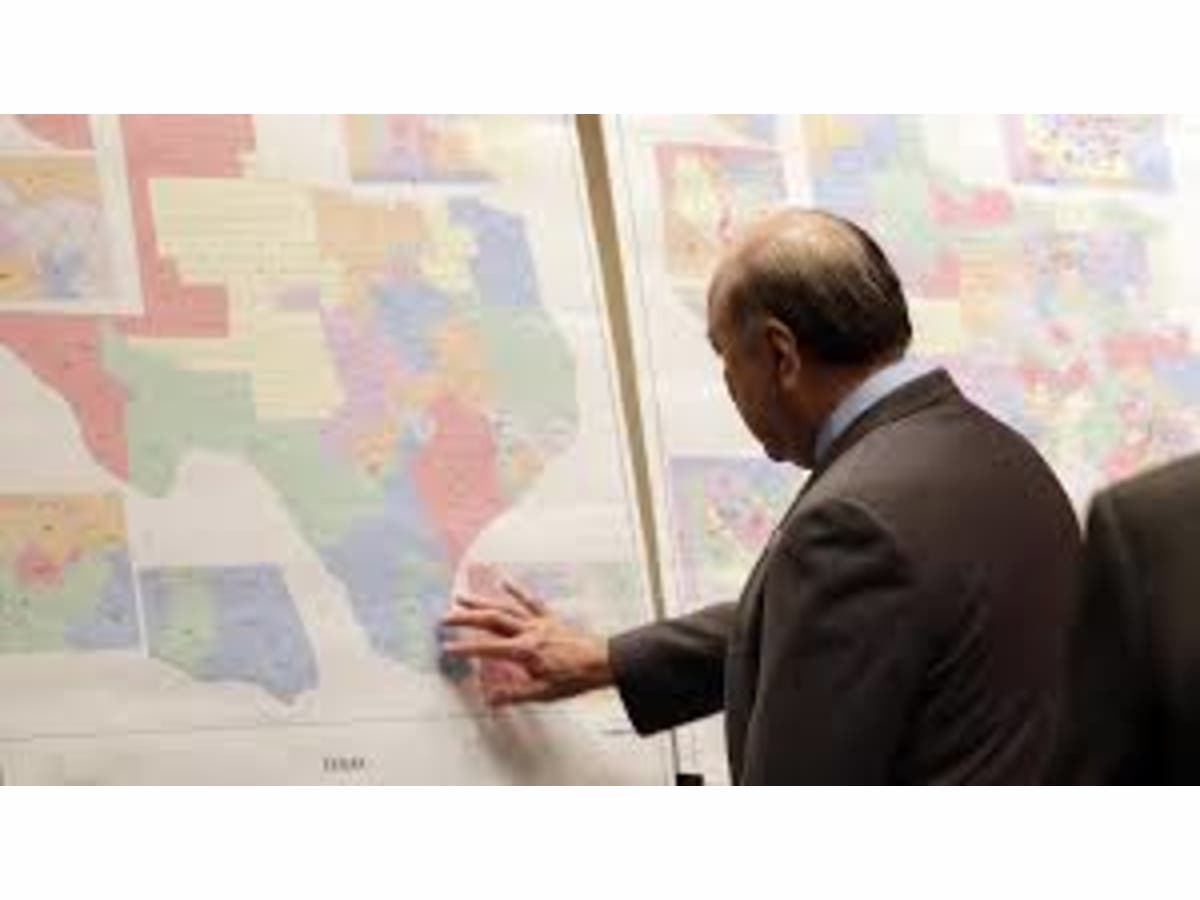
Can you make equal sized districts that don't break up communities of interest?

COMMUNITIES OF INTEREST (COI)
One of the key elements we’re being told to attend to in drawing up district maps for the 2018 election is a term called “communities of interest”. On the website that was created for our use, they refer to it often, but there are no definitions. Wikipedia defines it as “…a community of people who share a common interest or passion.” More specific to drawing district maps, the Ace Project defines it as “a group of individuals united by shared interests or values. These shared interests may be the result of a common history or culture, a common ethnic background, or a variety of other ties that create a community of voters with distinct interests.” (Click Here)
The Brennan Center for Justice quotes an Alabama statute that says – “a community of interest is defined as an area with recognized similarities of interests, including but not limited to racial, ethnic, geographic, governmental, regional, social, cultural, partisan, or historic interests; county, municipal, or voting precinct boundaries; and commonality of communications” (Click Here)
But it’s not so clear when you try to apply it. For example, you might assume that an HOA represents a “community of interest”. That’s certainly true for many of our smaller HOAs. But when you look at some of the larger HOAs, it may be difficult to define a community of interest, and we may find that some COIs intersect and challenge each other. For example, Lake 1 and Lake 2 are two distinct HOAs, yet both HOAs share a common area – “the Woods”. Lake 2’s share involves streets like Singingwood, Fallen Leaf Rd, Knollwood, etc. Lake 1’s share involves Rollingwood, Forest Knoll, Glenwood, etc. Each area has about 400 people living it in. Should all 800 be grouped together since they share the Woods, or should they be split in half because one group belongs to Lake 1 and the other to Lake 2?
Find out what's happening in Lake Forestfor free with the latest updates from Patch.
Or consider the mobile park areas. There are four of them. Do they constitute a “community of interest” since all share the fact that they live in mobile homes. Yet Kimberley Gardens caters to families and is distinctly different from Forest Gardens, which is in another part of town.
Consider the Asian population. Are they a “community of interest”? You can be “Asian” and come from any one of dozens of different countries, some of which are historic enemies. Should they be lumped together? Or Hispanics? People classified as “Hispanic” come from dozens of different countries. Shall Cubans be combined with Mexicans and Argentine people into one “community of interest”?
Find out what's happening in Lake Forestfor free with the latest updates from Patch.
The bottom line is that it’s easy to talk about “communities of interest” but actually defining them is not so easy.
ONE MAN ONE VOTE (OMOV)
“One man one vote” is the politically incorrect way of saying that districts should be equal sized. This is a fundamental principle in federal law. If you’re using the “Interactive Map” or the Excel version you’ll be able to see how much each of your districts deviates from the ideal size of 15,453. If you sum up the deviations, without regard for the + and – signs, you’ll get a total deviation which is some measure of how well you were able to create districts of equal size. If any one of your districts deviations exceeded 773 people, then you exceeded 5% of the total which we’re told is not acceptable.
OMOV vs. COI
Once you start drawing maps you’ll find that at some point OMOV and COI come into conflict. To equalize districts, you may be required to split some perceived COIs. For example, if you’re inclined to think of Foothill Ranch (FHR) and Portola Hills (PH) as a COI you’ll find out pretty soon that PH has 6202 people and FHR has 11,244 people. If you try to create one district you’ll have 17,446 people in the proposed district, beyond the ideal size of 15,453 by nearly 13%. So you’ll need to split these districts in some manner.
Bottom line – it’s not an easy task, but do the best you can. Try to make equal sized districts without breaking up communities of interest.
MEETING #2
The second public meeting will be held Thursday night at 6:30 pm at the Sports Park. To see what happened at the first meeting, Click Here.
ABOUT THE AUTHOR
Dr. Jim Gardner is on the City Council for Lake Forest. You can check him out on LinkedIn and/or Facebook and you can share your thoughts about the City at Lake Forest Town Square on Facebook. His comments are not meant to reflect official City Policy.
Dr. Gardner has office hours every Tuesday from 4 pm to 6 pm at the City Hall. In addition, he holds a mini town meeting every month. The next meeting will be on Sept 9 at 2 pm at the El Toro Public Library.