Schools
Parents, Educators Fear Loss of Successful High-Tech Program If Aliso Elementary Closes
The Lake Forest school is one of three sites on the chopping block as Saddleback Valley Unified School District grapples with huge deficits and the county's highest rate of declining enrollment.


Teacher Kristin Thomsen estimates she has spent thousands of hours to help get the so-called iEngage program set up for her classroom. Equipped with iPod touch mini-computers, her students made unprecedented gains on state achievement tests, scoring at the proficient or advanced level in 96 of 99 tests they took, said Aliso’s principal, Crystal Turner.
Their gains helped to contribute to the school’s overall jump of 45 points in the school’s API scores last year.
But Thomsen and others worry that the progress made could be reversed if Aliso Elementary is shut down at the end of the school year, as a Saddleback Unified School District
Find out what's happening in Lake Forestfor free with the latest updates from Patch.
“I was crying on my way to work today,” she said Friday. “I feel like I’d like a level of acknowledgment for what we have done.”
Though Thomsen will have a job at one of the district’s other schools if Aliso closes, she fears that the time and effort she and the school's staff have has invested in the iEngage program could be wasted. Why, she said, wouldn’t the district close another school where students aren't making academic gains and move them to Aliso instead?
Find out what's happening in Lake Forestfor free with the latest updates from Patch.
“I’m afraid it will dilute the program if we’re all in different places,” said Thomsen. “It doesn’t give our program a chance.”
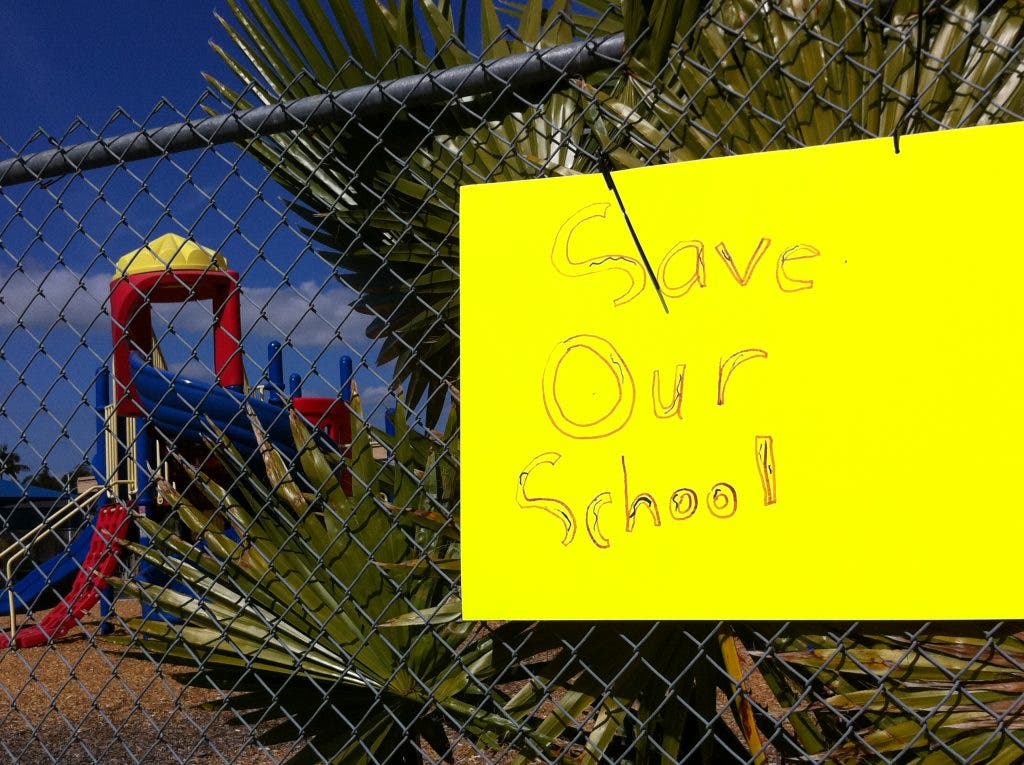
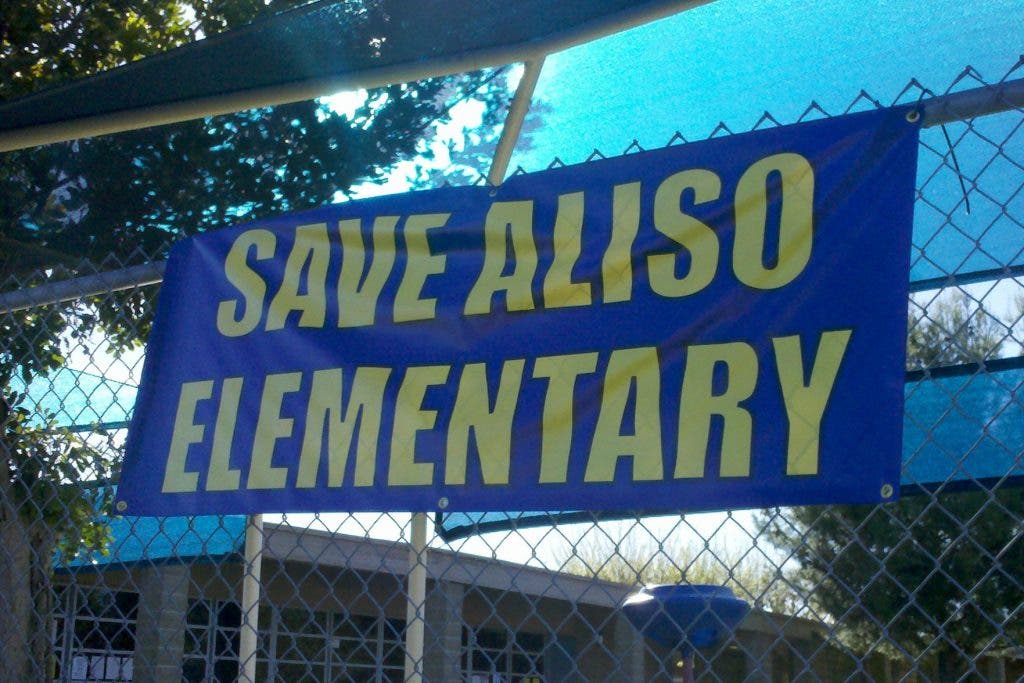
Parents at Aliso Elementary are touting the iEngage program as a reason the district should not close their school. They have vowed to fight to keep it open, creating an informal group called Save Aliso Elementary, complete with banners, a website and its own Facebook page.
The group rallied an estimated 150 Aliso parents and students to attend , which heard a report from the consultant, DecisionInsite.
“The key thing is, we’re going to make sure our voice is heard,” said Bart van Aardenne, who has two children who’ve attended Aliso. “Whether we’re listened to, that’s another story.”
The district is considering school closures as it faces the highest rate of declining enrollment in the county, which costs it $3.8 million a year, officials say. SVUSD is looking at a deficit of $9 million in the coming budget year, and closing an elementary school saves an average of about $500,000 a year.
But district representatives say the process for selecting which schools could be closed has thus far focused on how to minimize the number of students impacted by closures. That means targeting older campuses with declining enrollments, such as Aliso.
"We did not factor in test scores or socioeconomics," district business director Jeff Starr said when he was asked at the FAC meeting about the criteria. "We're very proud of Aliso. Those students will be attending other schools and hopefully will raise the scores at the other schools."
Starr also said the district will take all computers and other equipment from any closed schools and use them at other schools.
Thomsen’s iEngage classroom is outfitted with about $12,000 worth of technology, from the iPods that retail for $200 each to an Apple computer, smart board and a secure storage cart that costs $3,000. The technology is portable but requires a wireless Internet connection, Thomsen said.
This year, Thomsen has mentored other Aliso teachers as they have rolled out the program into the school’s fourth to sixth grade classrooms. “I can’t step into the teachers' lounge without someone asking me a question,” she said.
The school has hosted a steady stream of educators from as far away as New Zealand, seeking to learn how to implement similar programs at their own schools. Just this past Friday, representatives from Apple were on campus, asking questions about the program.
The program works, Thomsen says, because it engages students. Her advanced math students are now creating podcasts to teach the sixth-grade curriculum to one another.
“My students come to school excited to see what new things we do each day,” she said. “I’m proud not just of the scores of my lower students, but also my higher students. They’ve shot through the roof. There’s always something new they can learn. There’s no ceiling.”
Starr said the criteria given to DecisionInsite to identify schools for closure were developed by district staff and approved by the school board.
"It was not set up to target a certain area or a certain school," Starr said.
Other parents are upset that DecisionInsite's plan could redraw boundaries to direct many former Aliso students to . At the FAC meeting, parent Tammy Palos asked whether the district’s school choice program, whose application period ended March 11, could be reopened for families affected by a school closure. District officials at the meeting said that was unlikely.
FAC member Allyson Shimasaki, who represents but also has a child at Aliso, had asked the members of the Facilities Advisory Committee to consider adding Montevideo or Cordillera Elementary Schools to the list of schools being studied for closure, but the committee voted against that proposal.
The move to close elementary schools comes at a time when the district is losing 600 to 700 students annually, Starr said.
The district hired DecisionInsite to complete a demographic study and recommend three elementary schools for closure, based on criteria including schools' capacity to accommodate excess students, school conditions, geographical boundaries, non-contiguous attendance areas, property values of the school site and transportation issues. The goal, says DecisionInsite's Dean Waldfogel, was to affect the smallest number of students possible, according to the district.
In 2010, the district had the capacity to serve 18,320 students at its 24 elementary schools. But elementary school enrollment was at 15,395 in 2010 and is forecast to be at about 15,160 for 2019, according to DecisionInsite. Even with a 10 percent cushion, the district’s elementary schools have an excess capacity of 1,645, Waldfogel said.
The district also faces the challenge that many of the neighborhoods with the highest number of students are not where its schools are located. Waldfogel said that , Melinda Heights and elementary schools, in the district’s northern area, are operating at capacity, while many older schools closer to the 5 freeway are underutilized.
Waldfogel said part of his effort to redraw boundaries would be to preserve the ability of schools such as to handle future new residential growth expected near the Foothill Ranch area.
But parents organizing to save Aliso say they do not plan to see their school closed without a fight. Signs hung up around the school urge parents to attend the next school board meeting, on April 12.
The district has also scheduled the first meeting of the 7/11 Committee (named for legislative requirements that it have at least seven but no more than 11 members), an advisory group that will help it identify “surplus” properties, including schools that could eventually be closed.
The committee will meet April 14 at 6 p.m. in the district’s boardroom, at 25631 Peter A. Hartmann Way in Mission Viejo, said district spokeswoman Tammy Blakely.
Anyone who wants more information about the district's process for school closures can go the district's web page about it.