Politics & Government
Tips on Drawing District Maps
Here are some tips to help make your drawing experience better

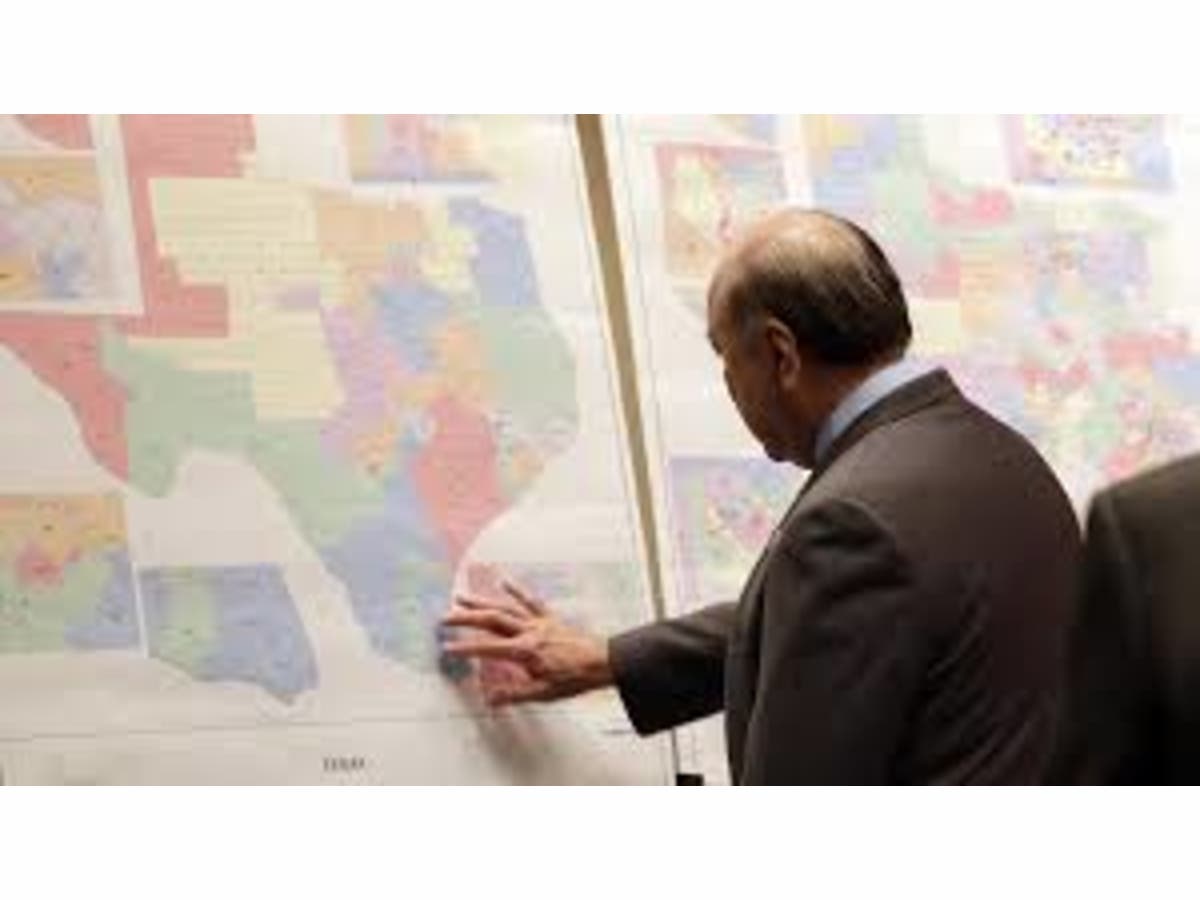
Yesterday we looked at the transition to district elections. Today I want to offer some tips to using the maps.
WHERE TO FIND IT
There are a couple of urls you can use
Bear in mind that you can make as many maps as you desire. As the saying goes, “There’s more than one way to slice a cake”.
Find out what's happening in Lake Forestfor free with the latest updates from Patch.
SIZE, SIZE, SIZE
The most important criterion is to create 5 districts of equal size, staying true to the “one person one vote” credo that underlies the democratic process. Creating equally sized districts is more important that any of the other factors (e.g., communities of interest, compactness, natural boundaries, etc.)
Each district you create will probably deviate from the average size (77,265/5 = 15,453). I created 5 districts and the biggest deviation was 491 people and the smallest was 44 people. It’s nearly impossible to create 5 districts each of which has 15,453 people.
Find out what's happening in Lake Forestfor free with the latest updates from Patch.
According to the standards used in creating districts, a 5% deviation is allowed. This means any districts with more than 16,225 people or less than 14,680 people will be eliminated, but you should be able to do better than this.
WHAT COMES AFTER SIZE?
Here are some additional considerations you can use in drawing up the districts.
- Avoid racial gerrymandering – don’t use race or ethnicity as the primary factor when you draw your districts. This can be easy to do if you draw your districts without considering where various racial or ethnic groups live. Think of this merely as a visual exercise in block building.
- Try to create districts where the blocks are contiguous (next to each other). This is pretty easy to do.
- To the extent possible, try to make districts compact. The interactive map has a measure of compactness you can use. In my case I had an average compactness of 0.47 in one map and 0.48 in another map.
- Try not to split “communities of interest”. Examples of communities of interest include HOAs and mobile park residents.
- Try to follow visible natural and man-made geographical and topographical features (e.g., creeks, hills, major streets)
- Try to avoid putting two or more Council members in the same district (though this may be hard to do since two of them live very close to each other).
You probably won’t be able to create your 5 districts without violating at least one of these rules, but even if you violate the rules, try to do so with minimal impact.
TRY THE INTERACTIVE MAP FIRST
The interactive map is the most powerful tool and will help you make 5 approximately equal districts. That being said, it also is clunky and has problems (e.g., the undo button often doesn’t work) so the learning curve can be lengthy. It took me an hour to learn how to use it and another hour to get comfortable with it.
USE THE HELP OPTION
The professional demographers hired by the City to assist us are very responsive to requests for help. They have an FAQ section on their website and they have a phone number (818 254-1221) and an e-mail address - LakeForest@NDCresearch.com. They also have a contact page on the website.
ABOUT THE AUTHOR
Dr. Jim Gardner is on the City Council for Lake Forest. You can check him out on LinkedIn and/or Facebook and you can share your thoughts about the City at Lake Forest Town Square on Facebook. His comments are not meant to reflect official City Policy.
Dr. Gardner has office hours every Tuesday from 4 pm to 6 pm at the City Hall. In addition, he holds a mini town meeting every month. The next meeting will be on Sept 9 at 2 pm at the El Toro Public Library.