Schools
Today's Students Face Too Much Work, Too Many Pressures, Says Film Screened at Gates Elementary
"Race to Nowhere" questions scholastic expectations for kids in school today.


Devon Marvin was a 13-year-old straight-A student, but when she got an “F” on a math test, .
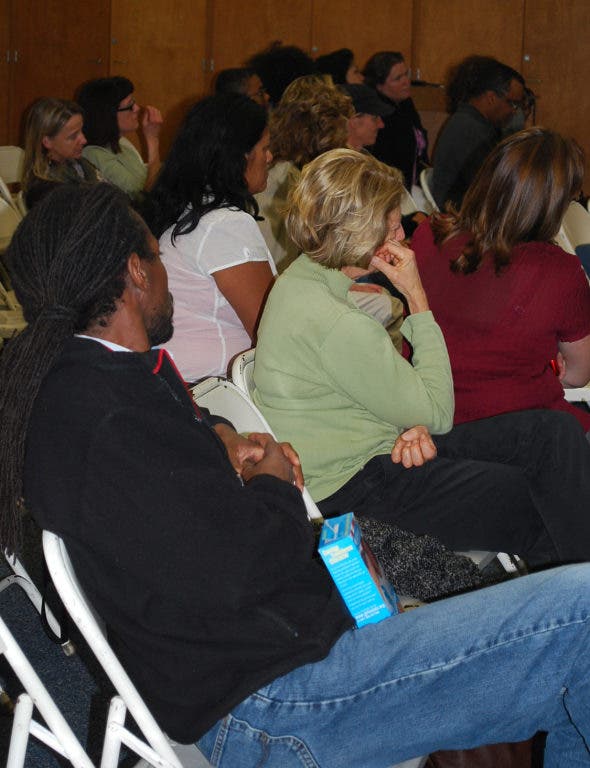
The documentary Race to Nowhere is dedicated to Marvin and depicts the pressures placed on students like her. On March 10, Lake Forest mom Nikkie Webb-Elder—with the permission of the Saddleback Unified School District—hosted a screening of the film at for about 174 people.
"I saw it and was moved by it," said Webb-Elder, whose son attends Gates. "I wanted to get it out to more people. Parents and people in the educational system need to be aware of some of the physical and mental pressures that our young people are under."
Race to Nowhere questions current popular teaching methods and the tests used to determine scholastic achievement. The film also warns against the rising pressure placed on students and teachers to perform.
A mom, Vicki Abeles, who began noticing signs of stress in her children, created the documentary. Her son, Zak, would cry before going to elementary school. Jamey, her daughter in junior high school, began showing symptoms of depression.
"I wanted to understand what was going on," Abeles said in the film.
Abeles asked students, teachers, administrators and psychologists their thoughts on the current educational system in the United States.
From students, Abeles gathered that young people today are expected to be superhuman. Many children go to school, participate in sports, participate in extracurricular activities, volunteer in their communities, meet with tutors and complete hours of homework. In each arena, they’re supposed to excel.
As a result, more young people are suffering mentally and physically, the film says. Psychologists are seeing more children facing nervous breakdowns. Sleeping and eating disorders are on the rise. Students take stimulants and depressants to help them keep up with the educational demands placed on them. Under their clothes, some children hide the results of “cutting,” or habitually slicing their skin to help deal with stress.
"Metaphorically as well as ... literally, they're bleeding underneath," clinical psychologist Dr. Madeline Levine said in the film.
When the 2001 federal law No Child Left Behind, was mentioned in the film, some members of the audience at Gates booed and hissed.
The No Child Left Behind Act requires that standardized tests be taken in government-funded schools to assess yearly progress made by students. The film asserts that students who are required to take standardized tests learn how to memorize, not to "think outside the box."
The movie also presents evidence to show that cheating is on the rise and says the amount of homework students are saddled with should be reduced. The Case Against Homework, a book by Sara Bennett and Nancy Kalish, is cited in the film. The book says homework "overload is compromising our parenting choices, jeopardizing our children's health, and robbing us of precious family time."
"Countries outperforming the U.S. actually have less homework," Stanford University School of Education senior lecturer Denise Pope says in the film.
Toward the end of the documentary, Abeles discusses how time spent with her family changed.
"We don't ask about homework," Abeles says. "We don't ask about grades. We asked the school for less homework. We have dinner together, and we play games together. … Right now, for me, success is just getting her [Jamey's] health back."
Ed Neely, a retired elementary school principal, was in the audience at Gates.
"I've seen increased expectations of students,” Neely said. “There is so much pressure to get kids into AP classes.”
Lu Neely taught elementary school in the Capistrano Unified School District for 18 years.
"I've noticed a big change in the pressure in general,” she said, “pressure on students, parents and the community."
Before the screening, Regina Comroe, the mother of an eighth-grader, said she attended because she “wanted to be more aware of what pressures kids are under nowadays.”
After the film, tears welled up in her eyes as she reflected on what she’d seen.
"I could relate to a lot of the stuff in the movie,” she said. “I always ask my eighth-grader about homework instead of 'How was your day?' … I feel convicted. I'm glad I saw it now before making all of those high school choices."
The next local screening of the film will be at Lincoln Elementary School in Corona del Mar on April 20 at 7 p.m. For further information about Race to Nowhere, or to schedule a showing, visit the film’s website.