Politics & Government
Grossmont Healthcare CEO Gets Salary Boost, Will Top $200,000
By 5-0 vote, board gives former La Mesa Councilman Barry Jantz a series of 4% raises. He earns praise for expanded district roles, dealing with Prop. J bond projects.


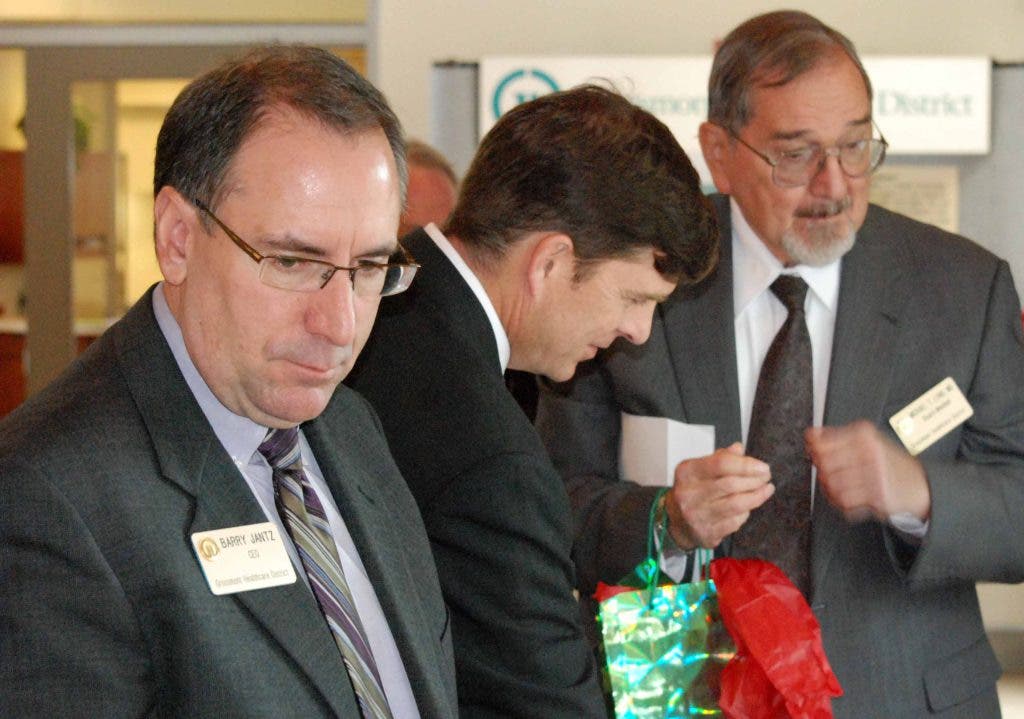
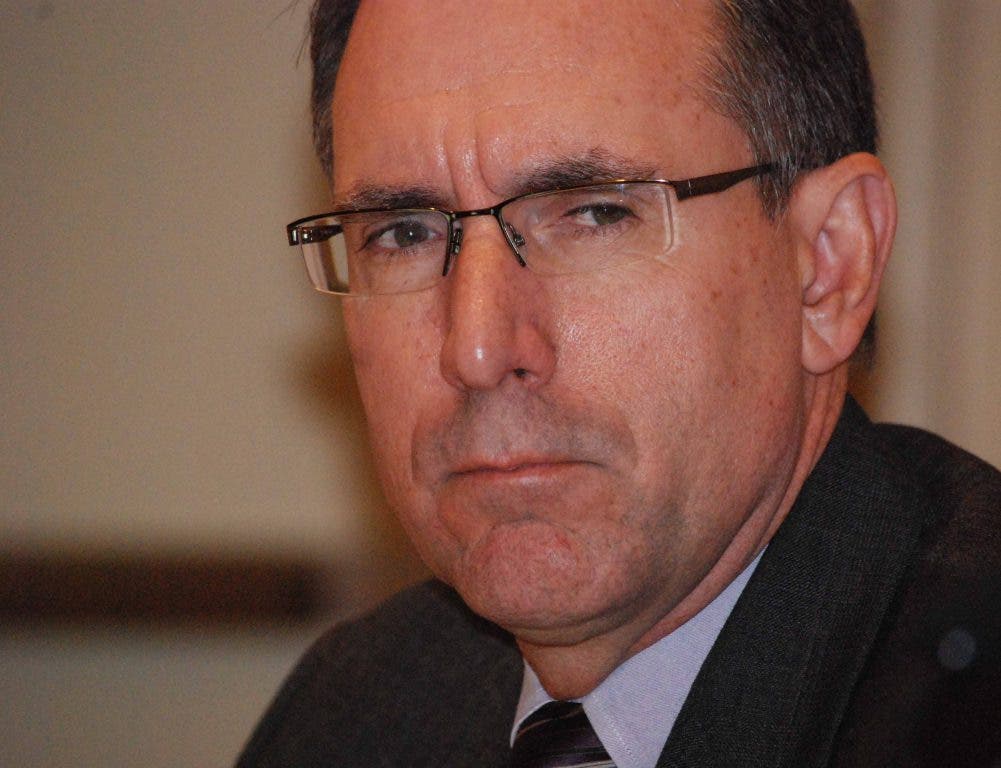

Barry Jantz will see his annual salary as CEO of the Grossmont Healthcare District rise to about $206,000 in December 2012 from a base salary of $183,150, thanks to unanimous action Friday morning by the district’s board of directors.
Jantz, 51, a former La Mesa city councilman, has been chief executive of the district that oversees Sharp Grossmont Hospital since November 2004. Another 4 percent raise took effect Dec. 1, 2010, boosting his current pay to $190,476, according to the revised contract.
At the same meeting, the board rejected funding for 13 community groups, including the Alzheimer’s Association East County for the Alzheimer’s Education and Outreach Program ($37,050 requested) and Survivors of Torture International’s Survivors Medical Service Access Project ($38,225 requested).
Find out what's happening in La Mesa-Mount Helixfor free with the latest updates from Patch.
Also turned down were the Center for Community Solutions’ Project HEAL ($50,000 requested) and Spring Valley-based Noah Homes’ funding for medical coordinators ($25,000 requested). The Sharp HealthCare Foundation’s ThinkFirst San Diego request of $13,597 also was denied.
Two groups making the cut for district funding were:
Find out what's happening in La Mesa-Mount Helixfor free with the latest updates from Patch.
- Trauma Intervention Programs (TIP) Crisis Intervention will get $8,000. This passed by a vote of 5-0.
- Volunteers in Medicine San Diego Inc. will get $150,000 for primary care for uninsured residents of East County. This passed 4-0-1, with director Michael Long the abstainer.
“The board awarded a $100,000 grant to [Volunteers in Medicine] last year and has supported the program the last few years, as exemplifying the district’s mission to provide health care access by addressing unmet needs,” said board documents.
“The community grants program is budgeted this year at $2.2 million, nearly all expended,” Jantz said via e-mail Friday. “It is a policy decision on the part of the board to not exceed that amount. ... Those funds are discretionary and can by law only come from our approximately $5.65 million general fund revenues.”
Some 13 groups made $520,000 in requests, said board minutes.
In an e-mail response Sunday, board President Deborah McElravy said: “It is not correct to say that many local groups were denied money this year as only a handful of requests have been denied.”
She said the district has a “very open and fair grants process,” which can be viewed on its website.
“Ultimately it is a policy decision of the board as to which organizations receive district support and funding,” she said. “The board encourages all health-care related organizations in the community to actively participate in the grant process to enhance their opportunity for funding.”
The 5-0 vote to approve Jantz’s new contract came as a result of his increase in duties, Jantz said.
But public-agency watchdog Ray Lutz objected Friday, saying Jantz “should be embarrassed” as a conservative to be accepting a raise during these rough economic times. He challenged Jantz to turn it down.
“This district should save money by keeping salaries flat,” Lutz told the board, saying he’d like to see a comparison of salaries with the private sector for other executives “running an organization of seven people.”
“You have to ask: What is right for the public’s good here? You call yourselves conservatives . . . and you’re acting against your touted position.”
Lutz bemoaned a trend toward CEOs being given pay hikes “just because they’re doing a good job.” Lutz contended: “They’re supposed to do a good job.” And he said CEO salaries are not on the upswing now.
Lutz suggested that salaries should rise to keep CEOs from leaving—not a concern in the Jantz case.
Jantz, via e-mail, said: “I do appreciate the board recognizing the overall workload and the significance of the projects I am managing, along with the fact that we have worked hard to keep the size of the employee base and related pension obligations to a minimum by contracting for services and partnering with Sharp.”
McElravy called Jantz's annual 4 percent raise “fairly moderate considering his value to the healthcare district and community we serve and the increased duties which are referenced in the committee's memo. ... Delegating the increased duties to consultants or hiring new employees would be far more expensive and less efficient than assigning the increased responsibilities to Mr. Jantz.”
Lutz also complained that news of the raise being considered became public only in Friday’s board agenda, and should have been released as minutes earlier.
An ad hoc CEO Contract Committee, appointed by McElravy, was made up of directors Gloria Chadwick and Robert Ayres, plus district counsel Jeff Scott .
In a memo dated Feb. 18, the committee said it reviewed “Mr. Jantz’s accomplishments since 2006 through 2010 and can report that his contributions have been significant and important to the growth and development of the District and Grossmont Hospital.”
Among other things, the panel said he took care of media relations, created the annual Health Care Heroes awards, managed “complex construction project oversight” for a project completed June 14, 2010, and seated the Independent Citizens Bond Oversight Committee.
The panel also said he “reduced district cost with savings realized from restructuring security, utilization of temporary employees and negotiated contracts.”
“As the board memo outlines,” Jantz said, “most of the increased responsibilities are due to the passage of Prop. G, the $247 million in construction improvements at and near Grossmont Hospital.”
Jantz said a second sale of bonds—worth $137 million—is about to take place, “which will trigger the majority of the construction to follow, over $180 million in projects over the next few years, with hundreds of contracted consulting and personnel positions under my management.”
Jantz is underpaid, however, when compared to other health-care district CEOs in the county.
Last September, the North County Times reported that Palomar Pomerado Health CEO Michael Covert made $1.1 million in 2009 in salary and fringe benefits, incuding a base salary of $736,000. PPH, which the paper called the largest public health-care district in the state, oversees Pomerado Hospital in Poway and Palomar Medical Center in Escondido.
The paper also said that Tri-City Healthcare District CEO Larry Anderson makes about $625,000 a year in total compensation, with a base salary of $480,000. Tri-City district operates Tri-City Medical Center in Oceanside.
The remaining hospital district in San Diego County—the Fallbrook Healthcare District—pays its administrator, Vi Dupre, a base salary of $61,000 a year and benefits that raise her compensation to just over $69,000, said The San Diego Union-Tribune in September 2010.
The paper said Dupre—who also manages a Healthcare Heroes award program—was not bothered about being paid appreciably less than other public health-care executives.
“Doesn’t everybody think they should be earning more?” Dupre was quoted as saying. “If I really objected, I would take it to my board and make a request. I am treated with regard and respect, which is worth a great deal.”
Regarding the community grants program, Jantz said it’s budgeted this year at $2.2 million, nearly all spent.
“It is a policy decision on the part of the board to not exceed that amount,” Jantz said. “Those funds are discretionary and can by law only come from our approximately $5.65 million general fund revenues. … My responsibilities, however, include that and the $247 million in additional bond-funded projects.
“In other words,” he said via e-mail, “$2.2 million in already spent grant monies is markedly different than the District's $247 million in Prop. G improvements. The two cannot be compared, other than I am responsible for managing both of them.
The district has $135,805 left over, said district documents.
In Feb. 2 minutes of the Community Grants and Sponsorships Committee, the board was told:
“The last several years, the district exceeded its budgeted grants amount annually through board action, based on the financial ability each year to use other general fund monies to provide support to several worthwhile health-related programs.
“However, the board and staff have closely monitored the decrease in tax revenue over the last couple of years and are acutely aware that the future is uncertain regarding ongoing economic impacts to the district.”
This, said the minutes, “the committee's discussion focused on the need to stay within the grants budget as much as feasibly possible. As a result, the committee will recommend to the board that the district only minimally exceed its budgeted grants amount this year.”
The next meeting of the Community Grants and Sponsorships Committee is set for 7:30 a.m. March 2, 2011.
The Grossmont Healthcare District, based in La Mesa, covers a wide region of East County, reaching north to Santee, east to Campo and west to Lemon Grove.
Updated at 9 p.m. Feb. 20, 2011.
Get more local news delivered straight to your inbox. Sign up for free Patch newsletters and alerts.