Health & Fitness
Things Get Just a Little Bit Odd In the Burton Valley Garden
Choosing heirloom seed, over hybrids has made all the difference in our Garden Classroom.
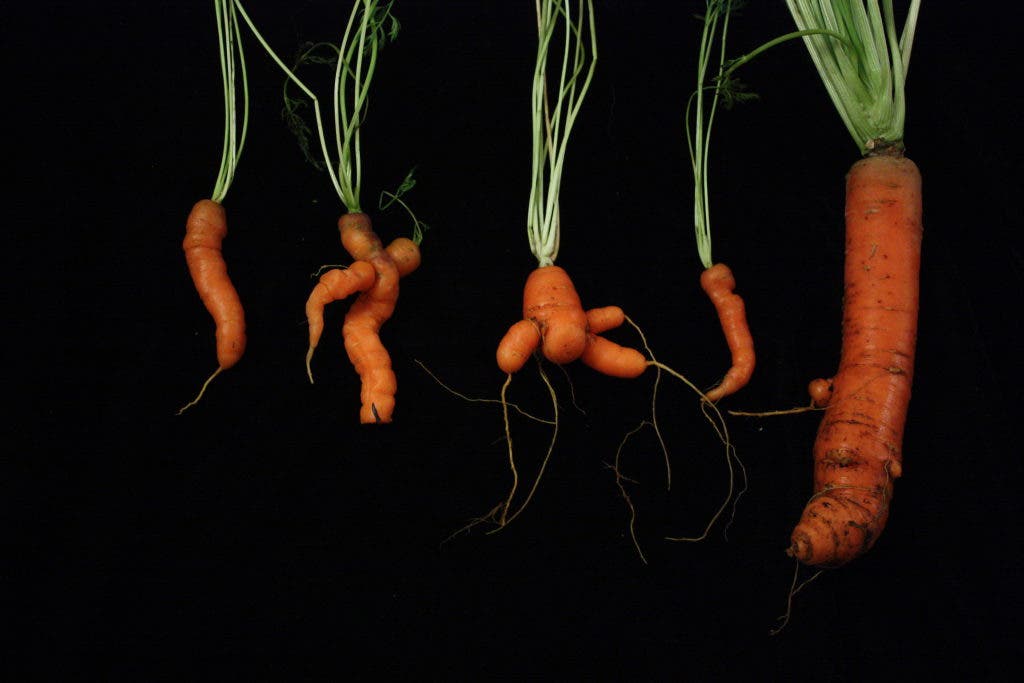

At the Burton Valley Garden Classroom second graders recently harvested our carrot crop. Students surrounded the bed packed full of carrots and I asked if anyone saw the carrots. They looked at each other a little confused. They looked down and saw the feathery leaves of the carrot plants. They thought I might be tricking them. One of them looked closer and saw the top of a carrot peaking up from the soil and exclaimed, “I see them! They’re hiding in the ground!”
As we lifted them from the loamy soil they ooohed and awwwed as if watching a fireworks display. They were wowed. Food was coming up from the ground. How amazing!
After we washed off the soil and brought the harvest to our outdoor kitchen the kids got a good look at them. “They look kinda funny.” “That one’s got legs!” “Look at that crazy thing! It looks like a monster.” “It looks like a tiger!” “That one has warts!” “Why are they so weird?”
Why, indeed, are they so weird?
That’s an important question that needed careful answering. I wanted them to eat them as I was answering that question, because so much of the answer lies on our tongues.
Ordering seed that we’ll be planting is solely my decision. I chose to buy only organic, heirloom seed available from small seed companies. This has made all the difference. The kids can taste that difference in every food we grow.
Currently, 98 percent of the world’s food seed is owned by five chemical companies; Dow, Dupont, Cargill, Cal-Ag, and the biggest of all, Monsanto. In fact, Monsanto owns nearly all corn and soy seed. We’ve gone from mostly heirloom seeds just 50 years ago to almost entirely hybrid seed.
What’s the difference? Hybrids, created in chemical laboratories, are bred for many things, for instance their resistance to disease, their refusal to die when sprayed with plant killer, their ability to be piled on top of each other and shipped several thousand miles and their ability to produce identical fruits. The seed from these hybrids will not grow the same plant again in the next season. If you want to have Monsanto’s “Early Girl” again next year, you’ll have to buy them. If you save the seed from those tomatoes they won’t grow Early Girls, they’ll grow a tough skinned, tasteless cherry tomato.
Heirlooms, in contrast, are open pollinated, created by nature. You will not be able to pile them up, nor ship them very far. You may need to get creative with disease resistance and actually pull your weeds, instead of spraying with poisons. And you may get some pretty odd looking fruits, no two alike. But you’ll get something that hybrids can not compare to: Taste.
In the Burton Valley Garden Classroom, we’ve got the absolutely best tasting vegetables imaginable. Kids consistently beg me for more. They can’t believe the difference in the flavor. The carrots we pulled from the ground, may have looked bizarre, but they were the sweetest, juiciest, carrots the kids had ever eaten. It was incredible how good they smelled. As I chopped them, the kids four feet from me were exclaiming, “Those smell delicious! I can smell them from here!” I wish you all could smell them too.