Arts & Entertainment
Drop The Roundup, Pahdnuh - And Back Away From That Weed
No more cowboy justice for outlaw weeds

A few weeks ago, while driving to one of my jobsites, I spotted a middle aged man bending over on the sidewalk. I thought he might have dropped something. Then he reached out and sprayed some Roundup on a small weed growing in a crack. This got me to thinking.
Instead of using Roundup he could have scratched that weed out with a little tool. He was already bending over. I suppose that squirt of Roundup may have saved him some time, maybe a couple of seconds. And perhaps it saved him a little labor. It probably took less effort to squeeze a trigger than manipulate a tool. And it was undoubtedly easier to spray and walk away than clean up and dispose of a pulled weed. Spraying and walking away may have been (slightly) easier but was it environmentally and socially responsible?
I have to confess, I've used Roundup a couple of times at the request of a client. Virtually every one of my current clients, highly discerning people who care about the environment, have a dusty container of Roundup somewhere in a shed or garage. Most of them, as far as I know, have kicked the Roundup habit.
Find out what's happening in Lamorindafor free with the latest updates from Patch.
After nearly 40 years on the market, cracks have started to appear in the marketing facade that's promoted Roundup as an environmentally benign substance. Speaking at a recent conference in Kansas City, USDA microbiologist Robert Kremer said that 15 years of research has discovered a disturbing incidence of soil fungal diseases associated with heavy Roundup use. The International Survey of Herbicide-Resistant Weeds has been documenting the rise of so-called superweeds, weeds that are evolving to be resistant to glyphosate, the active ingredient in herbicides Roundup and Rodeo, as well as to other herbicides including our beloved 2,4-D. It may not be long until the bending man will be squirting his weeds in vain. But he may be doing more than just exercising in futility. Other studies have suggested that Roundup has potentially harmful effects on the endocrine system and may cause birth defects .
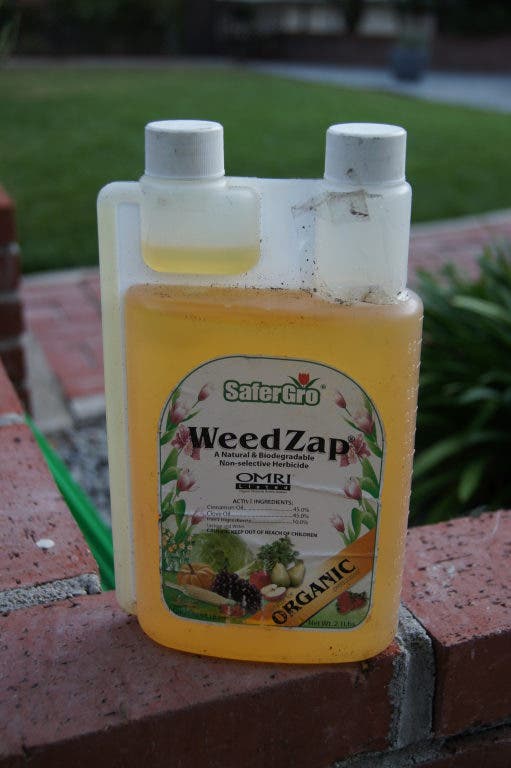
Contrary to what Monsanto might want us to believe, there are tried and true and safe alternatives for managing weeds in our landscapes. First there's hand pulling and hoeing, which I do throughout the year. For hoeing I prefer to use a stirrup or hula hoe that cuts weeds off just under the soil surface and leaves their roots to decompose. In the winter and early spring, when the ground is wet, there's thermal weeding using a propane torch. It doesn't take very many BTUs to cause a plant's cells to rupture. For large areas, there's sheet mulching or soil solarization in which you roll out clear plastic sheeting over wet soil and let the sun toast any weed seeds that dwell in the top few inches of soil. Some of the trickiest spots to weed are cracks in the pavement, as the bending man no doubt knew. I generally use a thin scraping tool to cut or lever weeds out. Sometimes there are so many weeds, in an unmortared or deteriorating brick patio for instance, that spraying is the most economical solution. For many years I've been using non-toxic (unless you're a weed) herbicides in such situations and I find them adequate. Unlike systemic Roundup, they work only by desiccating leaves, so repeat sprayings are sometimes necessary. The most effective one I've come across is OMRI-listed citrus-based Avenger made by Cutting Edge Formulations. I've used another decent one called BurnOut II from St. Gabriel Labs that's made of citric acid and clove oil, a new formulation that smells much better than their old vinegar-based product. I'm currently using WeedZap from JH Biotech, an OMRI-listed cinnamon and clove oil mixture that seems to work pretty well and smells just like the cinnamon oil soaked toothpicks I made as a kid. All of these products work best when sprayed on young and tender weeds.
Find out what's happening in Lamorindafor free with the latest updates from Patch.
The EPA estimates that as much as 18-23 million pounds of glyphosate is sprayed in and around our homes and workplaces each year. Considering the risks and the fact that viable alternatives exist, I think it's time for all good cowboys to put away their Roundup and those other herbicides Lasso, Rodeo, and Corral, before somebody gets hurt.