Arts & Entertainment
On the Trail of the Lamorinda Leafminer
A crafty fly presents a sticky situation — and response — from the Tranquil Gardener.
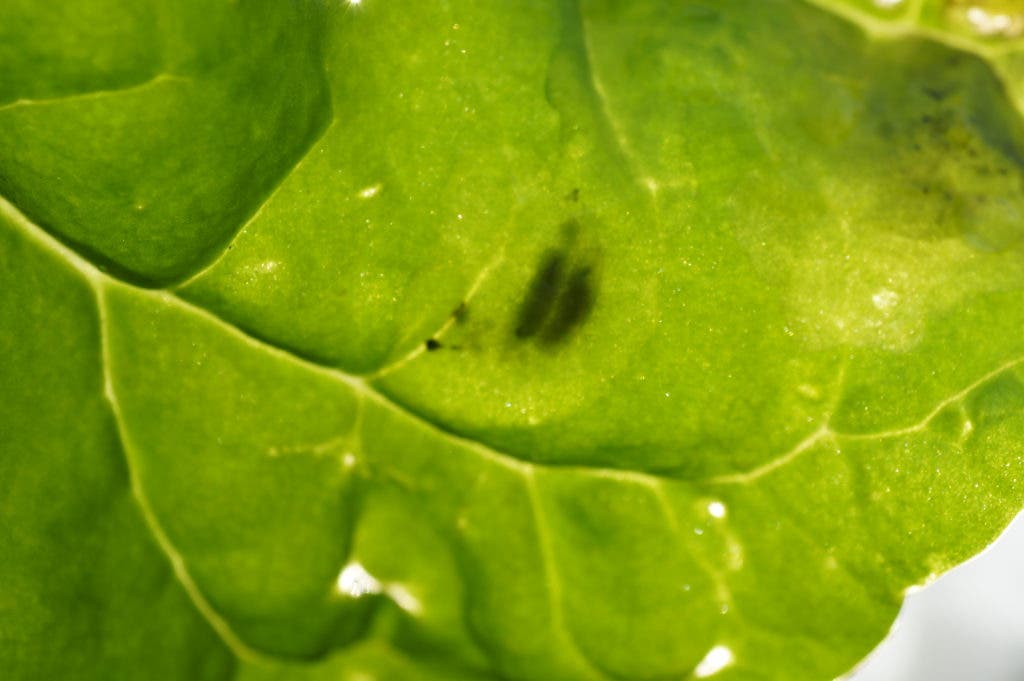


It's a cool spring morning and tiny flies are rising from the soil and taking to the air. Soon they'll mate and the females will begin searching for chard or spinach or beet leaves. Having found a suitable leaf, they'll lay tiny white eggs on the underside. In a few days the eggs will hatch and the larvae (aka maggots) will dig into the leaf and begin devouring its tissues.
At first the damage will look like winding trails, but eventually the trails will merge and large areas of the leaf will have been eviscerated. If I hold such a leaf to the light I often can see the larvae: small, short, dark pellets against a pale green background. At that point I'll squash them between my fingers and use the leaf for compost. Those I don't find will cut a small escape hatch in the leaf and drop to the soil, where they'll burrow down to pupate. In a few weeks they'll be back as flies looking for mates and more leaves to ruin.
I love to grow Swiss chard and, though it tolerates the heat of summer, it's at its succulent best in the spring. Last spring I watched patiently first as the leafminers had their way with the chard leaves and later as black aphids had theirs. In the end, despite the presence of abundant beneficial insects, I surrendered to the aphids and pulled the crop. It was painful to lose so many good plants. This spring, despite the fact that at this point only unblemished leaves are at stake, I decided to go into battle with the leafminers.
Find out what's happening in Lamorindafor free with the latest updates from Patch.
My first sortie was to the Internet to learn something about the spinach leafminer. Especially useful was the UC IPM page that discussed the insect, its damage and its control. As a strictly organic grower, I figured I had three choices: do nothing, introduce beneficial insects that prey on leafminers or use an organic insecticide. I had recent experience doing nothing and that hadn't worked out too well. A predatory wasp called Diglyphus isaea that parasitizes leafminer larvae is available commercially but prohibitively expensive. It looked like I'd have to spray. I sometimes use neem oil on the job and I have some in my truck so that looked like an easy solution. But before using it I took a look at the National Organic Program standards for insecticidal oils.
The organic law of the land says:
Find out what's happening in Lamorindafor free with the latest updates from Patch.
(b) Pest problems may be controlled through mechanical or physical methods including but not limited to:
(1) Augmentation or introduction of predators or parasites of the pest species;
-
Development of habitat for natural enemies of pests;
-
Nonsynthetic controls such as lures, traps and repellents.
And
(e) When the practices provided for in paragraphs (a) through (d) of this section are insufficient to prevent or control crop pests, weeds, and diseases, a biological or botanical substance or a substance included on the National List of synthetic substances allowed for use in organic crop production may be applied to prevent, suppress, or control pests, weeds or diseases: Provided that the conditions for using the substance are documented in the organic system plan.
This meant I could not spray my neem oil until I'd first tried predatory insects, habitat alteration and lures.
My next sortie, then, was to a small laboratory in Emeryville. Seabright Labs makes blue sticky traps that are supposed to lure leafminer flies to a gooey death. I've used their yellow traps before to catch whiteflies and found them effective. I hung the blue traps just above the leaves of my mature plants and my new transplants and waited.
The next day I inspected the traps with a hand lens and found good and bad results. There were indeed many tiny flies that could have been leafminers, hundreds of thrips, a few minuscule wasps, some leafhoppers and unfortunately, several ladybugs.
My chard plants already have plenty of larvae chewing away contentedly inside the leaves. There isn't much I can do about them other than scout and squash. But the next generation that arises from the soil will find irresistible blue death swaying in the morning breeze.
Undoubtedly some flies will not be attracted to blue and will mate and reproduce and continue to scar chard, spinach and beet leaves. Almost every form of pest control seems to select for its own failure. But for now, I have a little edge and a lot of chard and that's enough to declare a win.
You really have to grow your own to appreciate the silky subtleties of chard. Refrigeration just seems to coarsen it. Here's a favorite recipe from one of my all-time favorite cookbooks, Joyce Goldstein's The Mediterranean Kitchen:
SWISS CHARD TAGINE
12 c chopped Swiss chard
½ c olive oil
2 c chopped onions
2 cloves garlic
1 T paprika (adding a little smoked paprika is also nice)
1 t ground coriander
1 c cooked chick peas (optional)
½ c chopped cilantro
Salt and pepper
2 to 3 T fresh lemon juice
Rinse the chard well and drain but do not dry; the water clinging to the leaves will help them wilt during cooking.
Heat the oil in a large saute pan over medium heat. Add the onions and cook until translucent, about 7 minutes. Add the garlic and spices and cook two minutes more. Stir in the chard and cook, partially covered and stirring occasionally, until tender and wilted, about 5 minutes. Stir in the chickpeas, if using, and simmer 2 minutes. Add the cilantro and salt and pepper to taste; cook 1 more minute. Stir in the lemon juice to complete the balance of flavors.