
My clock no longer seemed to be synchronized with the light so I wandered out into the pre-dawn garden. I could hear only crickets and the subwoofing waves of freeway traffic. For company I had the silent sunflowers, black eyeless disks that seemed to float in the air, and above them Cassiopeia, the Pleiades, and the great square of Pegasus. I could almost feel the earth beneath my feet turning toward the sun. The air was cool, the soil was warm as they moved toward equilibrium.
Here in the deepest heart of the suburbs, where night was draining away like a tide, first from the sky, then the trees, then the lowest growing plants, just as it had every day since long before the first lot lines were drawn and the first fence posts sunk, I seemed to stand at the bottom of a vast funnel where the life of fading stars was pouring onto this small piece of fertile earth. And from that ground, with heat and light and sweat of the brow, a bright world might grow. Grow, that is, as long as it kept turning, like the sunflower, toward the rising sun. When the human world turns its back on the equanimity of the brightening day and chooses to walk only in the shadow of its own creations, it stumbles and falls as if blind.
The July-September issue of California Agriculture from the University of California features an article about biofactors (plant compounds) in food that promote health. Among these is a bacterial coenzyme called pyrroloquinoline quinone (PQQ) that seems to be a necessary part of a healthy diet. It's thought to promote neonatal growth as well as to improve immune and reproductive functions. Mice deprived of PQQ develop very poorly. What I find fascinating is that PQQ appears to be a component of stellar dust and it's found everywhere on earth. Soil bacteria furnish it to plants, especially to legumes, which is not surprising considering legume roots are easily colonized by other bacteria. And apparently our intestinal bacteria don't synthesize it so we have to get it outside. Those unimaginably distant stars provide us with more than just ancient light. When we eat our beans, our very mitochondria are nourished by their cosmic elemental compounds.
Find out what's happening in Lamorindafor free with the latest updates from Patch.
It looks like Joni Mitchell was on to something when she sang, “We are stardust. We are golden. And we've got to get ourselves back to the garden.”
Find out what's happening in Lamorindafor free with the latest updates from Patch.
Speaking of legumes, it's getting close to the time to put our gardens to bed. We don't want to leave soil exposed to erosive winter winds and rain so we should either mulch it or grow something on it. A legume cover crop makes a nice living alternative to mulch and next spring you'll be able to chop it up and turn it into the soil. You'll then get the benefit of those bacteria that collect nitrogen from the air and use it to build tissues that will decompose and provide nourishment for your spring plantings.
In small settings like a backyard garden I like to sow fenugreek. Not only is it easy to grow, but it's relatively compact – about a foot tall – and edible. You can cut some of the greens and use them in salads. If you should let it mature and go to seed, you can harvest and then sprout the seeds and use the sprouts in salads or grind the seeds to use in curries. As a bonus, when it matures, it smells curiously like maple syrup. You can order seeds online or, as I sometimes do, buy a bag of seeds at an Indian grocery, where it's often called methi.
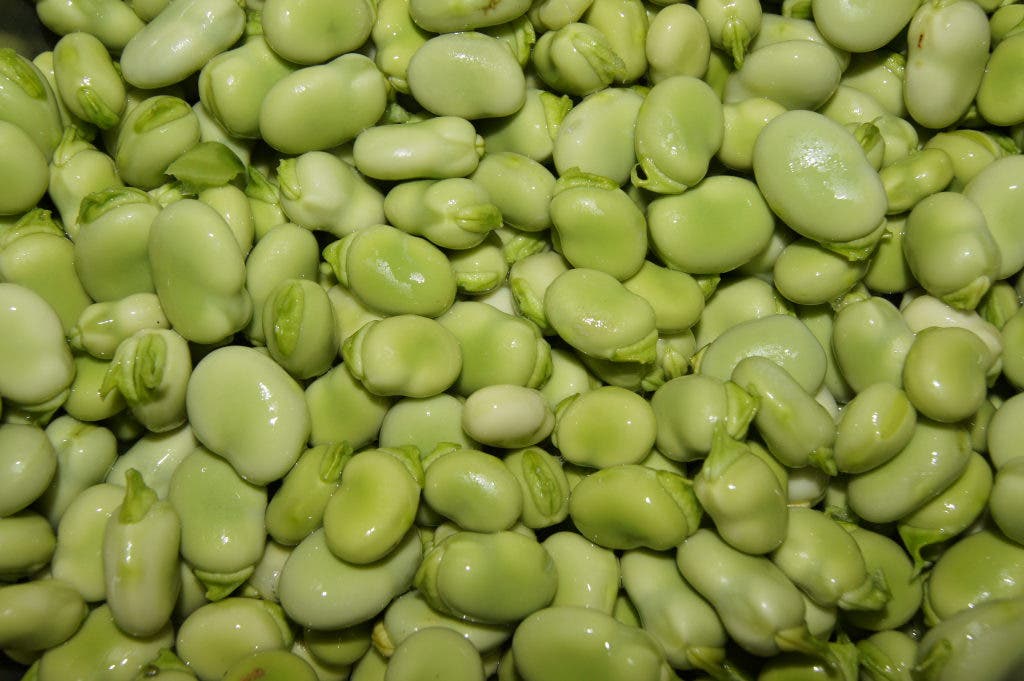
If you have a lot of room for a cover crop, try sowing fenugreek first then poke fava bean seeds into the soil about every foot or so. For a while the fenugreek will outgrow the favas. By spring, however, the favas will have filled in, and you can harvest the beans before you chop up the plants to add to your soil or compost heap. There's a dwarf variety called Statissa available from Territorial Seed Company that grows just 24-28” tall. It's ideal for a small garden.