Arts & Entertainment
Ten Wonders of the Spring Garden
What a difference a few days — and warmer temperatures — can make.


Spring has been looking very green this year. I've been watching it happen all around me, on the other side of the windows, in the rain. Now, with a couple of weeks of sun and a little warmth, the kitchen garden is coming back to life.
There are some herbs and vegetables that I consider indispensable in the spring kitchen garden. Some because they're virtually impossible to find in a market, others because they simply taste so much better when they've just been harvested. Once you experience the difference, you'll find it hard to go back to the meager offerings of a grocery store.
Radishes
Find out what's happening in Lamorindafor free with the latest updates from Patch.
What would spring be without radishes? Or without French breakfast radishes on a buttered slice of baguette? Or without French breakfast radishes on a buttered slice of baguette with a marinated anchovy and sea salt? There's an astounding variety of spring radishes available from seed companies: red, white, red with white tips, short, long, even a variety called rat's tail that's grown for its long seed pods. With a maturation time of three weeks from sowing to harvest, radishes are the closest thing in the garden to instant pudding. And you can tailor their size and spiciness to your liking by harvesting early or late. The long vegetable growing season that ends with winter squash begins with radishes.
Arugula
Find out what's happening in Lamorindafor free with the latest updates from Patch.
Arugula is another quick growing annual that thrives in cool weather. As with radishes, you can sow some seed in edges and small spaces and get enough to use. Plan on harvesting leaves in about 30 days. The harvest period is short; arugula doesn't take long to go to flower. Edible flowers may be so '80s, but arugula flowers have a unique flavor that transcends trendiness. I've heard kids call them peanut butter flowers. They add sweetness and sparkle to a salad. If you don't harvest all the flowers and let the plant go to seed, seedlings often will come up at unexpected times and places.
Spinach
Spinach can't bear summer heat so this is its time to shine. There are several varieties available, most of which don't vary much in size or quality. My personal favorite is a French heirloom called Monstrueux de Viroflay, or just plain Viroflay. Compared with common spinach it is indeed a monster, the leaves sometimes a foot long. I once grew out half a dozen varieties and the Monster was the sweetest by far. You can broadcast a handful of seeds on a prepared bed, harvest the thinings for salads, and let the rest super-size.
Turnips
Be sure to leave room for some turnips. If you're accustomed to grocery store baseball-size specimens, you may be surprised at how sweet and crisp baby turnips can be. Harvest them when they're about an inch across and saute the greens and turnips together. If you can get find some Japanese turnip seeds (try Kitazawa Seed Co. at www.kitazawaseed.com/index.html ), you'll be able to harvest babies in about 35 days.
Carrots
One of the revelations of the kitchen garden is just how much more complex and profound carrots taste when they've just been pulled. In our clay and clay-loam soils, I've had a lot of success growing a miniature carrot called Minicor. When they're mature, in about 55 days, they'll be 3-4 inches long and very sweet. You can broadcast the seed and thin to about an inch apart. The only caveat is that when it comes time for harvest, in tight soil you have to lift these by the carrot itself. If you try to pull them up by their greens, the greens may be all you get. If you don't eat them all before you get to the kitchen, braise them whole with other spring vegetables.
Leeks
I can't imagine a kitchen garden without leeks. Beginning this month, with regular sowing you can keep leeks coming throughout the summer. As with turnips and carrots, you can harvest them at various sizes during the spring or you can let them grow to maturity. Braised or grilled baby leeks are superb. I have yet to see anything but large, bulky leeks in the market. And if you grow leeks you won't have to sequester large areas of your garden for six months while your onions are growing. King Richard is a common early variety that will give you baby leeks in about 50 days. I also like Blue Solaise, a French heirloom. Any that you let mature will have striking blue-green leaves, a cooling sight in the summer garden.
Fennel
One never sees young bulb fennel only a couple of inches across in a market. But blanched and grilled young fennel is extraordinary. They're also excellent in an Italian dish called pinzimonio, an assortment of uncooked spring vegetables dipped in olive oil and salt. Again, you can sow these at regular intervals for the next several weeks and harvest them into the summer. If you're barbecuing salmon, throw a couple of these on the grill. You won't regret it. There are many varieties available. But be careful not to buy Bronze Fennel from the herb display. It'll give you plenty of bronze leaves but nary a bulb.
Chervil and Chives
There are a couple of herbs that are at their best in the spring. Chervil is a lacy tarragon-flavored relative of celery that's traditional in Bearnaise sauce and useful wherever you might use tarragon. It's a cool-season annual so plant now or hold your seeds until fall.
And chives are now in full force. Soon they'll be flowering, which makes harvesting a little more time-consuming, inasmuch as the flower stems are too tough to use and have to be sorted out. But keep the flowers. You can sprinkle them over a salad, use them in a flavored butter or steep them in white vinegar to make a rose-colored chive-scented herb vinegar. Black aphids seem drawn to chive plants and I sometimes find them tucked away in the flower heads. They're hard to see, so look closely. Otherwise your guests may think you've over-peppered the chive butter.
Alpine Strawberries
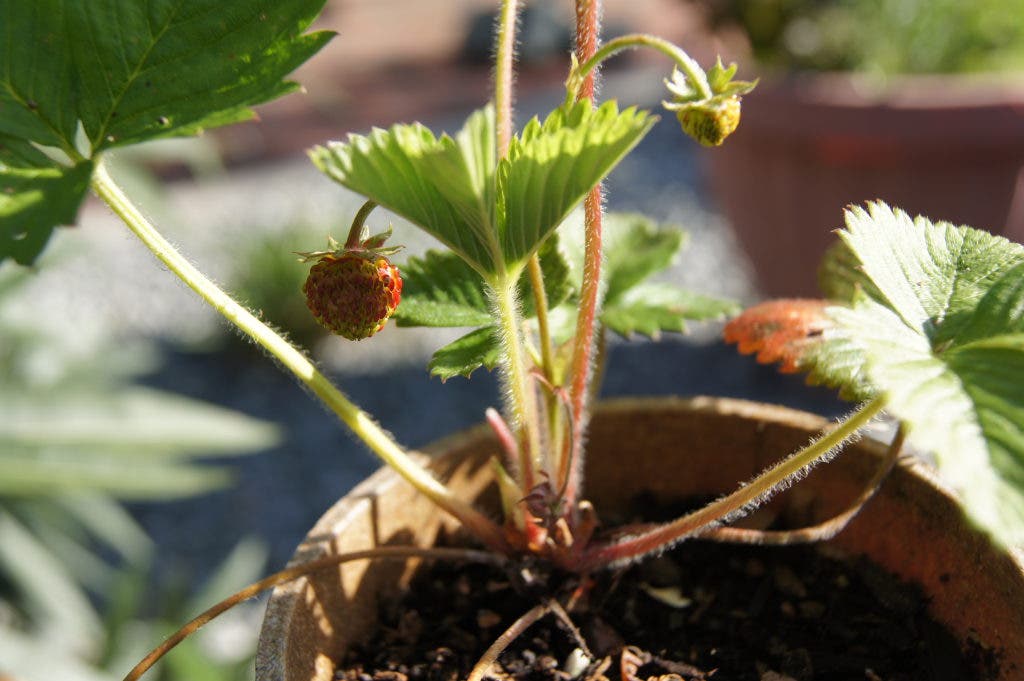
After you've done all that work preparing the soil and getting your spring vegetables and herbs in the ground, you have one more thing to consider: Alpine strawberries. These intensely flavored and highly aromatic mini-strawberries are perfectly ripe for only a day or two so it's highly unlikely you'll ever see them in a market. They're slow to grow from seed so it's best to order some plants. They're easy to find online. Even Amazon sells them. Plant them in loose, lightly-shady, slightly-acid soil or in a container and, if you can keep them going through the dry season, they'll bear for several years. You can choose plants that yield red, yellow or white fruit, all of which taste like truly natural strawberry candy. Kids love them. And, if you don't pick all the fruit, they readily re-seed. I'd put in at least a dozen plants so you get a handful of berries at each harvest. If you haven't tried these before, you really do owe it to yourself.
Spring is the season of promises fulfilled. These 10 marvels of the spring kitchen garden promise to fill and fulfill. It's time to dig in!