Arts & Entertainment
When It Comes To Fertilizers - Trust, But Verify
Corporate chickens*it. The Tranquil and ORGANIC Gardener fights for truth in advertising, and in his garden fertilizers.
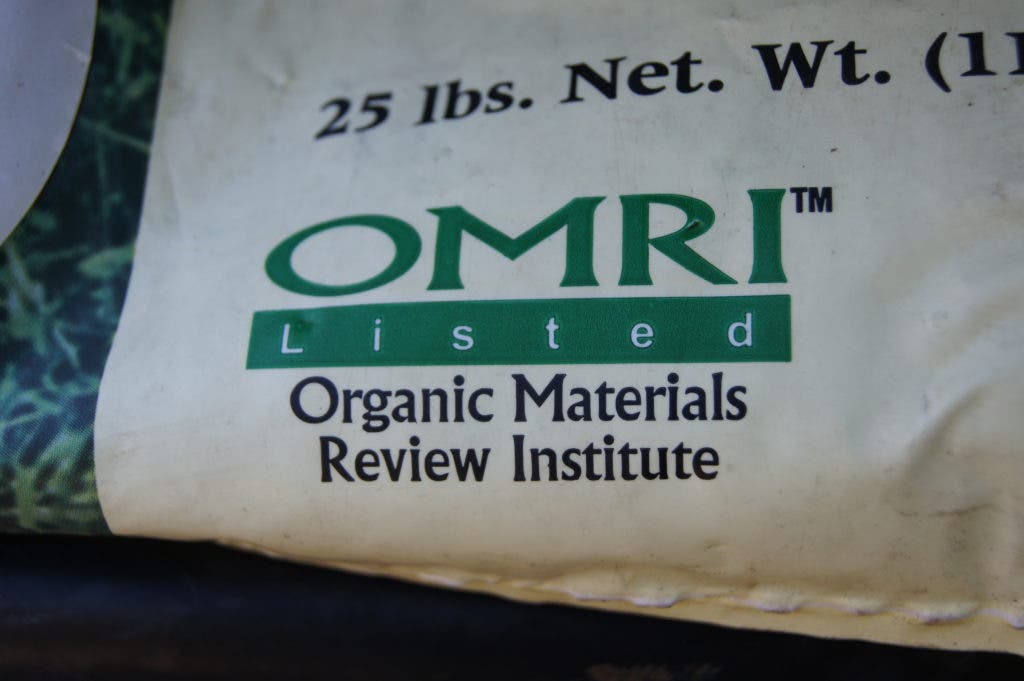
I was duped. Or perhaps I allowed myself to be duped. I wanted to trust the labels of two products that I'd been using for years. The labels clearly read “OMRI Listed." That meant to me that each product met the standards of the Organic Materials Review Institute and was therefore approved for use in organic production and I could use it freely. I was wrong.
The revelation that sewage sludge made its way into “natural and organic” soil amendments made by Kellogg Garden Products and thence into school gardens in Los Angeles County opened my eyes. While I knew that there was no organic labeling standard for compost, I believed that “OMRI Listed” came close. But just to be sure I thought I'd better check the OMRI list for the two products I'd been using.
I'd used both Kellogg's Garden Soil All-Natural and N-Rich, which appear to me to be the same thing in different wrappers, as a mulch, finding them much too coarse to use as a soil amendment. OMRI does indeed list both of these. However, their use is restricted because Kellogg has added micronutrients, without bothering to reveal them on the label. I can legally use this only when soil or tissue testing reveals a micronutrient deficiency for the specific micronutrients in the bag, whatever they might be.
Find out what's happening in Lamorindafor free with the latest updates from Patch.
I'd also used “OMRI Listed” Ringer Lawn Restore as a relatively inexpensive all purpose fertilizer. The label lists its ingredients as hydrolyzed poultry feather meal, nitrate of soda, potassium sulfate, bone meal and soybean meal. Again, the OMRI list reveals all. Lawn Restore is also restricted due to the nitrate of soda, a mined source of soluble nitrogen. Nitrate of soda is a natural substance and it's been used for decades in organic gardening, as well as for explosives and the preservation of meat. But as a soluble source of nitrogen it has a negative effect on soil organic matter and it can leach into groundwater. It's been allowed in organic gardening as long as its use constituted no more that 20 percent of a plant's nitrogen requirement but it will soon be disallowed entirely.
So if you can't trust a label that says “OMRI Listed”, what can you trust?
Find out what's happening in Lamorindafor free with the latest updates from Patch.
It turns out the State of California has come up with an answer. After a couple of recent large-scale scams in which fertilizer sold as organic and used in certified organic production was found to have been adulterated with synthetic substances, in January of this year the state passed a law requiring inspections and labeling of organic fertilizing materials. “OMRI Listed” will no longer be enough to ensure that materials are what they're claimed to be. Instead we'll look for an official CDFA organic label.
But I'm not sure I'll be reassured even by the new label. Our world is so splintered, producers and consumers are so distant from one another, and desperation and greed are such powerful motivators to hedge the truth, that knowledge of what goes into the soil and then into our bodies will always be tainted with doubt. When buying pigs in pokes, “trust but verify” is a useful motto. But it works only when verification is possible.
My solution? Use compost I've created myself from clean garden waste and organic produce, trusting the composting process to break down any potential toxins, use single ingredient organic fertilizers such as alfalfa meal, fish meal, or feather meal, and grow green manure crops to add organic matter to the vegetable garden. I'm not sure I can remove all doubt, but I can certainly reduce the odds of being duped again.