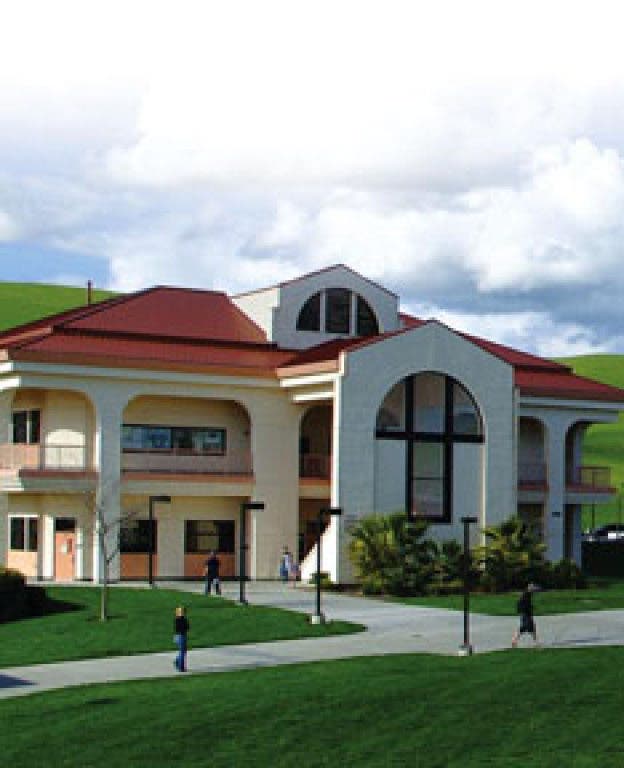
The seminar, “Restoring Sight to the Blind: Bringing Hope through Technology,” will open the second season of the Lawrence Livermore National Laboratory (LLNL)/Las Positas College Science and Engineering Seminar Series on Monday, October 3, 6-7:15 p.m. in the Barbara Fracisco Mertes Center for the Arts. The event is free and open to the public.
The seminar will be presented by a team of seven LLNL experts led by Sat Pannu, Ph.D., Section Leader for the Center for Micro and Nano-Technology and former Las Positas College student. It is part of a series, “Theory to Practice: How Science gets Done,” launched last year.
“The series is designed to enhance the partnership shared by the two Livermore institutions and provides a forum for laboratory scientists and engineers to share their broad range of basic and applied research with the college’s scientific community of students, staff and faculty,” said Dean of Math, Science, Engineering and Public Safety Neal Ely, Ph.D.
Find out what's happening in Livermorefor free with the latest updates from Patch.
“The series offers a way to look at how science is done,” added Biology Instructor Nan Ho. “A unique feature of the series, especially for a community college, is the focus on the ‘big science’ that LLNL does that requires cross-disciplinary expertise.”
The presentations are interdisciplinary in nature and focus on how science is applied to solve problems from theory to practice, she said. The seminar will run about 45 minutes, with another 30 minutes allocated for questions and answers.
Find out what's happening in Livermorefor free with the latest updates from Patch.
Millions of people worldwide suffer from ocular diseases that degrade the retina, the light-processing component of the eye, causing blindness, according to the seminar abstract. As the population continues to age, the number of Americans blinded by age-related macular degeneration (AMD) and retinitis pigmentosa (RP) will increase. Unfortunately, there are no therapeutic or curative options for these patients, and it has left them with little hope, the abstract states.
Lawrence Livermore National Laboratory, in collaboration with four other national laboratories, four universities, and Second Sight® Medical Products, has developed the first long-term retinal prosthesis that can function for years inside the harsh biological environment of the eye. The device takes images from an external video camera and sends electric impulses to an array implanted in the eye. These impulses stimulate the retina and enable the brain to perceive patterns of light, according to the abstract.
In clinical trials, patients with vision loss were able to successfully identify objects, increase mobility, and detect movement using the retinal implant. Further planned developments for the device will enable reading and face recognition. In addition, the technologies used in the retinal implant, to restore sight to the blind, could be expanded to develop devices that increase the functionality of people with spinal cord injuries, deafness and other neurological disorders, the abstract states.
The second generation of the Artificial Retina, Argus II, which has 60 pixels won a 2009 R&D 100 Award as well as the R&D 100 Editor’s Choice Award. It also received the 2010 Popular Mechanics Breakthrough Award.
In addition to Pannu, LLNL team presenters will include: Terri Delima, Microsystems Technician; Sarah Felix Ph.D., Microsystems Engineer; Kedar Shah, M.S., Microsystems Packaging Engineer; Heeral Sheth, M.S., Biomedical Engineer; Vanessa Tolosa, Ph.D., Chemical Engineer; and Angela Tooker, Ph.D., Microsystems Engineer.