Community Corner
Livermore Tiny Home Community Celebrates 2 Years
Goodness Village offers 28 affordable tiny homes and 24-7 care for the chronically homeless.


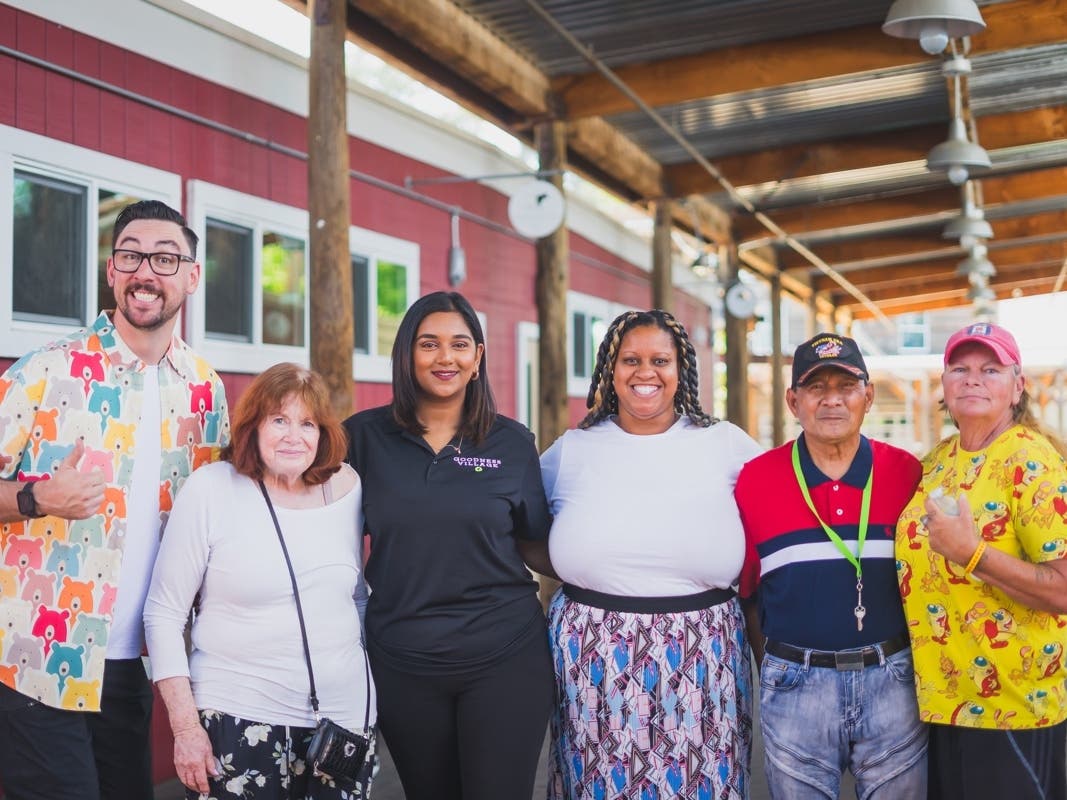
LIVERMORE, CA - 160 square feet may not sound like a lot, but for many people around the Tri-Valley, it saved their life.
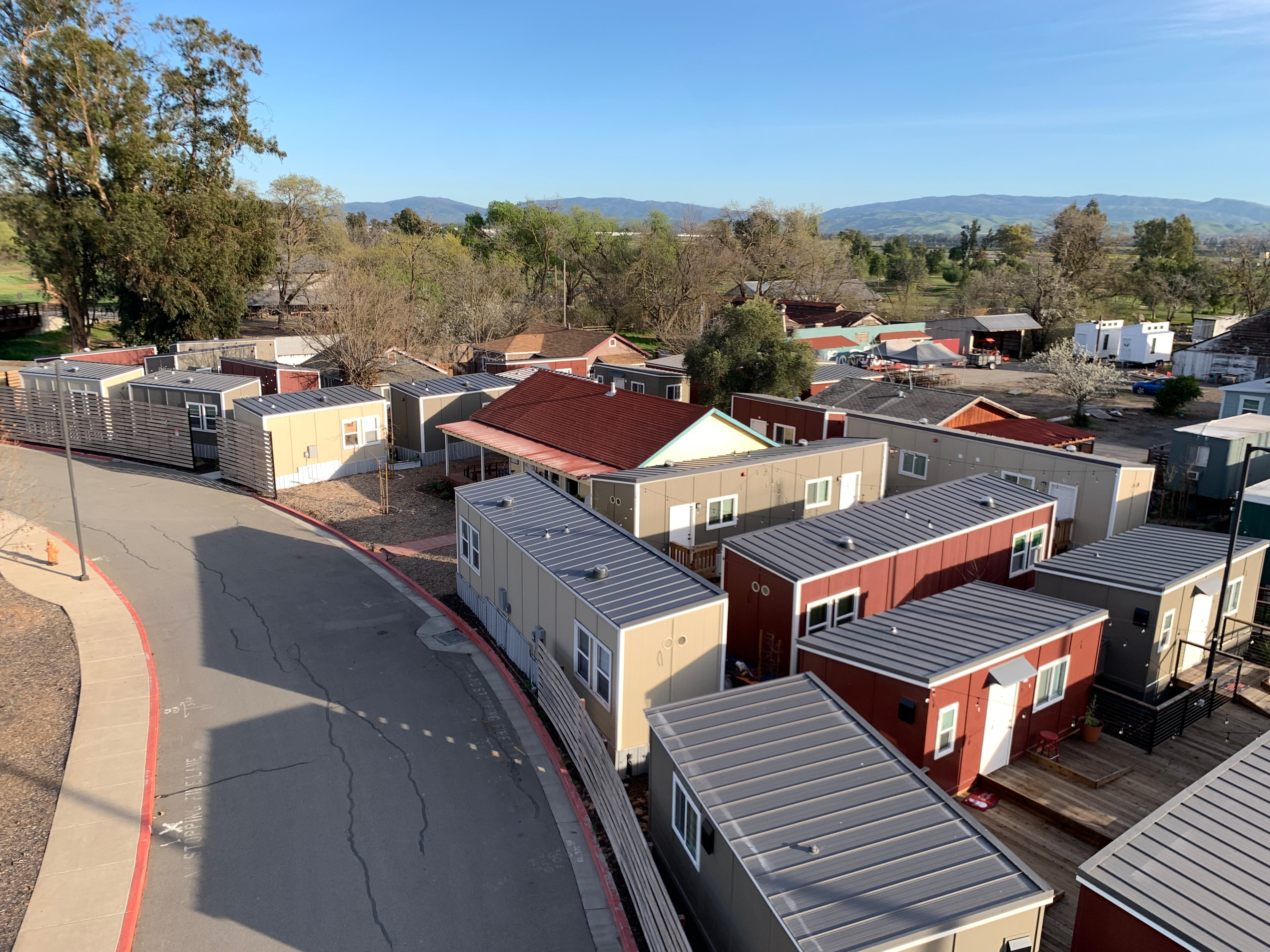
Goodness Village, the Tri-Valley’s only tiny home community, comprises 28 units near the grounds of Crosswinds Church.
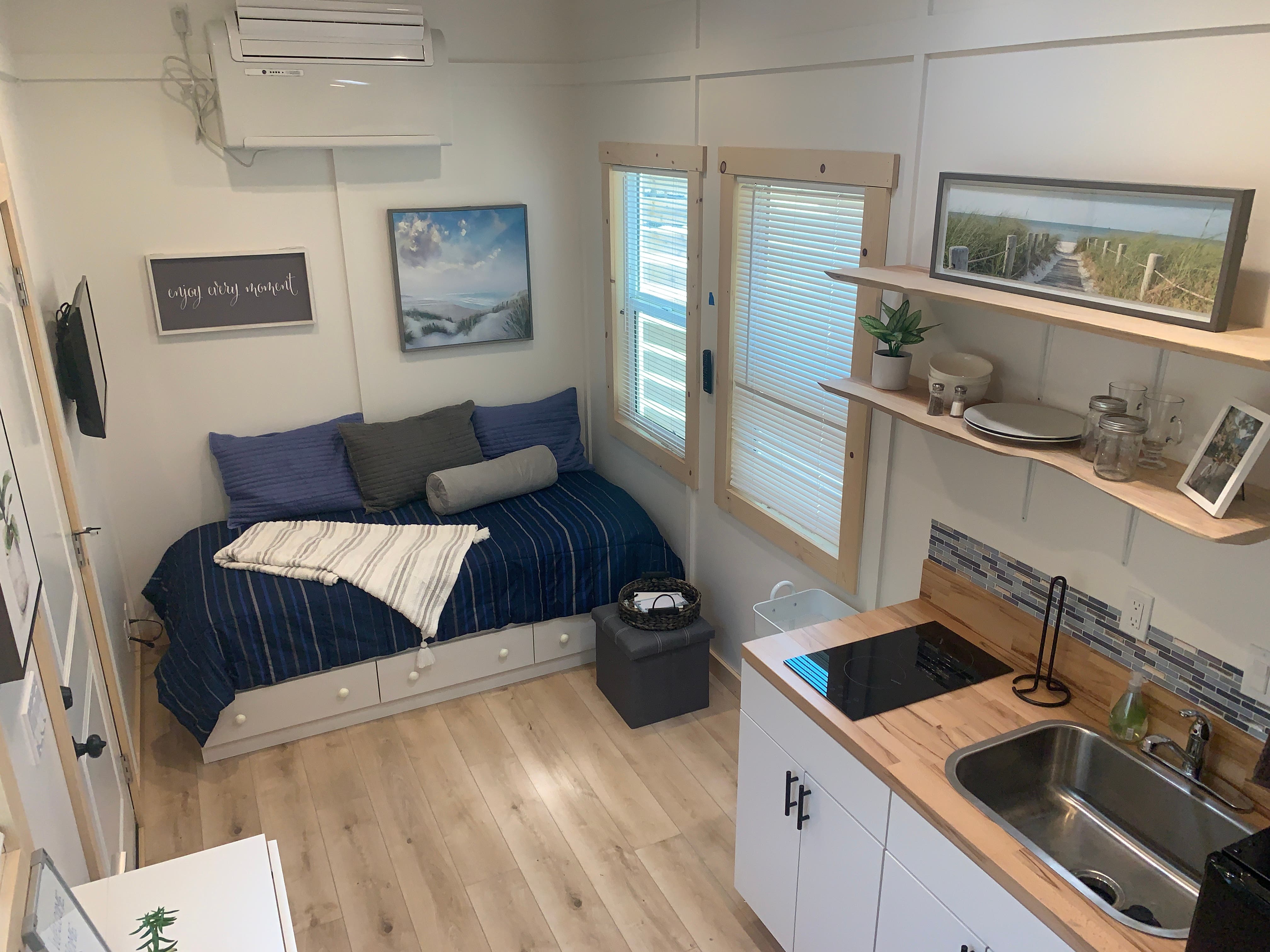
Each home has a twin bed, toilet, kitchenette and shower, and residents pay 30 percent of their monthly income to stay there.
Find out what's happening in Livermorefor free with the latest updates from Patch.
While the homes may be small, the support community is large.
Residents get access to 24/7 mental health support with counselors experienced working with crisis intervention, de-escalation, and unsheltered populations; case managers working one-on-one with residents to link them to services they need; a large network of volunteers who provide residents with mentoring, socialization, transportation, and more; a three-tiered vocational program that puts residents to work either in traditional employment or through maintaining the community; and regular community events to bring residents together.
Find out what's happening in Livermorefor free with the latest updates from Patch.
Founder and Executive Director Kim Curtis said that it is the supportive community piece that sets Goodness Village apart from other housing-first communities.
“You need a house before you’re going to start switching your mal-adapted coping mechanisms, and you need to take away the scary things that are out there putting you in that fight-or-flight mode,” Curtis, who is also a licensed social worker, told Patch in an interview. “But it doesn’t always work to put people with high-level needs in isolated apartments with folks like you and me, who are scared of them… That community piece is what I felt was missing, and what I loved about community first.”
Part of the community-first philosophy is to try to include as many people as possible. Applicants must be from the Tri-Valley (which currently has 275 unsheltered people, according to the latest count, but likely has many more), chronically homeless (unsheltered for at least 12 months, and/or possess a debilitating and chronic mental or physical affliction), and pass a background check. However, because 95 percent of residents are trauma survivors with difficult pasts, the only disqualifying elements are arson, sexual assault or repeated acts of violence.
“We’re extremely low-barrier, but we also just want to have conversations about how we support you and your wellness and recovery,” Curtis said. “During the support interview, they’ll tell us things that happened 20 years ago, 30 years ago, during their childhood, so we know way more than the background check is ever going to provide us…we’ve never been surprised yet.”
Curtis added that in the community’s two-year history, no one has been arrested, and just one person has been asked to leave.
“Safety is an immediate out — within 24 hours, we’ll ask you to leave. We don’t play. The village has to be a safe place,” Curtis said. Despite the infraction, that person was invited to reapply for a spot if she could demonstrate that the behavior would not happen again.
However, unlike some other communities, Goodness Village is not a sober living community. According to Curtis, substances can be a temporary lifeline for people suffering from extreme trauma.
“We are about removing the shame and guilt around that, and having full conversations about how this substance use has been incredibly effective in keeping you alive on the street. If I was unsheltered, I guarantee you I would not be sober out there,” she said. “But now we’re here, and we’re going to try to learn some healthy coping mechanisms, but until you learn those, we cannot expect you to give up their other ones.”
That fits into the community’s broader ethos of trying to find durable solutions tailored to the individual. For example, if someone doesn’t have an income, the program helps them get SSI payments, or work to get them employed. In the meantime, they can perform a job they’re able to do on the grounds of the village, like landscaping, working in the store, or taking care of the on-site chickens.
“There is always something — we figure out what can you do,” said Curtis. “As long as they’ve really communicated about what’s going, where are we at, why are we in this situation, and how do we work together to help you maintain housing. As long as we’re seeing effort and we’re not working harder than them to keep them in housing and their reasoning is valid, whether it’s delusional or not, then we’re going to continue to work with them.”
Talks for what would become Goodness Village started around 2013, when Crosswinds Church was considering ways to use 38 unused acres that it owned. The church eventually decided to offer the land to a nonprofit by offsetting land costs, and decided to build tiny homes after viewing a successful community in Austin, Texas in 2018.
The pastor called Curtis, one of his congregants, to ask if she could help him get a similar community started on the site. She loved the idea. Thanks in large part to an initial $3 million secured by former Alameda County Supervisor Scott Haggerty, the project broke ground in August 2020, and the first residents moved in June 2021. The community is currently funded by a federal grant, state and county funds, corporate support, and funds from the cities of Livermore, Pleasanton and Dublin.
Goodness Village is currently working to expand, and hopes to build as many homes as $5 million, limited space, and politics permit. At least 12 more homes on the site will be constructed, Curtis said. The village is also working with architects to design a community center.
Unlike a current proposal to build 16 tiny homes on the site of Asbury Methodist Church on East Avenue, Curtis said the remote location of Goodness Village has not led to much controversy. Rather, the nearby church and surrounding businesses have shown great support for the project. For example, a nearby Starbucks drilled a plaque into one of its tables to honor a resident, who had stopped by often, after he died. The community has also donated generously through volunteering and supporting two large fundraisers a year.
For more information, visit goodnessvillage.org.
Get more local news delivered straight to your inbox. Sign up for free Patch newsletters and alerts.