Neighbor News
6 Innovative Eye Care Technologies Available in the San Diego-Tijuana Region
New Diagnostic and Surgical Tools Changing How Eye Problems are Treated Across San Diego

Key Takeaways
- Tools like corneal topography and AI-integrated imaging are making detection faster than routine exams.
- Femtosecond lasers and MIGS are improving surgical precision while reducing disruption to surrounding eye tissue.
- Light-adjustable and EDOF lenses are giving patients more personalized vision outcomes after treatment.
Most people still think of eye care as a basic exam room visit that involves reading charts with one eye covered. That’s still important, but the breakthroughs in ocular science in San Diego are quickly making those basic procedures only half the story.
From bladeless surgical techniques to advanced diagnostic mapping, the residents here are taking advantage of these technology-driven solutions that paint a clear picture of what’s really happening inside the eye to provide better and more accurate treatment.
Six Technologies That Are Helping To Elevate the Standard of Optical Care
1. Femtosecond Laser Systems
Laser-assisted eye procedures are not new, but femtosecond laser systems have changed the level of precision available during certain surgical steps. These lasers emit ultra-fast pulses of light, measured in quadrillionths of a second, to create highly controlled incisions in delicate eye tissue.
Find out what's happening in Los Angelesfor free with the latest updates from Patch.
Because the system is guided by sophisticated computer mapping, it minimizes physical impact on surrounding ocular tissue, which generally makes the recovery process more efficient.
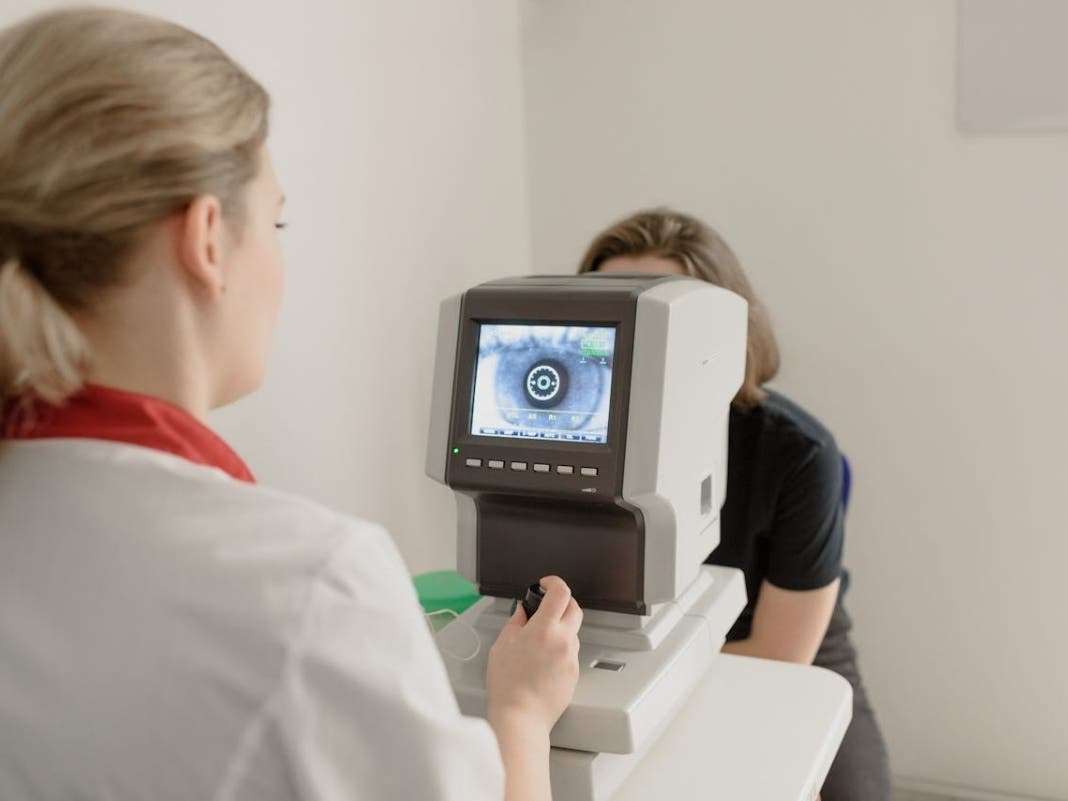
2. High-Resolution Corneal Topography
Find out what's happening in Los Angelesfor free with the latest updates from Patch.
This is used to create a detailed map of the cornea’s shape and curvature. Since the cornea plays a major role in how light enters the eye, small irregularities on that surface can affect visual clarity and comfort.
Corneal mapping is quite useful when evaluating patients for refractive procedures, specialty lenses, unexamined vision distortion, or to reveal early structural issues that would be easy to miss in a routine exam.
3. Light-Adjustable Lenses
Lens technology has become far more individualized than it used to be. Therefore, individuals undergoing lens replacement in San Diego no longer have to settle for a one-size-fits-all model.
The light-adjustable lenses are made of a specialized photosensitive material that allows for prescription adjustments after the initial procedure is complete.
Instead of locking everything on the day of the surgery and hoping it lands exactly where expected, the specialist can fine-tune the visual outcome based on the patient’s real-world experience during the post-procedure/healing phase.
4. Minimally Invasive Glaucoma Surgery (MIGS)
For a long time, managing ocular pressure required either daily medication or highly invasive surgery. But that’s not the case anymore, thanks to the rise of MIGS.
These procedures use microscopic equipment to improve fluid drainage and help manage intraocular pressure with less disruption to the eye’s natural structures than traditional procedures.
MIGS is not the right fit for everyone, but it’s quite useful for patients who need more than medication alone yet may not be ready for more aggressive intervention.
5. AI-Integrated Diagnostics Imaging
Artificial intelligence is now a functional tool in local diagnostic suites. By cross-referencing retinal images against vast databases of clinical data, AI algorithms can identify the earliest markers of conditions like diabetic retinopathy or macular degeneration.
This proactive detection is often possible long before a patient experiences a noticeable change in their field of vision.
6. Extended Depth of Focus (EDOF) Lenses
Many patients want functional vision across more than one distance, especially as daily life moves constantly between screens, printed material, driving, and outdoor activity. EDOF lenses were designed with that reality in mind.
Rather than sharply dividing vision into separate near and far categories, these lenses aim to broaden the usable range of focus. That can reduce dependence on glasses for some tasks and create a better visual experience for patients with active routines.
In a place like San Diego, where work, commuting, and outdoor life often overlap in the same day, that kind of flexibility appeals to a lot of people.
Regional Access to Innovation
The density of research institutions, specialized medical facilities, and funding in the San Diego area means that these technologies can go from being theoretical to becoming accessible to the large and varied patient population there.
Better technology does not solve everything on its own, but it gives specialists more information, and in medicine, this clearer information usually leads to better decisions. That’s really what ties all six of these innovations together.
The efforts in surgical technology for better health outcomes are helping eye care become less generalized and more specific to the person being treated.
Frequently Asked Questions
Are these technologies only available in major hospital settings?Not always. Some advanced imaging and diagnostics tools are now used in specialized community clinics as well, depending on the practice and the type of care being offered.
Do newer eye care technologies make treatment automatically better?Not automatically. Good outcomes still depend on the patient’s condition, the doctor’s judgement, and whether the technology is being used for the right reason.
Is advanced eye technology mainly useful for surgery patients?No. Some of the biggest benefits show up before surgery is ever discussed. Imaging, mapping, and digital analysis can help detect disease earlier and explain symptoms more clearly.