Community Corner
Americans lost $20B to online crime — check your state’s ranking
See which states lost the most, who's most vulnerable, and how to protect yourself from becoming the next victim.
This is a paid post contributed by a Patch Community Partner. The views expressed in this post are the author's own, and the information presented has not been verified by Patch.
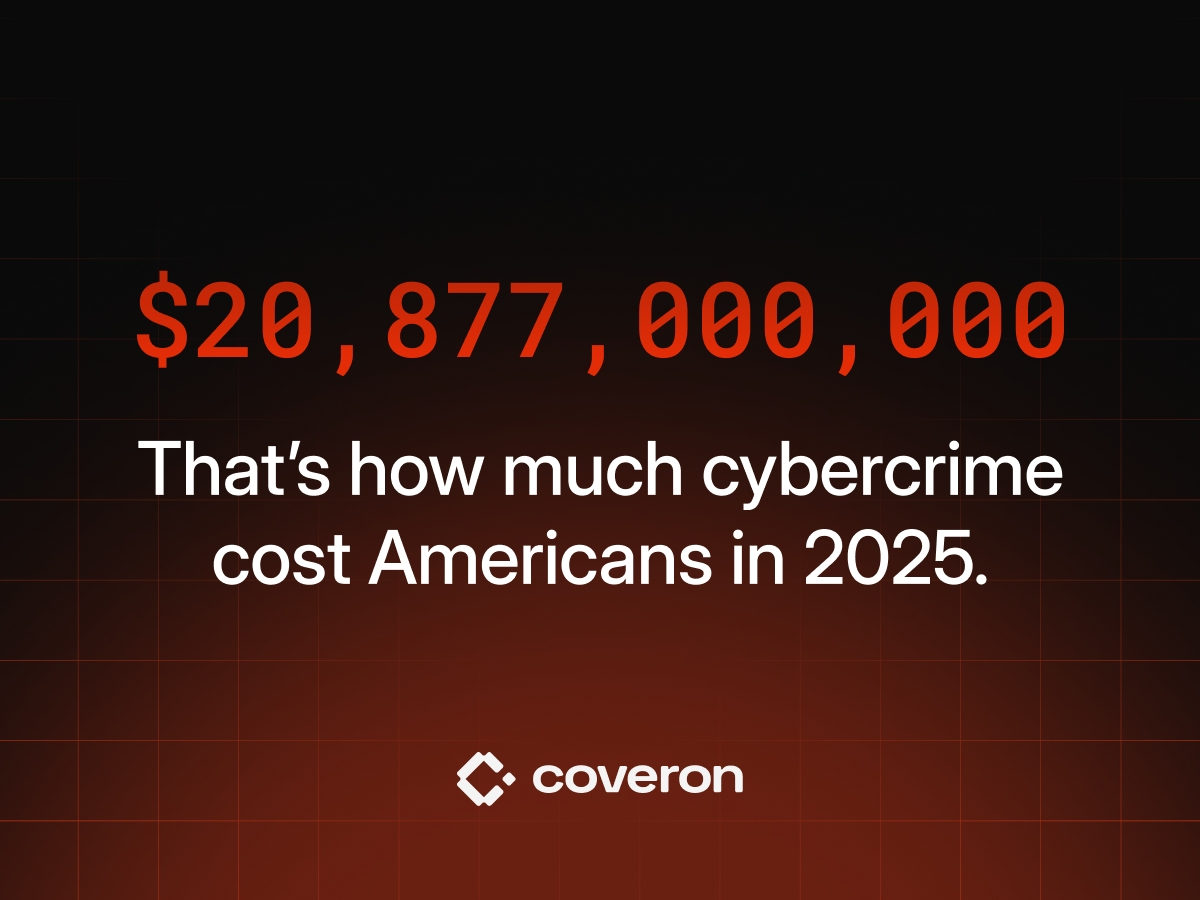
Internet crime cost U.S. citizens $20.877 billion in 2025 — with more than 1 million complaints reported to the FBI across all 50 states. That includes everything from investment scams and romance fraud to tech support scams, phishing attacks, and criminals impersonating the IRS or your bank.
However, a few states are getting hit far harder than the rest. See if your state is among the highest ranking and find out what you can actually do to protect yourself and your family.
Where most internet crime happens
These five states reported the most complaints to the FBI in 2025:
- California — 116,414 complaints
- Texas — 97,912
- Florida — 71,843
- New York — 45,255
- Illinois — 32,977
Where internet crime is most common per person
Total numbers favor big states, but when you look at complaints per 100,000 people, the states hit hardest are:
- Washington, D.C. — 448.8 per 100K
- Alaska — 434.3
- Nevada — 407.2
- Arizona — 378.7
- Massachusetts — 320.6
Even smaller states are reporting high rates — no one is immune.
Where people lose the most money to online criminals
Five states account for more than 40% of all reported losses:
- California — $3.67 billion
- Texas — $1.83 billion
- Florida — $1.60 billion
- New York — $1.23 billion
- New Jersey — $660 million
But where you live barely matters. What’s truly chilling is how cheaply criminals get the data to pull off scams.
The cruelest part: Your stolen data costs criminals almost nothing
You could lose thousands. The scammer? They paid less than the cost of a Big Mac for the information that made it possible. For example, a stolen Social Security number (SSN) sells on the dark web for under $2. Buy in bulk, and the price drops below a dollar.
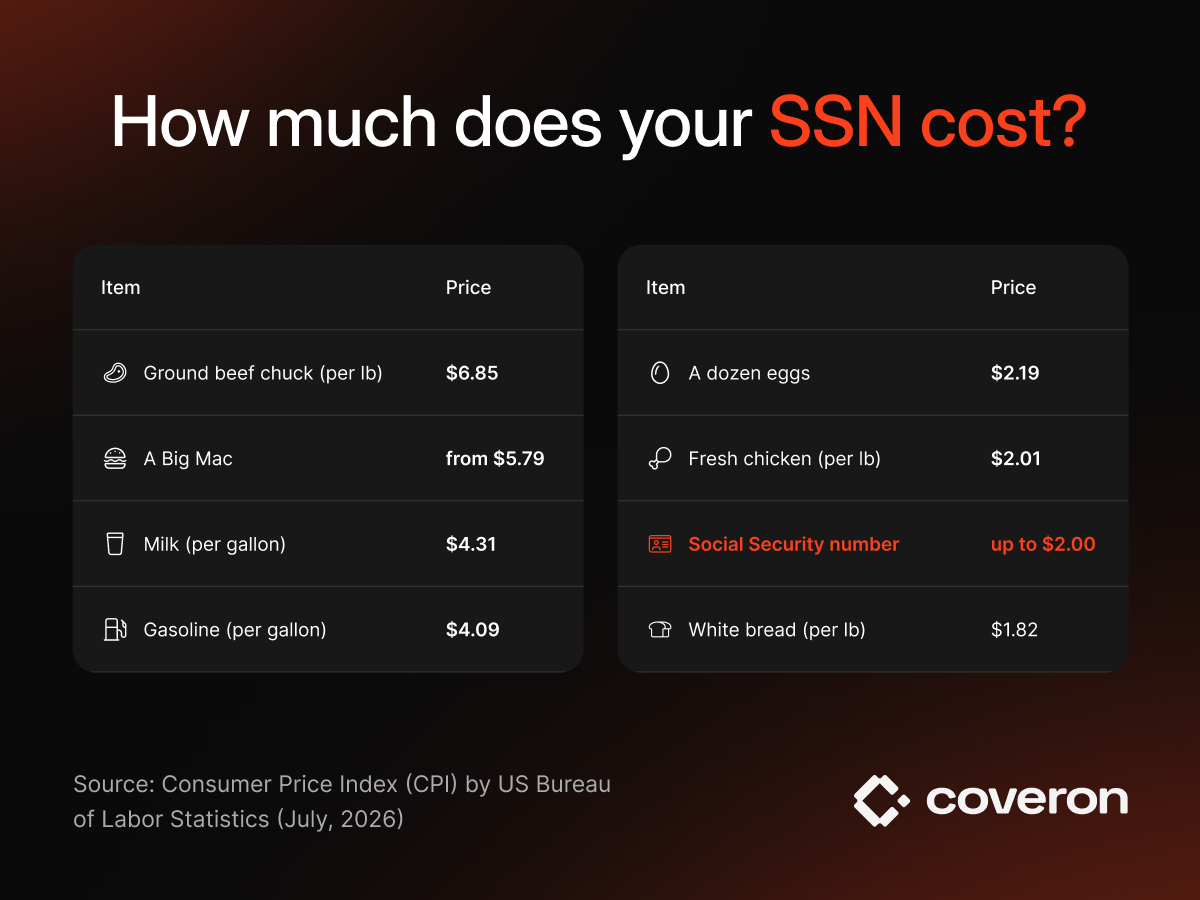
Coveron, the scam and identity theft protection service, carried out research into the dark web’s forums and marketplaces (June 2024-June 2026) and found 5,885 active posts selling data packages with SSNs.
Another thing the researchers discovered was that statistically, roughly 1 in 4 large U.S. company data breaches expose Social Security numbers. That means millions of Americans’ SSNs are already for sale online — and by the time most people find out, criminals have had their number for weeks.
With a stolen SSN, scammers can open credit card accounts, take out loans, file fake tax returns, and even steal government benefits — all in your name. That’s the math scammers count on: Spend $2, steal thousands.
Seniors are the primary target — especially during the holiday season
The holiday shopping season is ramping up, and so is fraud aimed at seniors. In 2025, Americans aged 60 and older lost $7.748 billion to internet crime — a 59% jump from the year before. That’s across 201,266 reported victims, with an average loss of $38,500 per person — nearly a full year of Social Security benefits.
Why seniors? Because they tend to have more savings, better credit, and home equity built up over decades. That makes every successful scam more profitable.
So, how are the seniors targeted? Scammers are now using AI to:
- Clone voices. They call pretending to be a grandchild in trouble, using a voice that sounds exactly like them.
- Fake bank calls. A “representative” warns that an account is in danger and pressures for PINs or security codes.
- Tech support scams. A pop-up claims the computer is infected, so “someone from IT” reaches out to “help” and installs malware on the device instead.
- Refund scams. A fake IRS, Social Security, or Medicare notice says the person is owed money, then asks for bank details or redirects to a fake website to “process” the payment.
These aren’t one-off cons — Coveron’s research into the criminal deepfake market found over 3,000 dark web posts selling bank fraud scripts designed specifically to target older Americans, plus more than 1,000 posts for tech support scams. Scammers buy these ready-made scripts and reuse them on target after target, reducing the costs and effort even further.
What actually helps — and how to get your money back
Most advice stops at “be careful.” But careful people still get scammed, and once the money is gone, getting it back is nearly impossible. Plus, the legal trouble, paperwork, and months of stress that follow can be overwhelming. But Coveron can help you in two important ways.
First, it watches out for trouble before it starts. Coveron monitors the dark web for your SSN and other personal information. If it finds your details, you get an alert with clear steps on what to do next.
Second and most important, if a scam gets through, Coveron helps you recover with:
- Up to $100K in online fraud insurance — you can get your money back if a scammer succeeds.
- Up to $2 million in identity theft recovery coverage — this covers legal fees, document replacement, paperwork filing, and even mental health counseling to help you through the stress.
- 24/7 expert recovery support — you don’t navigate freezing accounts, disputing charges, and reclaiming your identity alone. Dedicated specialists personally walk you through every step and, most importantly, do the legwork for you.
Scams are getting cheaper to run and harder to spot. Whether you’re protecting yourself or someone you care about, you deserve real support.
Learn how Coveron protects your family at coveron.com.
Sources
Federal Bureau of Investigation. (2026). “Internet Crime Complaint Center (IC3) 2025 annual report.” https://www.ic3.gov/AnnualReport/Reports/2025_IC3Report.pdf
Consumer Financial Protection Bureau. (2022, September). “Recovering from elder financial exploitation: A framework for policy and research.” https://files.consumerfinance.gov/f/documents/cfpb_recovering-from-elder-financial-exploitation_report_09-2022.pdf
This post is an advertorial piece contributed by a Patch Community Partner, a local brand partner. To learn more, click here.