Schools
Cal State LA geology professor receives national award
The National Ground Water Association presents award to Barry Hibbs in recognition of his outstanding contributions made to the association.
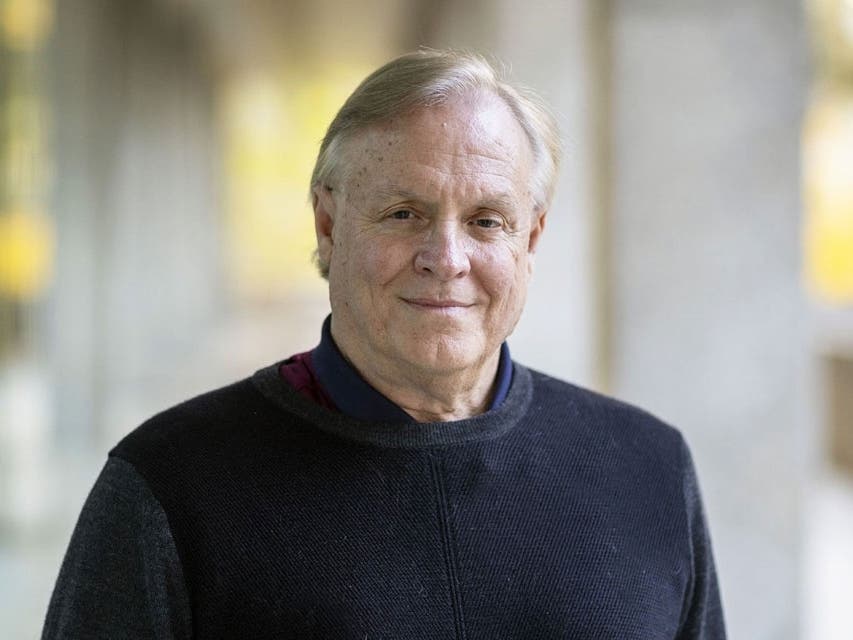
Cal State LA Professor Barry Hibbs has been selected as a recipient of the National Ground Water Association’s Keith E. Anderson Award for 2023.
The National Ground Water Association will present the award to Hibbs in recognition of his outstanding contributions made to the association. The association is a leader in advocating for the responsible development, management, and use of water.
The awards presentation will take place today, Dec. 6, during the association’s 2023 Groundwater Week celebration held in Las Vegas, Nevada.
Find out what's happening in Los Angelesfor free with the latest updates from Patch.
“It is a tremendous honor receiving this award. The National Ground Water Association is the premier organization serving the groundwater profession, and has been in existence since 1948,” said Hibbs, who is a professor in the Department of Geography, Geology, and Environment, which is housed in the College of Natural and Social Sciences at Cal State LA.
An expert in the field of hydrogeology, Hibbs has conducted cutting-edge research on groundwater and environmental issues. He has organized and chaired symposiums, as well as presented talks at the association’s annual meetings. He resides in the city of Thousand Oaks.
Find out what's happening in Los Angelesfor free with the latest updates from Patch.
The association’s awards, given annually, represent the highest quality in standards and business practices. Award recipients are recognized for outstanding contributions through service, innovation, research, safety, and outstanding projects of scientific and technological importance affecting the growth and well-being of the groundwater industry.
Most recently, Hibbs was instrumental in garnering a $674,000 grant from the U.S. Department of Energy (DOE) to provide career pathways at Cal State LA for diverse students in fields of watershed analysis. The goal is to train future generations of scientists to tackle urban watershed problems and impacts of disturbances, such as drought and urban change on associated river basins and people.
The three-year grant project at Cal State LA is a partnership with the Lawrence Berkeley National Laboratory and the Stanford Linear Accelerator Center. Students will have the opportunity to work collaboratively on research projects in the Los Angeles River watershed or in the East River watershed of the Upper Colorado River Basin.
The award is part of $70 million in grants from the DOE’s Reaching a New Energy Sciences Workforce initiative that aims to support historically underrepresented groups in science, technology, engineering, and mathematics and to diversify leadership in the physical sciences, including energy and climate.
Additionally, Hibbs is the lead on a team of Cal State LA faculty who received a $750,000 grant from the U.S. Department of Agriculture (USDA) to offer experiential research opportunities for diverse undergraduate students to study urban agriculture. The award is part of $15 million in grants from the USDA National Institute of Food and Agriculture’s Agriculture and Food Research initiative.
The grant supports a nine-week summer research program for nine underrepresented students each year for five years to investigate urban natural resources and urban agricultural problems. Students will be able to visit urban farms, urban forest areas, U.S. national forests, wetlands, and water infrastructure firsthand and learn about operations of water delivery systems in agriculture and environmental science education.
The goal of the project is to improve understanding of climate and anthropogenic-forced change in urban environments and systems that require additional study and long-term monitoring and to expand diversity representation in urban natural resources decision making, urban agriculture, and urban food production.