Community Corner
California Is Tracking The Journey Of A Newly Collared Gray Wolf
Earlier this month, a gray wolf entered Northern California, following in the footsteps of another wolf that traversed 500 miles in CA.


CALIFORNIA — In March, one plucky gray wolf made the farthest journey south across the Golden State of any tracked wolf in more than a century. Earlier this month, another young gray wolf entered Northern California on his predecessor's heels.
The newly tracked male gray wolf, OR-103, was tagged with a GPS collar in Deschutes County, Ore. and entered northeastern Siskiyou County on May 4, according to the California Department of Fish and Wildlife. Officials estimate that he was born in 2019 or 2020.
There is very little known about OR-103, but wildlife authorities suspect he was in the process of branching out from his pack in search of a mate or new territory when he left Oregon, Roblyn Brown, wolf program coordinator for the Oregon Department of Fish and Wildlife, told the Los Angeles Times.
Find out what's happening in Los Angelesfor free with the latest updates from Patch.
“...there will be more wolves dispersing to California," Brown told the Times. "It just shows that there’s a healthy population growth of the wolves."
Oregon's wolf population is growing, with at least 173 wolves in the state by the end of 2020 — a 9.5 percent increase from 2019, the Times reported.
Find out what's happening in Los Angelesfor free with the latest updates from Patch.
OR-103's story is similar to OR-93's. The yearling gray wolf was first collared in June 2020 by the U.S. Fish and Wildlife Service and Confederated Tribes of Warm Springs in Oregon. The young male wolf left his pack along the White River, southeast of Mount Hood.
"Like many young wolves, he subsequently left his pack in search of a new territory and/or a mate," officials from the California Department of Fish and Wildlife said in a statement.
Shortly after, he embarked on a 500-mile trek from Oregon to central Fresno County — each step chronicled by his GPS collar.
OR-93 traveled from Mono County, through parts of Tuolumne, Mariposa, Merced and Madera counties, the state agency said.
By late March, he had entered Fresno County, then moved to San Benito County. Experts believe he crossed two busy highways — Highway 99 and Interstate 5. He was tracked in Monterey on April 1.
The last collar reading showed him traveling through San Luis Obispo County on April 6, according to the state. After this last reading, his collar stopped transmitting a signal, according to the Times. It isn't known exactly why his collar went dark.
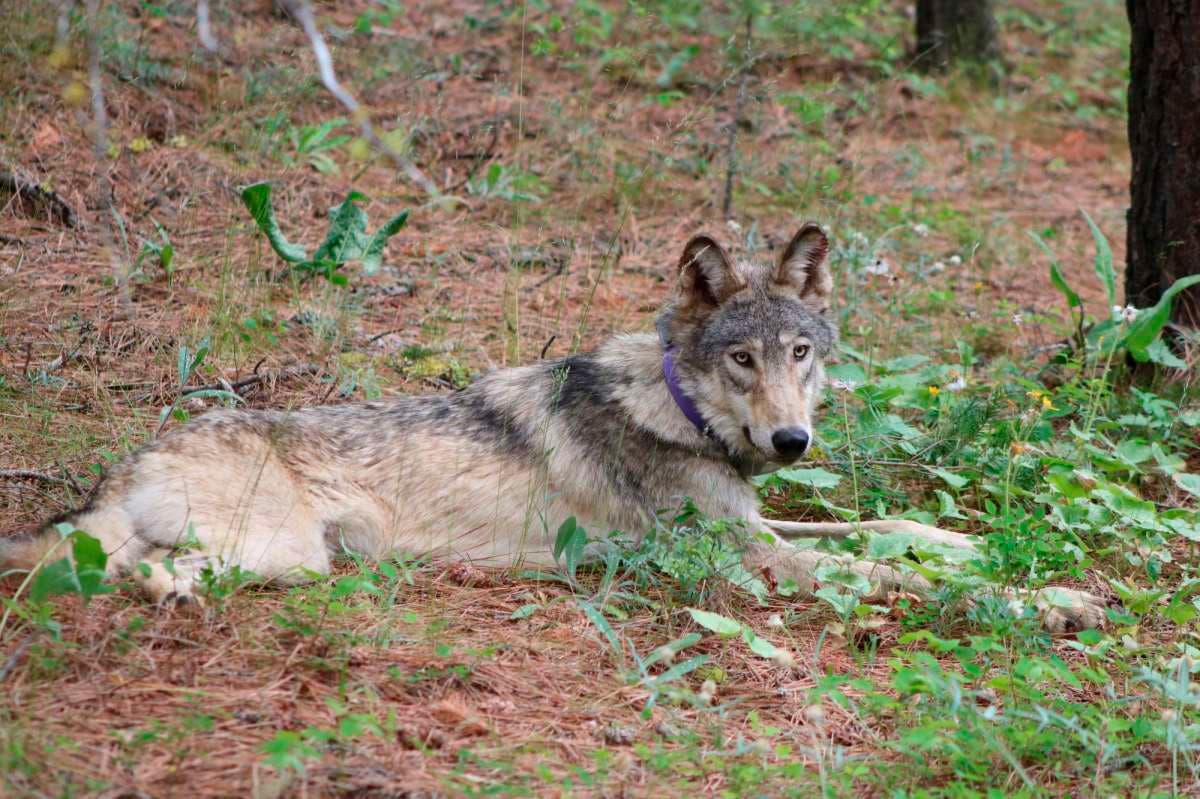
His journey marked the farthest south that any collared wolf has been tracked and a signal that gray wolves may be returning to their native lands in California. Gray wolves are rare in the Golden State these days and they haven't been around much since the 1920s.
His appearance in San Luis Obispo County also marked the first time in a century that a gray wolf traipsed around California's Central Coast.
Only about 12 gray wolves are roaming in California now of their own accord. Since, 2014, gray wolves have been federally listed as endangered, but effective Jan. 1, these wolves were taken off that list by the Trump administration.
In California, gray wolves are still listed as endangered.
"It is unlawful to harass, harm, pursue, hunt, shoot, wound, kill, trap or capture gray wolves," according to the state.
It remains unclear just why wolves decide to leave California, according to the state agency.
"There is no definitive answer," according to the department. "Studies demonstrate that human activity can have a negative impact on wolf populations, particularly where there are roads and agricultural activity."
The agency added: "Wolves were likely killed to control predation on other animals. Other factors, including hunting, may have contributed to their extirpation from California."
Anyone who believes they have seen a wolf in California can report it to the state Department of Fish and Wildlife here.
"Gray wolves pose very little safety risk to humans," the department said.
The state said it will continue to track the whereabouts of these wolves.
Get more local news delivered straight to your inbox. Sign up for free Patch newsletters and alerts.