Arts & Entertainment
'Clayface' Review: A Body-Horror Origin Story More Invested In The Monster Than The Man
James Watkins reimagines a Batman villain through body horror, crafting a bold exploration of identity, self-worth and self-destruction.



LOS ANGELES, CA — As “Clayface” twists flesh into increasingly grotesque forms, a rising actor's pursuit of stardom curdles into a nightmare of disfigurement, obsession and self-destruction, where vengeance ultimately threatens to consume the very identity he seeks to preserve.
Directed by James Watkins from a screenplay by Mike Flanagan and Hossein Amini, the third theatrical installment in James Gunn and Peter Safran's new DC Universe marks one of the franchise's most unusual departures to date. Rather than approaching Clayface as a conventional villain origin story, Watkins reimagines one of Batman's most malleable adversaries through the lens of body horror, using physical transformation to explore questions of self-image, ambition and identity. It is a premise rich with thematic possibility, and one that gives “Clayface” much of its distinctive character. Yet while the film repeatedly returns to those concerns, its exploration of them proves less fully realized than its increasingly elaborate horrors.
Matt Hagen (Tom Rhys Harries) is on the verge of superstardom when his face is brutally mutilated by Gotham crime boss Markos Szabo (David Dencik). Faced with the collapse of the identity and ambition he has built around his appearance, Matt undergoes an experimental procedure developed by scientist Caitlyn Corr (Naomi Ackie). The treatment initially appears miraculous, restoring both his looks and his prospects. Its effects soon become unstable, however, transforming his body into a malleable substance capable of assuming different forms. What begins as an attempt to reclaim his future gradually evolves into a fixation on those he believes abandoned him when he needed them most.
Find out what's happening in Los Angelesfor free with the latest updates from Patch.

Drawing clear inspiration from David Cronenberg's “The Fly” and the tragic mutations of “Darkman,” “Clayface” treats physical deterioration as both horror spectacle and psychological metaphor. Watkins remains committed to those influences, linking Matt's transformation to broader concerns involving celebrity, self-worth and public image. Yet where those films use bodily change to explore the erosion of identity itself, “Clayface” often arrives at the inverse conclusion, rendering Matt's transformation in vivid detail while leaving the man beneath it comparatively opaque.
Harries anchors the film with a performance that lends emotional credibility to even its most extreme moments. He traces Matt's progression from a man buoyed by ambition and self-belief to one increasingly consumed by resentment and self-destruction, threading a recognizable human pulse through the film's grotesque terrain. What emerges is a portrait of a man struggling to preserve a sense of self amid physical and psychological disintegration, even when the screenplay remains less certain about how to articulate that loss.
Find out what's happening in Los Angelesfor free with the latest updates from Patch.

That imbalance becomes one of the film's central limitations. “Clayface” repeatedly returns to the erosion of identity, yet never fully establishes the self being eroded. The man beneath the ambitions, insecurities and fears remains elusive, and the film's exploration of self-destruction often proves more intellectually engaging than emotionally affecting.
The film also gestures toward compelling ideas involving vanity, public perception and the fragile relationship between appearance and self-worth. Yet those concerns remain somewhat underdeveloped. Caitlyn's growing concern over Matt's increasingly disturbing behavior hints at a richer emotional dynamic and a more nuanced examination of Matt's unraveling than the film ultimately provides.
Watkins' visual sensibilities find their fullest expression in the grotesque possibilities of Clayface's powers. Practical effects, makeup work and bodily distortions are employed with an enthusiasm that recalls the tactile horrors of earlier decades. Flesh stretches, faces collapse and bodies deform in increasingly inventive ways. One particularly queasy sequence finds Matt attempting emergency self-surgery aboard a turbulent flight, while a nightclub confrontation becomes a showcase for the film's fascination with unstable forms and fractured identities.
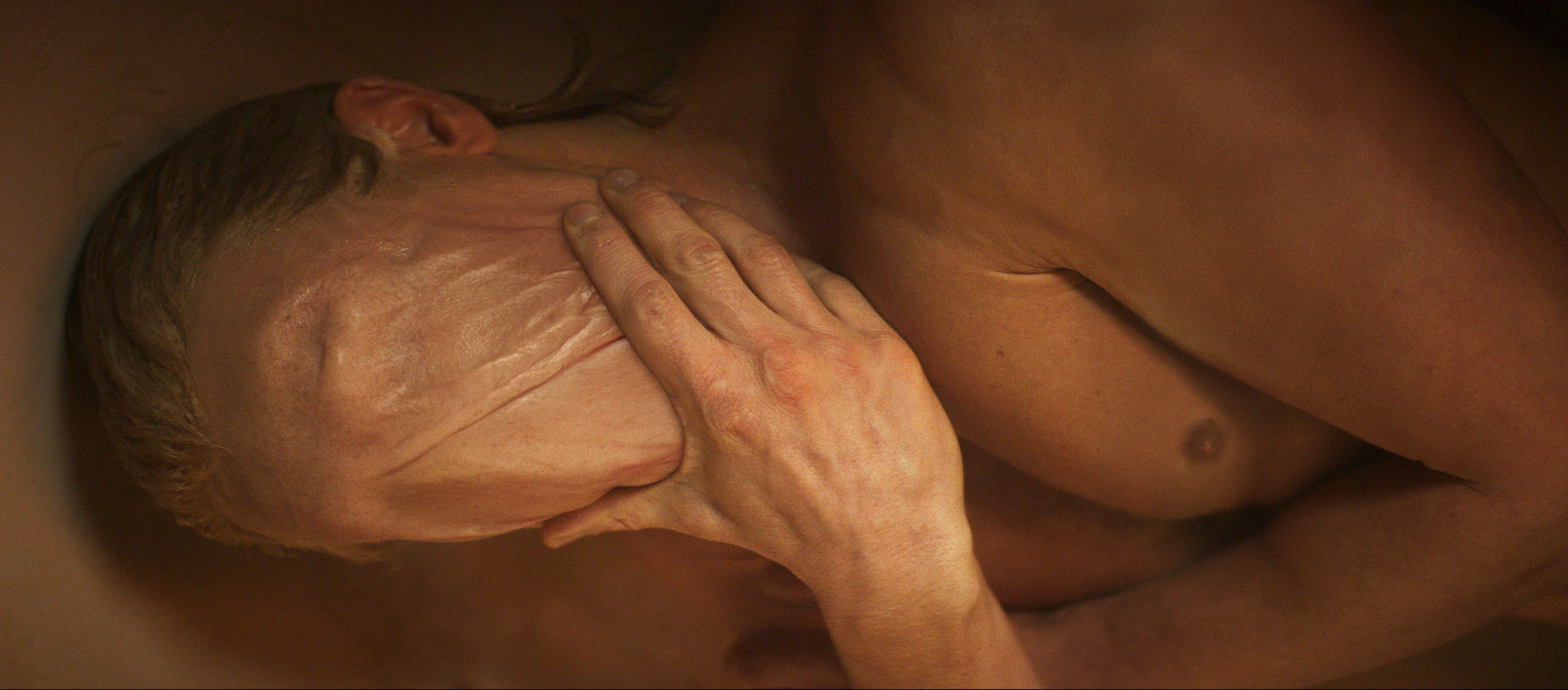
Watkins and cinematographer Rob Hardy render Gotham with a grimy, retro-inflected sensibility that emphasizes corruption, decay and perpetual reinvention. The city functions as more than a backdrop, becoming an environment that mirrors the uncertainty and instability at the heart of Matt's unraveling.
In the end, “Clayface” returns repeatedly to questions of identity, self-worth and transformation, using Matt Hagen's descent to explore the fragile boundary between appearance and selfhood. In Watkins' hands, physical transformation becomes a vehicle for examining the anxieties that accompany ambition, insecurity and the desire for reinvention. What emerges is an intriguing exploration of bodily metamorphosis that proves more persuasive in depicting the horror of losing control of one's body than the tragedy of losing sight of oneself.
The monster emerges in startling clarity. The man never does.
Get more local news delivered straight to your inbox. Sign up for free Patch newsletters and alerts.