Health & Fitness
Common Cold Returns With A Vengeance In CA. Here's Why
COVID-19 or the common cold? If you're sniffling through the summer, you may have caught one of the many pathogens festering in California.


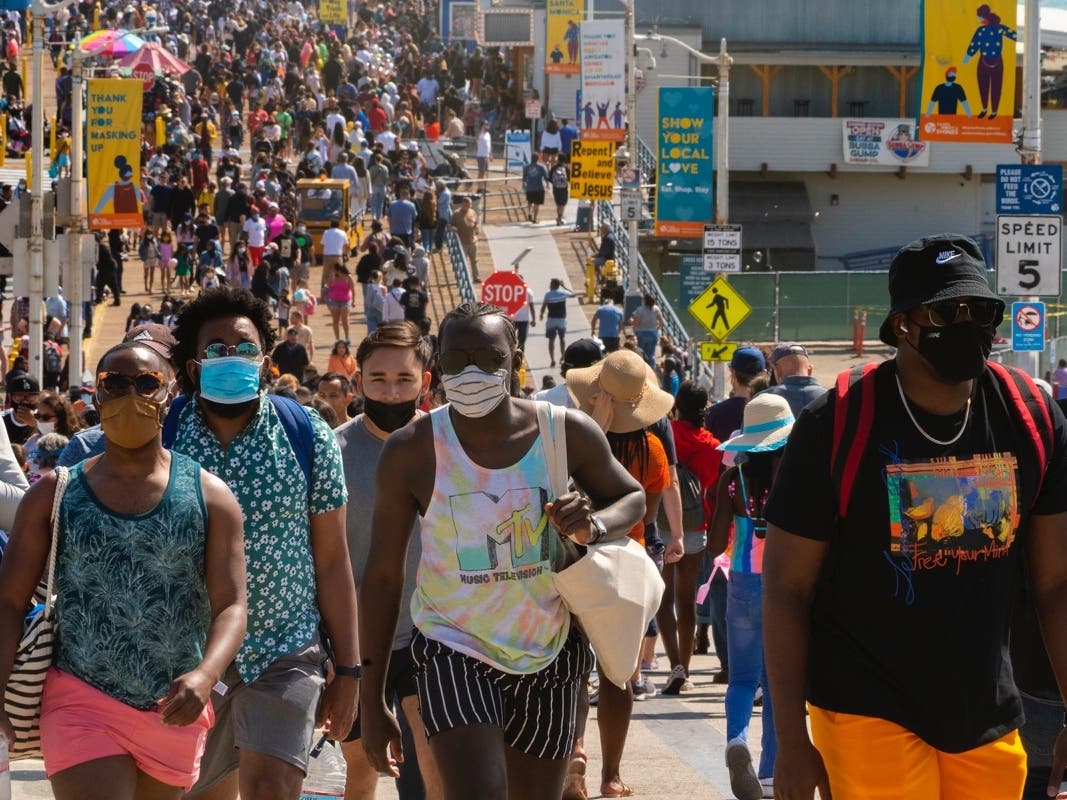
CALIFORNIA — Has your summer of reuniting with friends and family turned into a season of sniffles? If so, you're not alone. Many Californians returned to their social lives in June, and so did a whole raft of upper respiratory viruses, experts said.
Residents all over California, where vaccination rates are high, have been faced in the last several weeks with something most haven't had to deal with since coronavirus restrictions came down nearly a year and a half ago: the unrelenting common cold, along with other viruses.
The state this summer is seeing a whole buffet of viruses that normally circulate during the winter — and our immune systems may not be used to fighting them anymore, John Swartzberg, a professor of vaccinology and infectious disease at the University of California, Berkeley, told Patch.
Find out what's happening in Los Angelesfor free with the latest updates from Patch.
"We're seeing a ton of this right now," he said. "We actually have some studies showing that there are a variety of upper respiratory viruses and a couple of bacteria that have been circulating really widely."
The pesky illnesses likely returned just as people began getting vaccinated against the coronavirus. Many of those people have re-entered society and ditched masks, social distancing and constant hand-washing along the way.
Find out what's happening in Los Angelesfor free with the latest updates from Patch.
The nation started seeing a rise in respiratory illnesses other than COVID-19 around the middle of May, when the Centers for Disease Control and Prevention started loosening coronavirus guidelines, Swartzberg said. Such illnesses began circulating in California around June 15, when the state reopened.
"We're seeing a lot of upper respiratory viruses and some that can cause lower respiratory stuff as well as cough, but they're not really severe," he said. "We're not seeing much influenza because it's not influenza season."
It is unusual to see such pathogens during the summer, Swartzberg said. They've returned with a vengeance likely because our immune systems simply aren't as robust as they once were, and much of California may have lost immunity to common illnesses that otherwise circulated regularly.
"The reason why is because of the lockdown," he said. "People weren't exposed to anything. So you've got a very susceptible population, and the viruses are still around. So COVID has changed the epidemiology, at least transiently, of these other viruses and bacteria."
Non-COVID-19 viruses and infections, unlike the coronavirus we've grown so used to warding off, tend to be a bit stickier on surfaces. So it's more important than ever to keep up with hand-washing and sanitizing objects. Why? The viruses and bacterial infections have a coat on them that protects them from the environment, Swartzberg said.
"Ironically, washing your hands doesn't appear to be that important with COVID, but it is really important with many of these other organisms," he said. "We're seeing a lot of rhinoviruses, RSV, and then there are a couple of bacteria that can survive well on inanimate objects."
The two most common viruses detected in California are rhinovirus, an infection that causes the common cold, and respiratory syncytial virus, or RSV, another common cold-like virus, Swartzberg said. Two respiratory bacterial infections — chlamydia pneumoniae (not to be confused with the sexually transmitted infection with a similar name) and mycoplasma pneumoniae — have also been spreading around the state, he added.
"So washing hands becomes critical to prevent those, whereas it's not so critical with SARS-CoV-2 [the virus that causes COVID-19] because all the coronaviruses have that lipid coat that doesn't allow it to survive well in the environment," he said.
It's hard to know just how widespread these respiratory ailments are, since testing is extremely costly, Swartzberg said.
"It's really expensive to test for five or six or seven or eight other pathogens at the same time," he said. "But it may become much more important of a tool as the winter comes on in influenza season, because it's going to be really important at least to differentiate between influenza and SARS-CoV-2."
The good news is that there's no reason to panic, as the illnesses are often mild, albeit annoying. Those who become ill should get a coronavirus test and maintain a safe distance from others, he said. It's still possible for vaccinated people to become infected with even a mild case of COVID-19, although it is rare.
The new pathogens entered the mix just as the highly transmissible delta coronavirus variant became the dominant mutation in California. A new surge of infections has primarily been detected in those who are unvaccinated, and the delta variant may be driving the latest spike in cases.
"Generally speaking, people should assume it's COVID until proven otherwise," Swartzberg said.
About 3,200 breakthrough coronavirus cases in fully vaccinated people have been reported in California as of Monday, ABC7 reported. That is up from at least 3,084 breakthrough cases between Jan. 1 and April 28, officials from the California Department of Public Health told Patch.
"Given no vaccine is 100% effective at preventing COVID-19, we expect to find more post-vaccination cases as we continue to look for them and as additional data are received," a department spokesperson said in an email in May.
Post-vaccination infections are officially recorded if a person tests positive for the coronavirus two weeks after receiving their final dose of Pfizer or Moderna vaccines or after getting the single-shot Johnson & Johnson vaccine.
"Also, as more time passes and as more people are fully vaccinated, it is likely that additional post-vaccination cases will occur," officials said. "The number of post-vaccination cases remains small."
Both Pfizer and Moderna vaccines were found to be around 90 percent effective at preventing mild to moderate cases of coronavirus. Pfizer was found to be 100 percent effective in preventing severe disease or death from coronavirus variants, according to Yale Medicine. Moderna was found to be around 94.1 percent effective at preventing infection in those who have never had the coronavirus.
Johnson & Johnson was found to be 72 percent effective overall, with 86 percent efficacy against severe disease.
The bottom line is this: Those suffering from the summer sniffles shouldn't assume it's the common cold and should get tested for the coronavirus.
Get more local news delivered straight to your inbox. Sign up for free Patch newsletters and alerts.