Schools
Data Show Magnolia Public Schools is Making Significant Strides
Magnolia Public School officials say the growth speaks to the program's effectiveness toward closing the achievement gap.

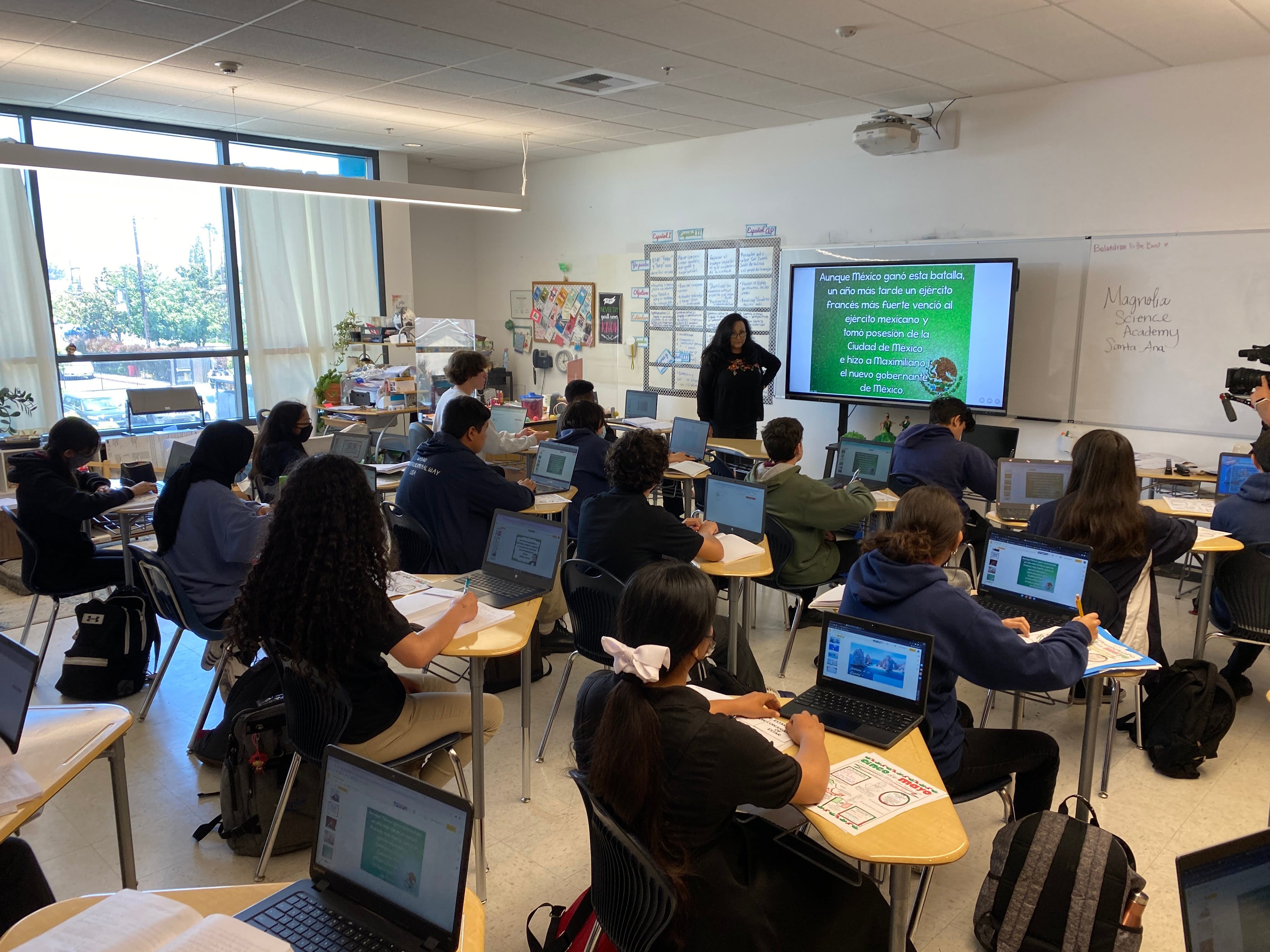
The California Department of Education recently released California Assessment of Student Performance and Progress (CAASPP) student data for 2022-23 that show Magnolia Public Schools (MPS), a network of ten tuition-free high-performing college preparatory charter public schools in Southern California, is making significant strides toward closing the achievement gap for underserved student populations, including English Language Learners, newcomers, and students on the federal Free and Reduced Lunch program. CAASPP is a comprehensive end-of-year assessment for English language arts/literacy (ELA) and mathematics aligned with California’s Common Core State Standards (CCSS) that measures proficiency in college and career readiness. MPS administrators say the data helps them measure their program’s effectiveness toward closing achievement gaps.
According to CAASPP data, overall, schools improved by 0.63% in English Language Arts (ELA), bringing MPS schools closer to prepandemic growth levels with almost all network schools outperforming the Los Angeles Unified School District (LAUSD) (-0.53%), and the Los Angeles County Office of Education (LACOE) (-0.02%). Schools, like Magnolia Science Academy-6, serving central and west Los Angeles, showed a whopping 8.45% jump in ELA scores, followed by Magnolia Science Academy-4 in Venice, which improved by 6.94%, and Magnolia Science Academy-2 in Van Nuys demonstrating a 6.85% increase.
MPS school officials say the approach is intentional. MPS implements promising effective practices and continuously assesses data to measure success. Academic and accountability teams observe and review data, while schools offer tutoring, intersessions, full-day Saturday school, intervention, enrichment programs, small class sizes, and high-quality effective teaching. The data help schools measure their program’s effectiveness toward closing achievement gaps and keeps them committed to providing a quality education. MPS officials find the growth is also due to the school’s holistic approach, centered on serving the whole child and connecting families with resources.
Find out what's happening in Los Angelesfor free with the latest updates from Patch.

“Our success is based on fundamental principles focused on teacher leadership development through professional learning and collaboration, coupled with intensive and extended support for students – extra instructional time and resources,” said Erdinc Acar, Chief Academic Officer and Deputy Superintendent, Magnolia Public Schools. “We take great pride in our persistence to enhance student outcomes and overcome challenges like teacher shortages, student social, mental and emotional well-being, and chronic absenteeism – all stemming from the aftermath of the pandemic. None deter us from our commitment to educational excellence.”
The network’s success extends to campuses in Santa Ana and San Diego, where schools also exceed local school district and state averages in ELA. Exceptionally, Magnolia Science Academy in Santa Ana showed a 7.02% increase in ELA compared to Santa Ana Unified’s 0.22%. In addition, MSA-Santa Ana jumped 6.10% in math. MPS analyzed data ranks the school among the top ten out of 73 schools in and around the Orange County area, and the top three among 30 elementary schools.
Find out what's happening in Los Angelesfor free with the latest updates from Patch.

“Our consistent annual growth and remarkable progress are a testament to the dedication and hard work of our teachers, administrators, staff, students, and families,” said Dr. María Rowel principal at Magnolia Public Schools in Santa Ana. “We take immense pride in this outstanding achievement, which reflects our collective commitment to excellence.”
Overall, MPS math scores improved by 2.77% between 2022-23, nearing prepandemic levels, with MSA-San Diego showing a math proficiency of 54.66% (4.78% growth), followed by MSA-6 at 35.87% (3.31% growth) – surpassing local district, county, and state average math scores. As a STEAM network of schools, MPS also administers the California Science Test (CAST) to students in Grades 5, 8, 11, and students in 12 grade who weren’t assessed in the 11th grade. CAST assessments are based on the state’s Next Generation Science Standards (NGSS). According to CAST data, MPS science scores improved by 2.17% from 2022 to 2023, with MSA-San Diego, a top-performing middle school, surpassing state average scores at 52.51% compared to San Diego Unified’s 38.15%.
Summative English Language Proficiency Assessments for California (Summative ELPAC) for 2022-23 show that MPS students who are emerging multilingual learners are achieving proficiency toward reclassification by consistently reaching a Level 4 (the highest level, meaning “Well Developed”). In fact, over the past three years eight of Magnolia’s 10 schools exceeded the percentage of students earning a Level 4, similarly to prepandemic levels.
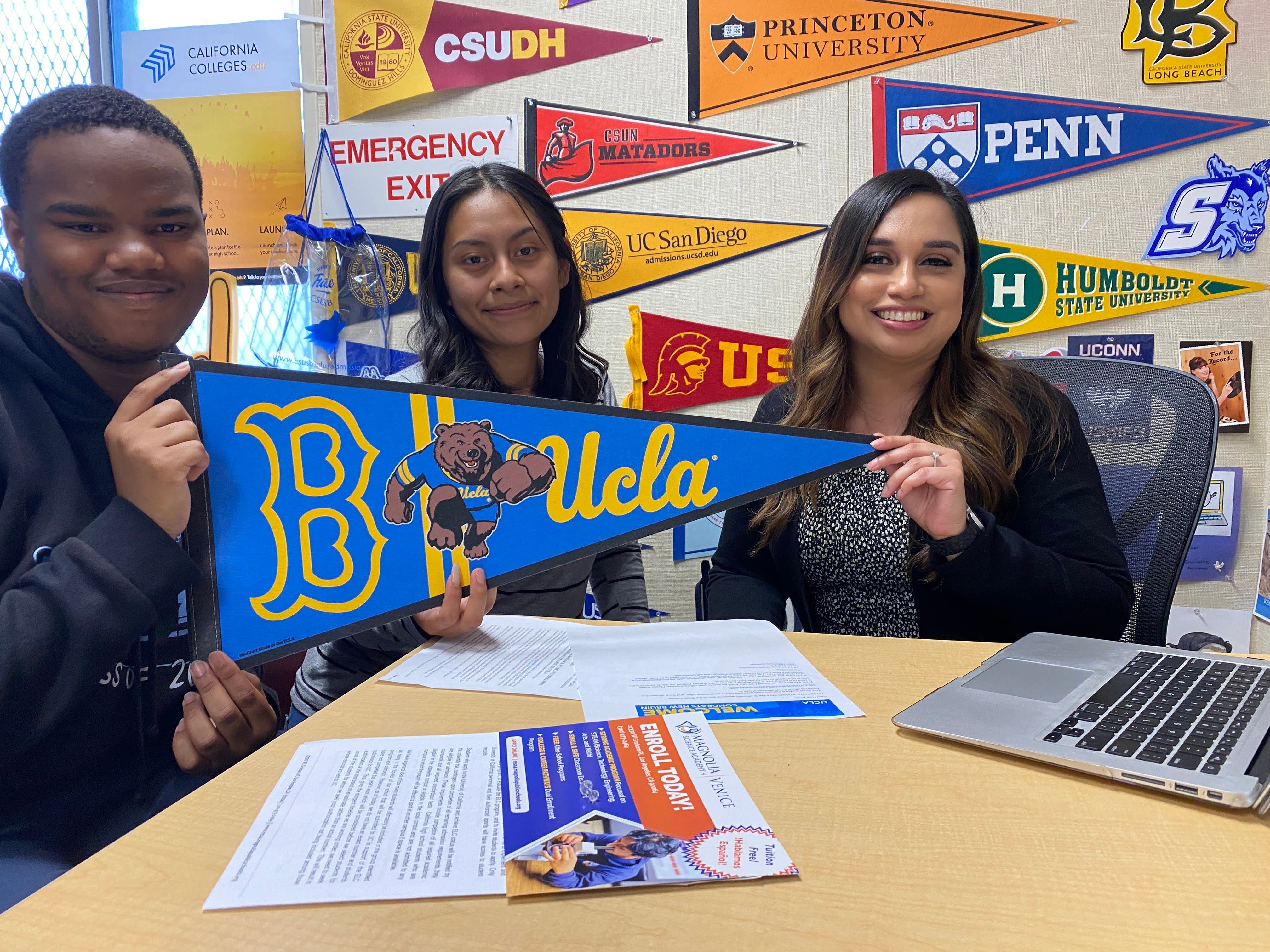
In the last two years, MPS added its own tracking system to connect with and support alumni. MPS wants to know student growth in college. Alumni Success Coaches do alumni check-ins for academics, as well as socio-emotional and mental wellbeing. MPS graduates are 40% more likely to enroll in college, 54% more likely to earn college degrees, and 22% (54% if female) more likely to graduate from a STEM field than students from similar schools across the country. Together, dedicated staff are building a pipeline to STEAM fields, and helping students achieve higher education goals.
For more information visit www.magnoliapublicschools.org, and follow us on Facebook @MagnoliaPublicSchools, Twitter @MagnoliaSchools, and Instagram @magnoliapublicschools.