Arts & Entertainment
'Disclosure Day' Review: Steven Spielberg Returns To UFO Mystery With A Humanist Sci‑Fi Thriller
Spielberg blends UFO lore, secrecy, and human emotion in a tense sci‑fi thriller led by Emily Blunt and Josh O'Connor.



LOS ANGELES, CA — “Disclosure Day” posits a world on the verge of awakening to the long‑buried evidence of extraterrestrial contact on Earth, where the boundary between fact and fiction blurs into an unsettling threshold. From that tension, Spielberg shapes a sci‑fi thriller rooted in shifting truths, guarded motives, and the emotional toll of confronting the great unknowns of the cosmos.
Coming nearly half a century after “Close Encounters of the Third Kind,” “Disclosure Day” plays like a late‑career echo from one of cinema’s most cosmically attuned storytellers, returning Spielberg to his stargazing question: Are we alone? In exploring it, the new film draws on the themes that have preoccupied him for decades — the shadowy machinery of secrecy (“The Post,” “Munich”), the fragile architecture of belief systems (“E.T.,” “A.I.”), and the raw, destabilizing fear of the unknown (“War of the Worlds”). Running beneath those anxieties is a humanist undercurrent — the sense that facing the unknown demands not just courage but a willingness to understand one another’s convictions and vulnerabilities.
What drives “Disclosure Day” is the way it draws from real close encounters with unidentified anomalous phenomena, or UAP — the Roswell crash, crop circle formations, and abduction testimonies. These events and claims shaped the culture’s imagination long before the current UAP zeitgeist — a reframing of what was once simply called UFO lore — pushed them back into the mainstream. Spielberg absorbs that lineage into a visual language attuned to a propulsive conspiracy thriller, one that hurtles toward a seismic finale — a point of no return where the truth can no longer be shunned.
Find out what's happening in Los Angelesfor free with the latest updates from Patch.
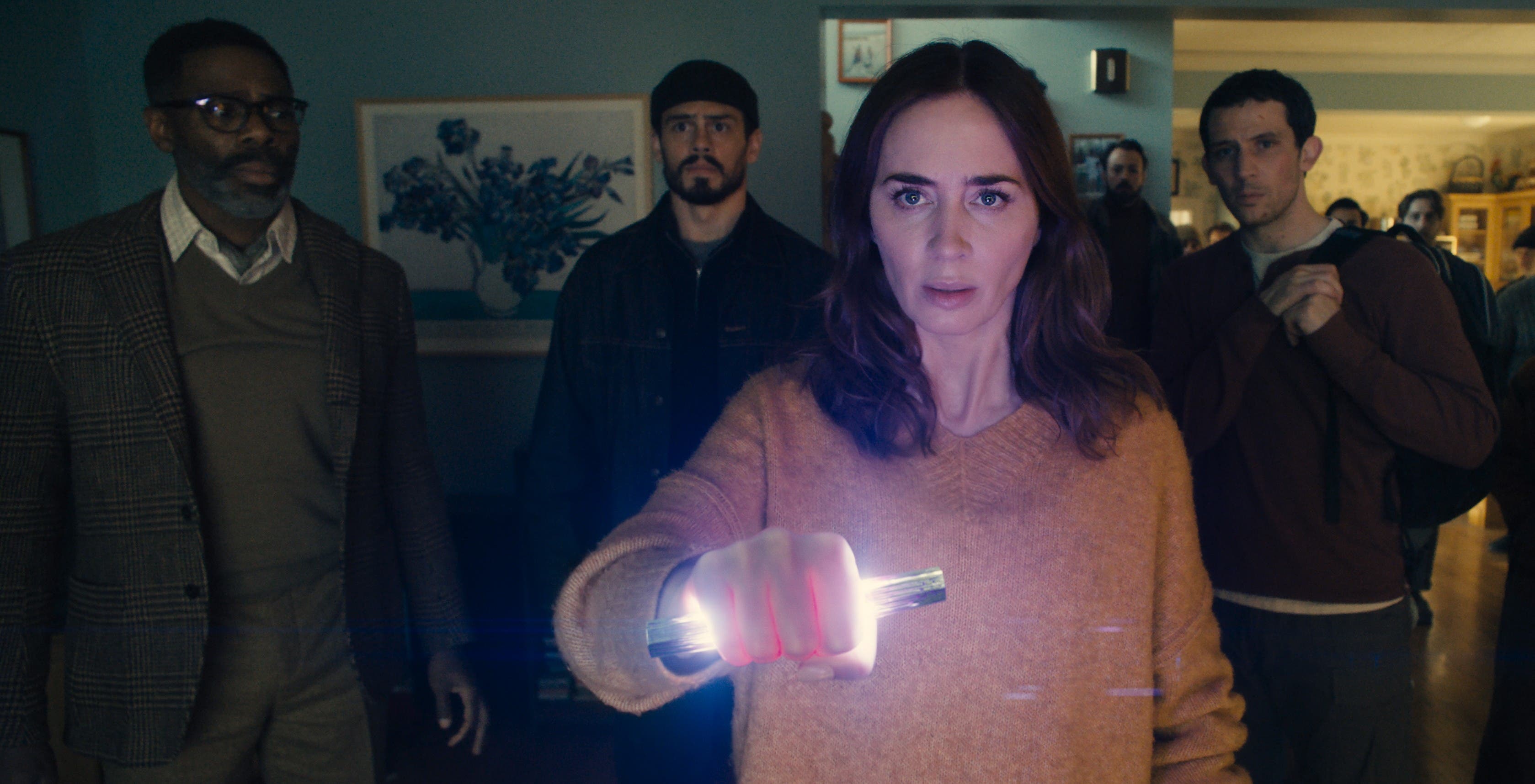
The movie opens in a thrilling chase, where Dr. Daniel Kellner (Josh O’Connor) — a cybersecurity whistleblower carrying long‑suppressed evidence of decades‑old alien encounters — is on the run from Noah Scanlon (Colin Firth), the autocratic head of WARDEX, the clandestine government arm tasked with containing the truth at any cost. Meanwhile, Hugo Wakefield (Colman Domingo), the charismatic leader of WARDEX defectors, is working with Daniel to bring the buried evidence into the light.
At the same time, meteorologist Margaret Fairchild (Emily Blunt) begins experiencing disorienting flashes tied to a history she doesn’t yet understand — moments of uncanny attunement that hint at a deeper, suppressed connection. Though strangers, Margaret and Daniel share fragments of the same buried past, their crises tightening toward “Disclosure Day,” the moment when the truth WARDEX has guarded for generations can no longer be contained.
Find out what's happening in Los Angelesfor free with the latest updates from Patch.
The main ensemble forms the film’s emotional spine, each one carrying a different charge that keeps the high‑concept story alive. Blunt delivers an Oscar-caliber performance built on precision and restraint, giving even her quietest moments an undercurrent of consequence. Her expressive eyes alone lend Margaret an internalized gravitas; the way she holds someone’s gaze feels as if the frame tightens around her — the world briefly stilled by a connection carrying warmth, understanding, and a flicker of hope. Later, when she slips into an alien language made of clicks and breaths, the moment plays in the same key — not as awe, but as a strange, wordless form of empathy that becomes the film’s emotional ballast, unfamiliar at first and then recognizably human.
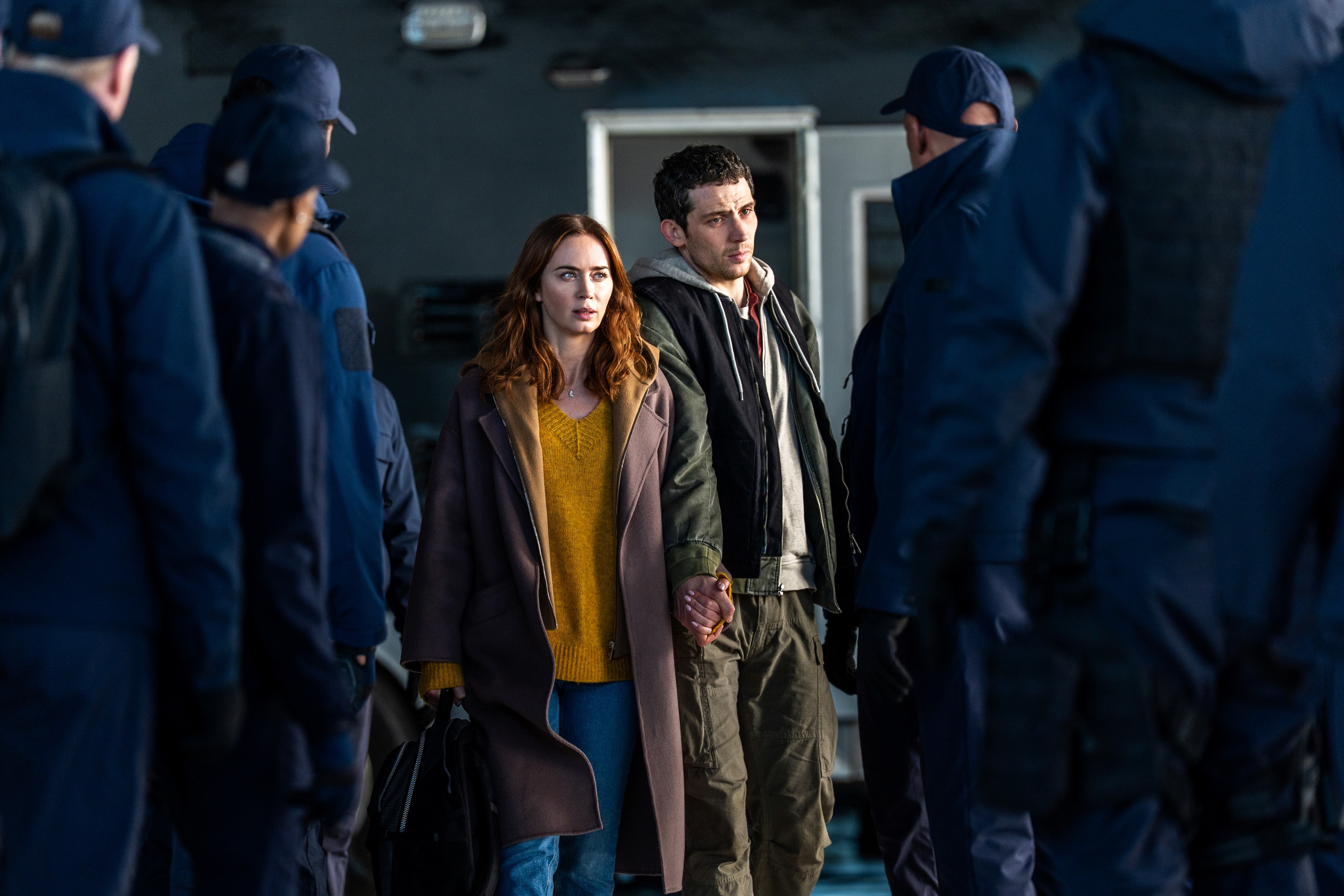
O’Connor plays Daniel as an unvarnished, reluctant hero — someone whose clarity comes not from bravado but from a simple refusal to let the truth stay buried. He becomes the film’s conscience, the human hinge between secrecy and revelation, between fear and understanding, and O’Connor threads that tension through a performance built on urgency and unease where his physicality shines.
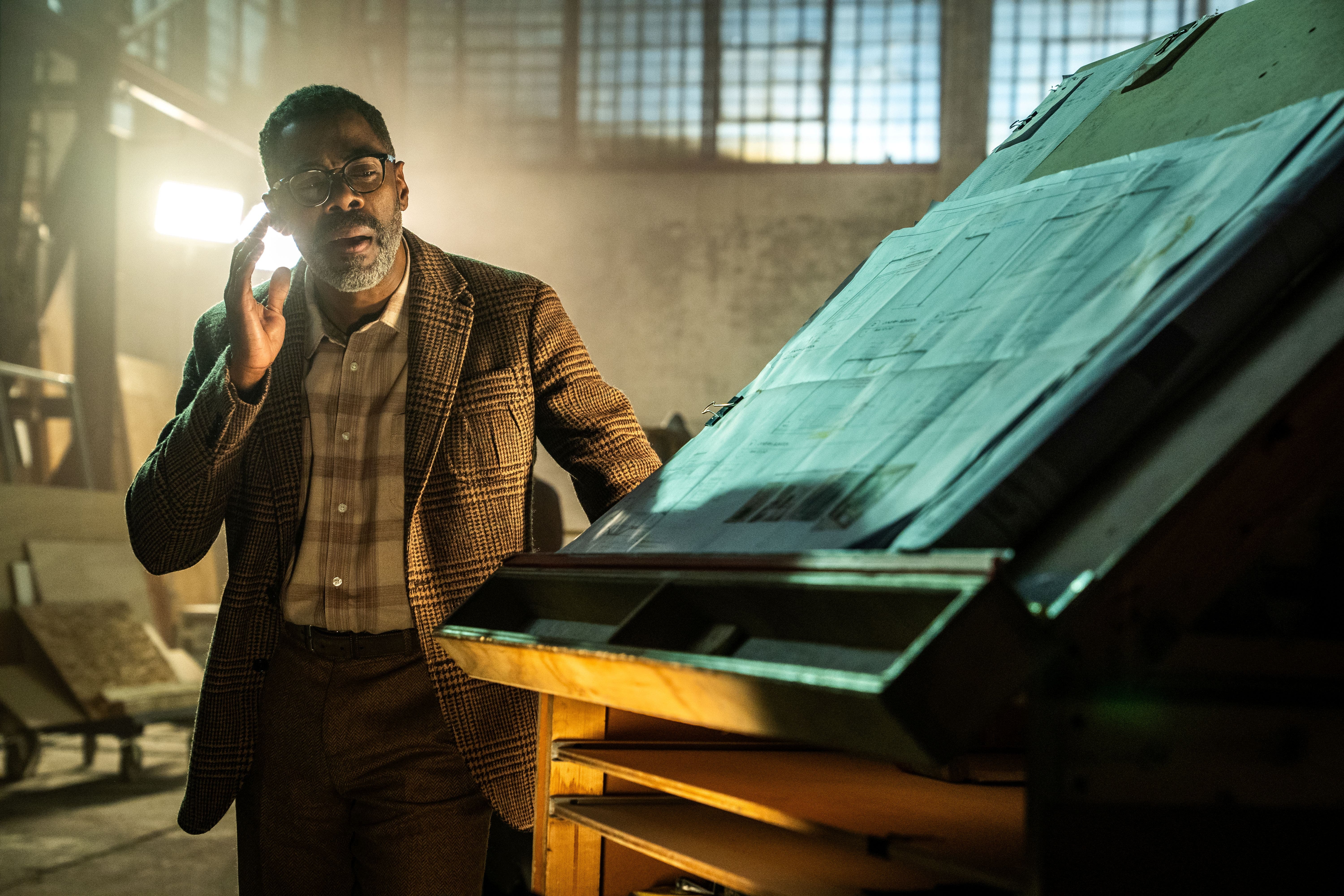
Domingo brings Hugo a manic precision — a charismatic paranoia that makes every warning feel quietly burdened and delightfully delusional. He becomes the film’s hope, the rare optimist in a world fraying at the seams, grounding the story with sincerity and conviction beneath the mania.
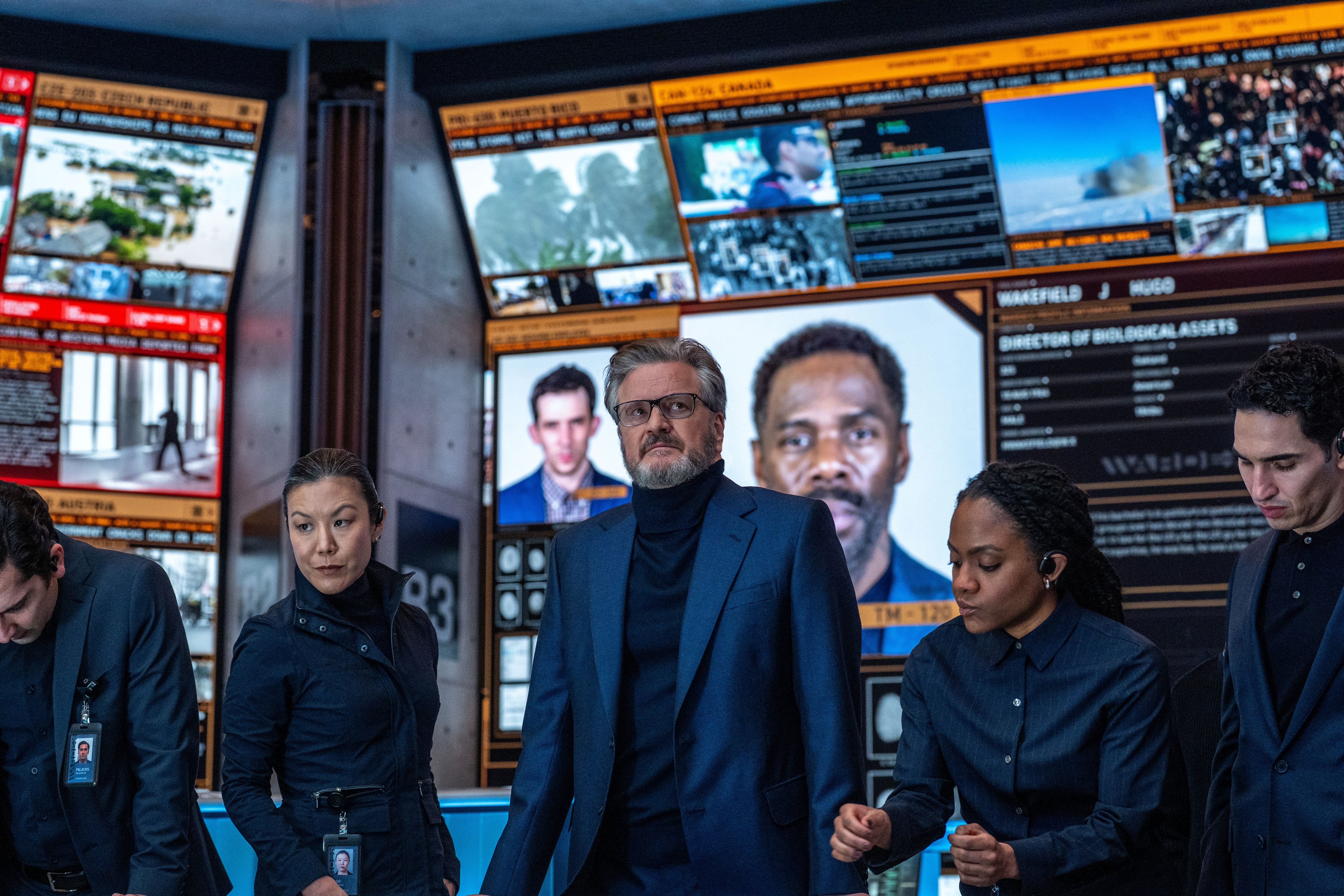
Firth, meanwhile, delivers the necessary counterpoint to the film’s cautious sanguineness. His Scanlon is ruthless — cold, doom‑and‑gloom, stoking fear — the embodiment of the belief that truth is too volatile for the world to survive.
With the ensemble grounding the film’s emotional stakes, Spielberg turns his attention to the larger canvas, propelling the story into its spectacular final movement. His direction carries the unmistakable imprint of a filmmaker returning to the obsessions that shaped him — the awe, the dread, the shimmering possibility of contact — now filtered through a more introspective lens. It’s a sci‑fi film with more heart than bravado — a far cry from the kinetic futurism of “Minority Report,” the cliff‑hanger swagger of “Indiana Jones,” or the awe‑struck spectacle of “Jurassic Park” — letting empathy reverberate across the film’s cosmic scale, binding the familiar to the unknown.
Spielberg’s collaboration with cinematographer Janusz Kamiński yields some of their most fluid, propulsive work in years. Shot almost entirely on 35mm film, “Disclosure Day” opens in the shadowed, tight‑framed realism of 1970s conspiracy thrillers before widening into a more heightened realism with the aid of drone cameras. Stylish as it is, the shift mirrors the film’s thematic trajectory, moving from paranoia and secrecy to openness and clarity. Meanwhile, John Williams’ score makes the immediacy hum with warm, melodic cues brimming with humanity.
If there’s a fault, it’s that the film’s emotional ambitions occasionally outpace its thematic articulation — creating a small but noticeable gap between what it reaches for and what it fully expresses. That’s most evident in its handling of faith and religion, where the invocations feel more rhetorical than truly explored.
Still, Spielberg’s command of momentum, imagery, and emotional timing remains impeccable, pulling the narrative back into focus and culminating in a climax that lands with a force only he can conjure. He’s not chasing nostalgia here but pressing further into the questions that have shaped his storytelling for decades.
“Disclosure Day” is not “Close Encounters” redux, nor is it trying to be. Rather, it’s Spielberg’s late‑career convergence of obsessions — secrecy, belief, fear, and the fragile humanist impulse to reach for one another even as the world tilts toward panic. In the end, the movie reveals itself as a meditation on empathy — not as consolation, but as the one human capacity capable of holding another’s convictions and realities, threading a human pulse through the cosmic expanse, the very thing Margaret channels each time she holds someone's gaze.
Get more local news delivered straight to your inbox. Sign up for free Patch newsletters and alerts.