Politics & Government
Drivers Could Pay To Bypass 405 Traffic: See The 3 Proposals For New Toll, Carpool Lanes
Metro is considering plans for new lanes on the 405 Freeway as part of an effort to ease traffic congestion.


LOS ANGELES, CA — Drivers on the notoriously congested stretch of the 405 Freeway through the Sepulveda Pass could eventually have the option of paying to bypass traffic under several proposals being considered by transportation officials.
Metro is studying four options for improving traffic along a 10-mile stretch of the freeway between the 10 and 101 freeways. Two would introduce toll lanes — similar to the ExpressLanes in operation on the 110 and 10 freeways — while another would expand the existing carpool lanes.
Metro said this week that it is preparing to release an environmental report comparing the proposals, with public hearings and opportunities for residents to weigh in expected later this year.
Find out what's happening in Los Angelesfor free with the latest updates from Patch.
No option has been selected, and the project remains in the planning stage.
The proposals are part of Metro's effort to reduce congestion, encourage carpooling and public transportation, and make travel times more predictable through one of the region's busiest freeway corridors.
Find out what's happening in Los Angelesfor free with the latest updates from Patch.
Four Options
Here's a breakdown of the four options under consideration:
Under the first option, the freeway would remain largely unchanged, with five regular lanes and one carpool lane in each direction.
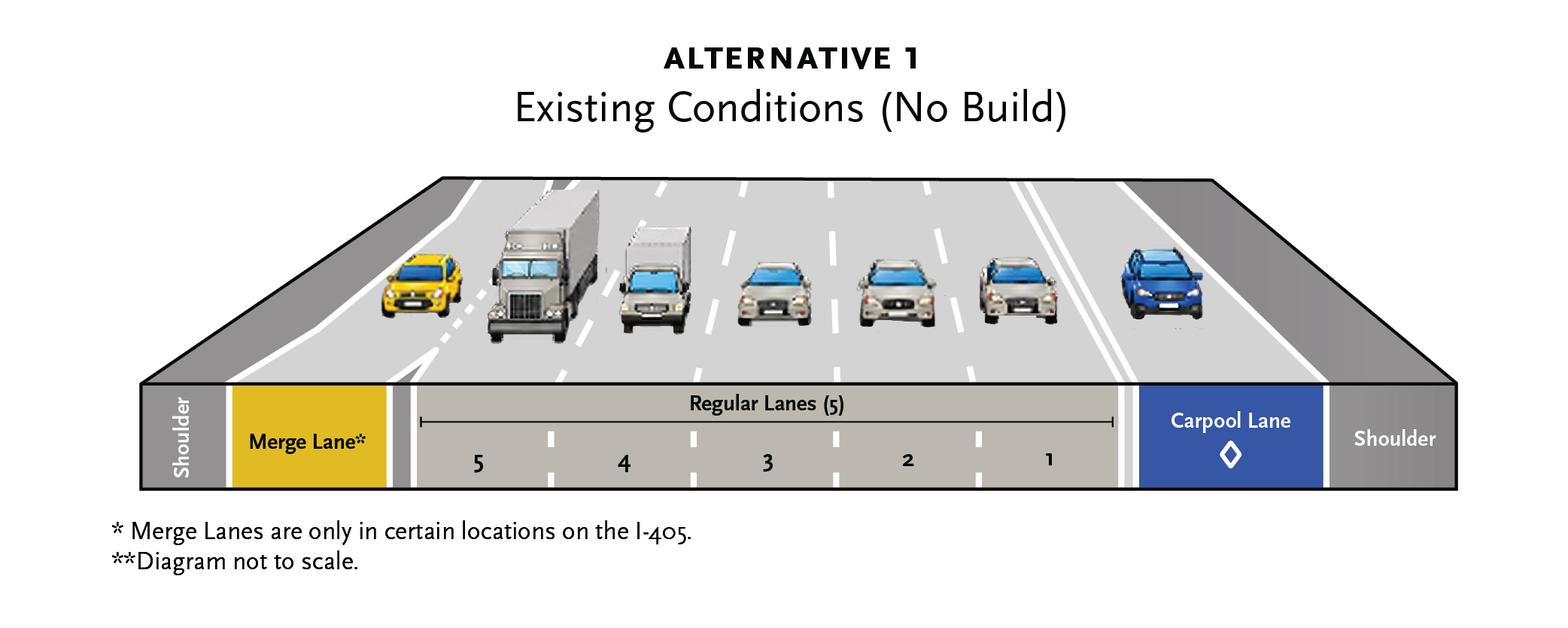
The second option would convert the existing carpool lane in each direction into an ExpressLane, allowing solo drivers to pay a toll to use it. The five regular lanes in each direction would remain toll-free.
That option would not require any additional land, and existing lane and shoulder widths would remain unchanged. Improvements would include new lighting, soundwalls, signage and barriers separating the toll lanes from regular traffic.
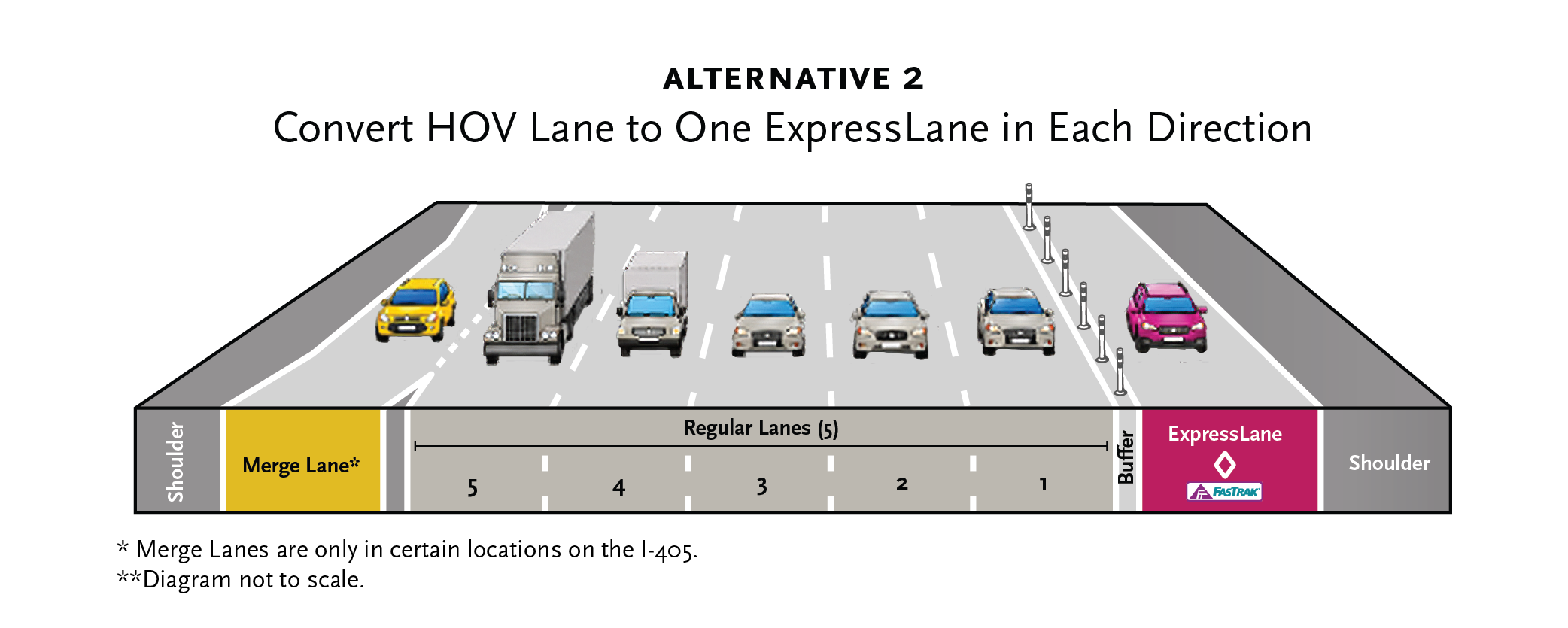
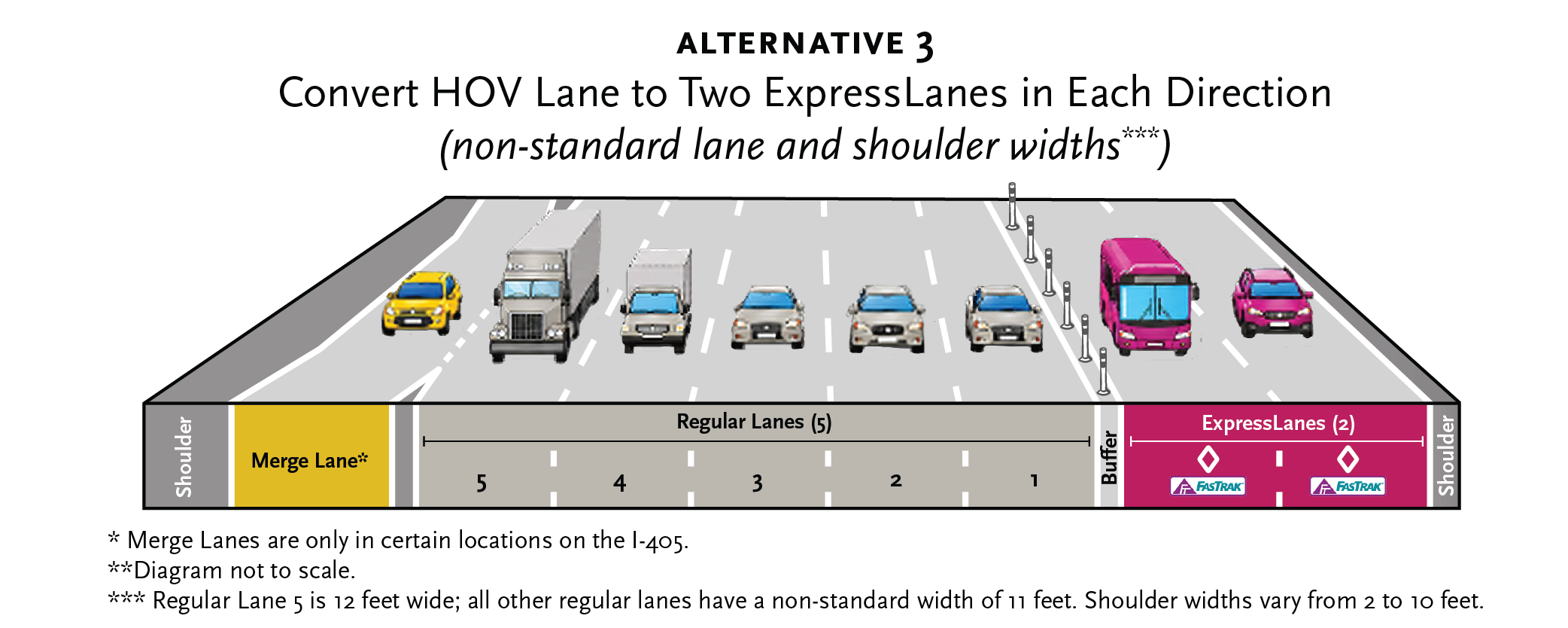
A third option would go further, converting the existing carpool lanes into ExpressLanes and adding a second ExpressLane in each direction.
That would leave the freeway with five regular lanes and two ExpressLanes in each direction. However, the project would require narrowing some lanes and shoulders and acquiring some property. Metro said no residential property would be needed.
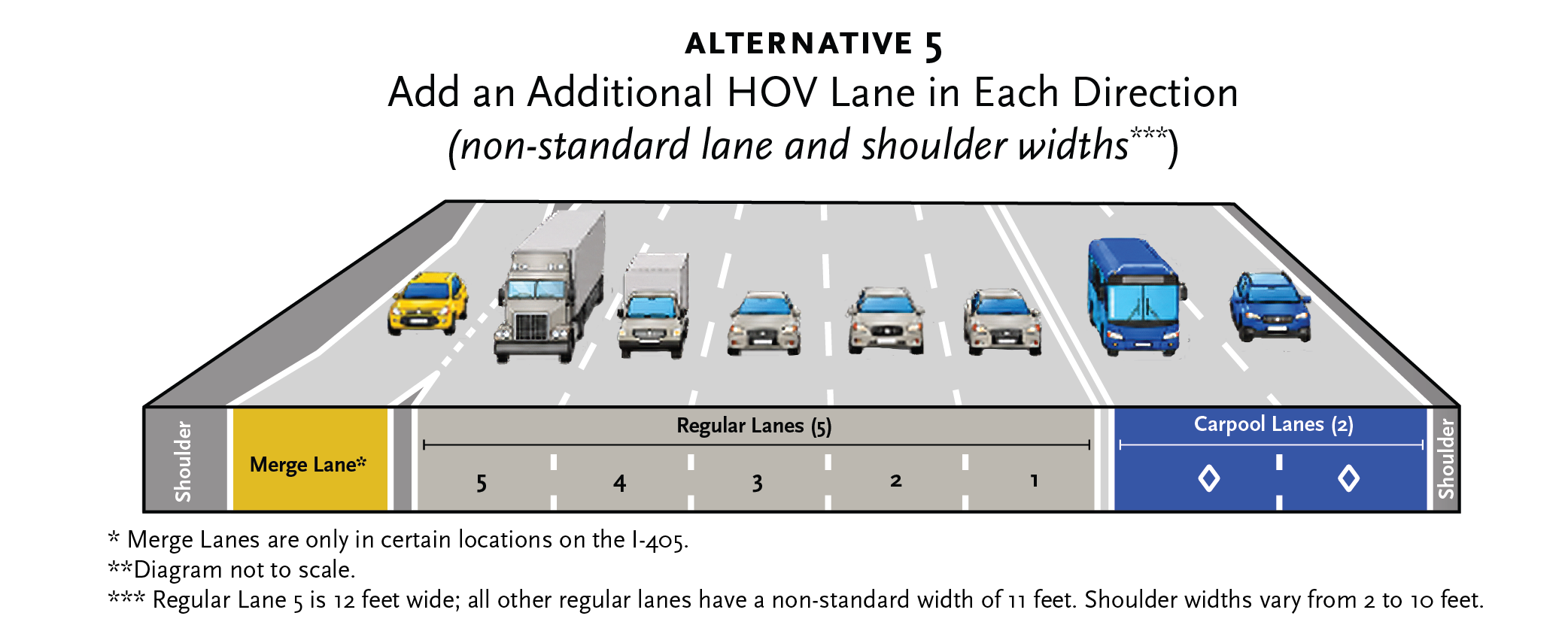
The fourth option would avoid toll lanes altogether, instead adding a second carpool lane in each direction. Both carpool lanes would remain free for qualifying vehicles, while the five regular lanes would be preserved.
That proposal would also require narrower lanes and shoulders in some locations and the acquisition of some nonresidential property.
Under the toll-lane proposals, drivers traveling alone could pay to use the ExpressLanes, while qualifying carpools, vanpools and transit vehicles could use them for free.
Tolls would fluctuate based on traffic conditions, rising when demand is high and falling when traffic is lighter. Drivers would need a FasTrak Flex transponder to use the lanes.
The proposals will be compared in a draft environmental impact report and environmental impact statement expected to be released in late 2026.
The documents will examine potential effects on traffic, communities and the environment. Members of the public will be able to review the findings and submit comments, including during public hearings.
Metro has emphasized that no decision has been made about whether to introduce toll lanes or expand carpool lanes on the 405.
Metro already operates ExpressLanes on portions of the 10 and 110 freeways, where tolls currently range from 10 cents to $3.30 per mile.
Metro is also constructing ExpressLanes on the 105 Freeway, including a project that will convert existing carpool lanes and add a second ExpressLane, similar to one of the options being considered for the 405.
The 405 proposals come as transportation officials pursue other major projects aimed at improving travel between the San Fernando Valley and the Westside, including the separate Sepulveda Transit Corridor subway project.
Get more local news delivered straight to your inbox. Sign up for free Patch newsletters and alerts.