Arts & Entertainment
'The End Of Oak Street' Review: Dinosaurs, Domestic Chaos, And Real Emotion
David Robert Mitchell's dino drama is conceptually bold, anchored by Anne Hathaway and Ewan McGregor in a tense suburban thriller.


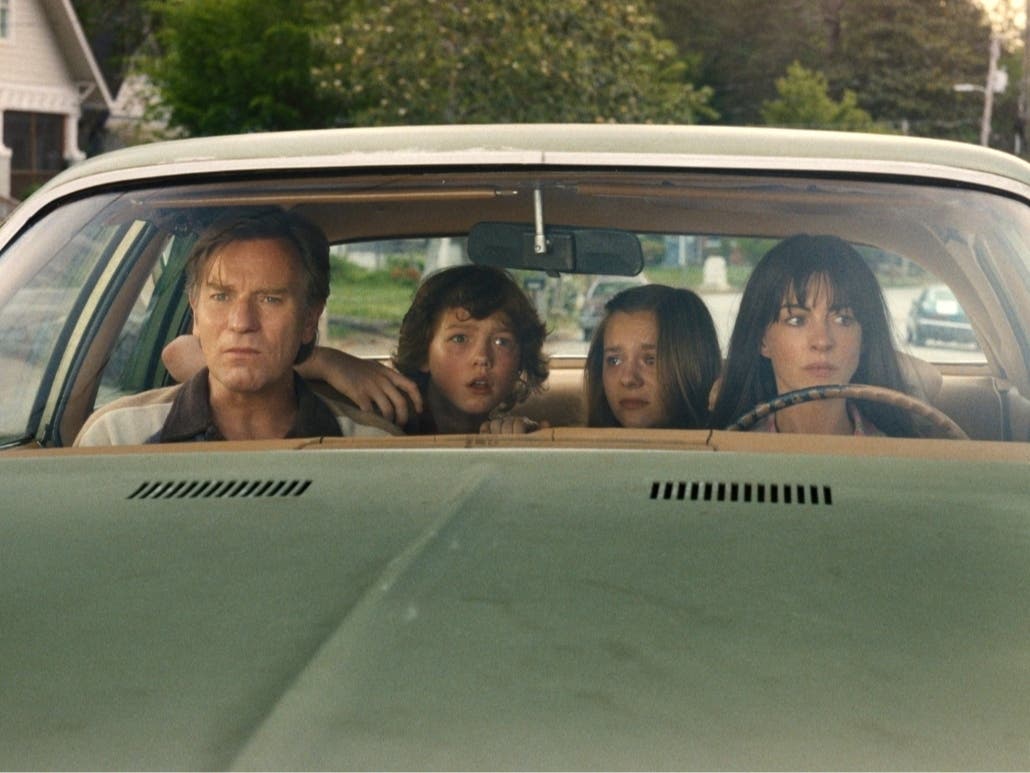
LOS ANGELES, CA — David Robert Mitchell’s “The End of Oak Street” rips a suburban street out of time and hurls it into a Cretaceous nightmare, where predators stalk and domestic fractures snap into focus. Mitchell weaponizes the collision between the extraordinary and the everyday, using cosmic upheaval to drag suppressed truths to the surface and make the illusions of ordinary life impossible to maintain.
Seen alongside “It Follows” and “Under the Silver Lake,” “The End of Oak Street” completes a loose triptych tracing Mitchell’s fascination with the moment when familiar worlds lose their coherence. Across these films, he returns to the same pressure points: the emotional seams beneath domestic calm, the rituals that barely hold everyday life together, and the fragile sense of normalcy that buckles the moment crisis presses in. What links them isn’t genre but worldview — a conviction that extraordinary events don’t change people so much as expose how precarious their everyday reality always has been.
At its core, “The End of Oak Street” absorbs decades of dinosaur cinema, suburban mythmaking, and creature‑feature language into something sharper and more psychologically charged. Mitchell draws on the Spielbergian awe of Amblin suburbia, the stop‑motion menace of Harryhausen, and the uncanny domesticity of “The Twilight Zone,” but filters those influences through a modern sensibility attuned to the fractures that surface within a family when ordinary life is pushed past its breaking point. The film’s spectacle isn’t ornamental; it’s the pressure system that exposes the emotional seams of its domestic world. The result is a striking, uneven, and often exhilarating suburban thriller — conceptually bold, emotionally sharp, and just unstable enough to leave a mark.
Find out what's happening in Los Angelesfor free with the latest updates from Patch.
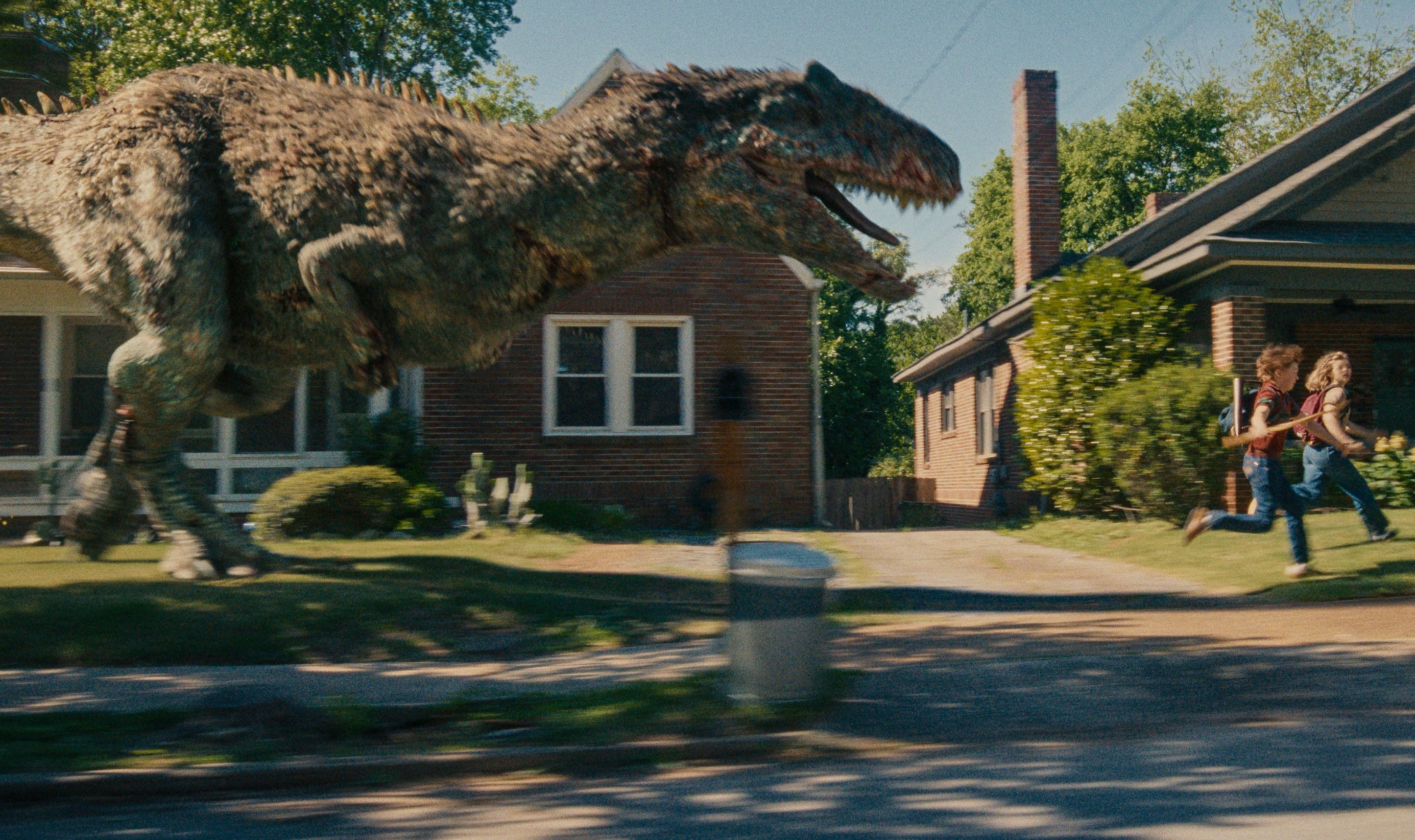
The film opens inside the Platts’ picture‑perfect suburban routine, where Denise (Anne Hathaway) and her husband Greg (Ewan McGregor) are already straining to hold their family together. Their kids, Audrey (Maisy Stella) and Brian (Christian Convery), feel the tension even before the film’s rupture arrives — a sudden wrenching of their entire street into a prehistoric landscape. From that point on, the story runs on a danger‑and‑rescue rhythm that pulls the Platts’ underlying fractures into the open, turning each crisis into a spotlight on how they respond when the illusion of safety falls away.
Hathaway’s composed vigilance tightens into fierce protectiveness, McGregor’s brittle optimism cracks under pressure, Stella’s watchful restraint hardens into guardedness, and Convery’s shaky bravado dissolves into fear. Hathaway gets one of the film’s oddest grace notes when Denise pauses to giggle at a pair of mating herbivores — a disarming flash of levity that makes her bottled‑up tension briefly visible. Mitchell builds the spectacle on top of these emotional fissures, letting each close call sharpen the truths suburban calm has been keeping out of sight.
Find out what's happening in Los Angelesfor free with the latest updates from Patch.
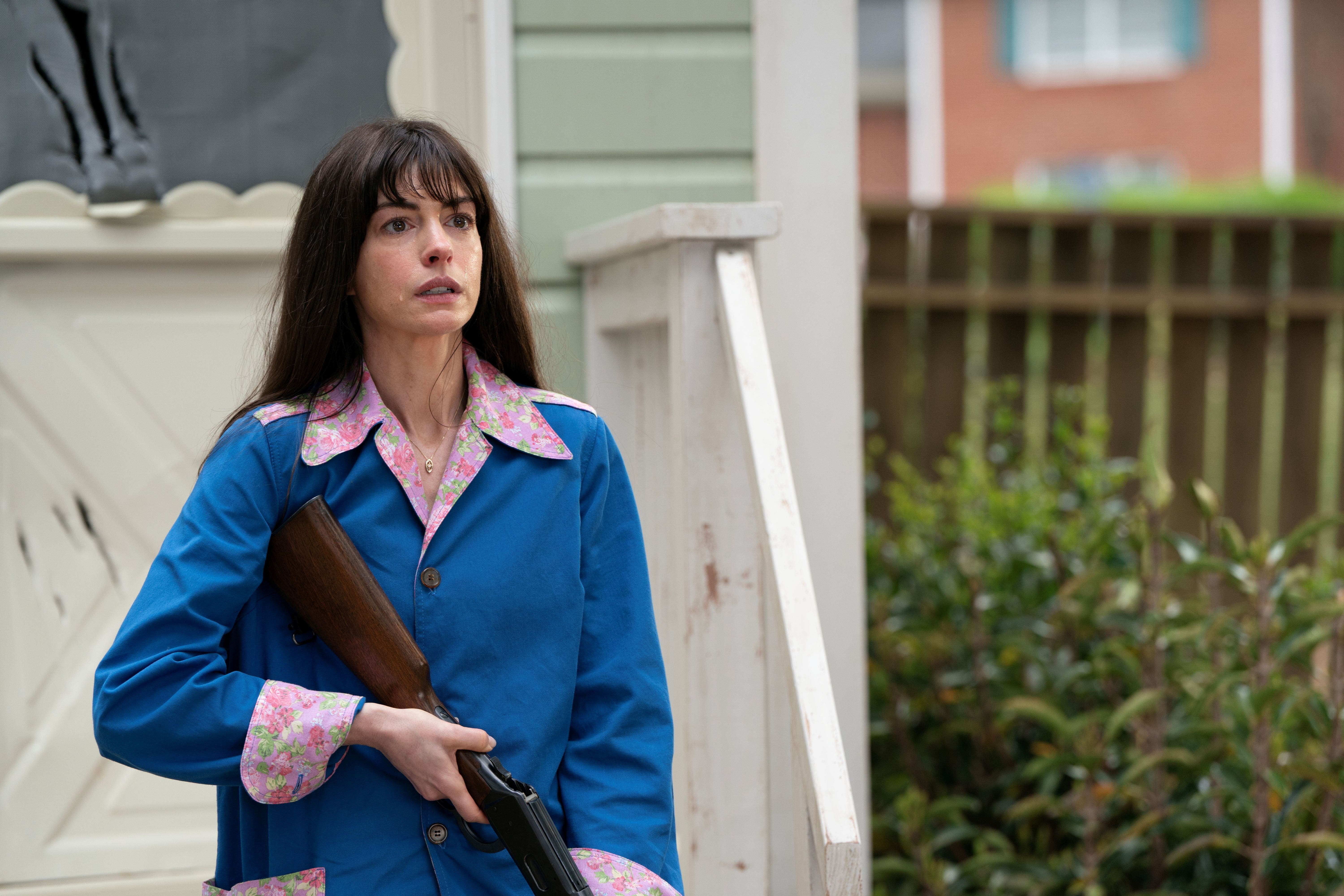
Mitchell’s partnership with cinematographer Mike Gioulakis heightens the film’s tension by showing how extraordinary pressure triggers a kind of ontological collapse — the world’s familiar logic buckling under strain. We feel it immediately in a sequence where the Platts hammer nails into their window frames in a frantic attempt to secure the house. Each strike lands with an ominous thrum as neighbors fire desperately at passing feathered raptors, a sonic rupture that exposes their belief in domestic control as an illusion. That instability becomes even more palpable later, when a titanoboa‑like creature slides through the Platt home, its massive body brushing against doorframes and clutter until the house’s once‑reassuring contours feel suddenly treacherous.
Composer Michael Giacchino adds a crucial sting later, laying a triumphant adventure cue over a doomed escape; the music’s refusal to shift with the moment exposes how brittle the scene’s reality has become, revealing how the ordinary world can no longer hold its emotional logic together under pressure.
Mitchell’s strongest sequences let pressure erode the ordinary until its emotional logic collapses. But every so often a clever musical cue or genre‑tilted beat briefly steadies a world meant to be losing its balance — a tonal whiplash that feels more like a stylistic wink than a genuine rupture. Such flashes don’t break the spell, but they do soften the instability the film thrives on.
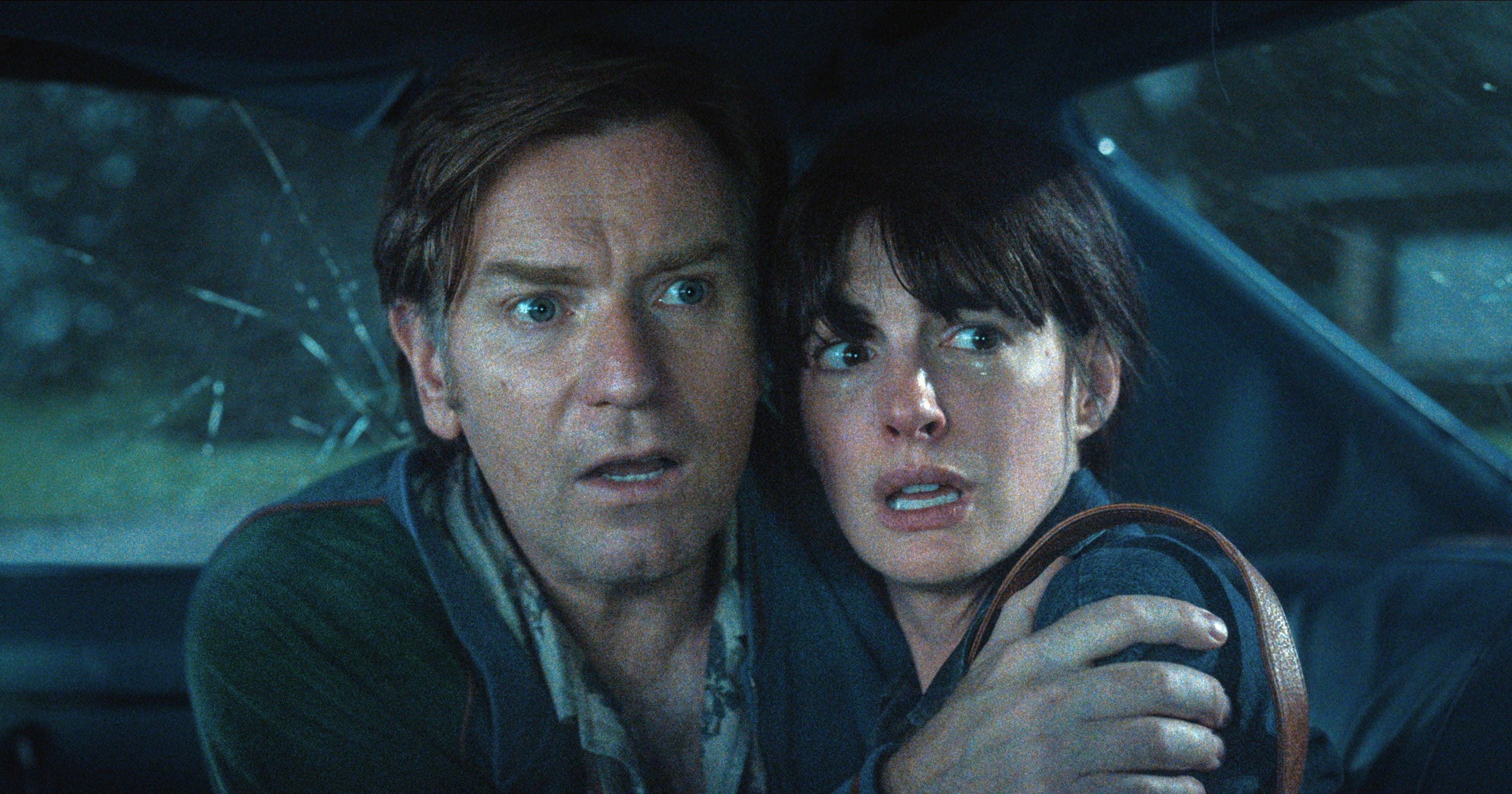
For all its brief recalibrations, “The End of Oak Street” ultimately commits to a worldview in which the ordinary world of Oak Street can’t withstand the pressure placed upon it. Mitchell exposes that fragility through the collision of the extraordinary and the everyday, letting tone and emotion slip as reality itself buckles. Denise feels it first when she mutters, with conviction, “I think our neighborhood, our house, our whole street has moved.” The rupture doesn’t transform the Platts so much as reveal the world they’ve been living in all along.
Get more local news delivered straight to your inbox. Sign up for free Patch newsletters and alerts.