Politics & Government
LA City Council Holds Off On Measure ULA Exemption For New Housing
In a 13-1 vote, the council decided to "note and file" the proposal.
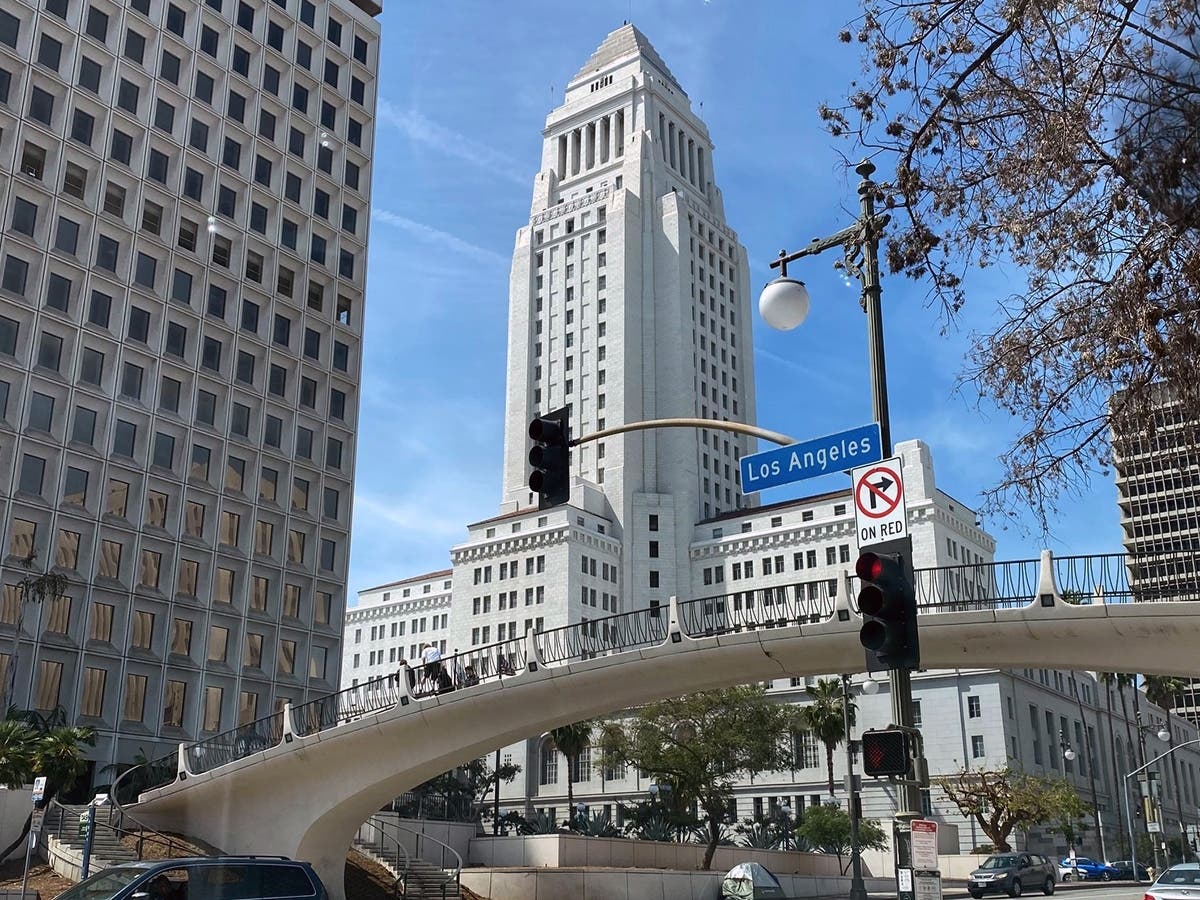
LOS ANGELES, CA — The Los Angeles City Council Wednesday scrapped a plan to exempt newly constructed multi-family and mixed-residential buildings from the city's so-called "mansion tax" for a 10-year period.
In a 13-1 vote, the council decided to "note and file" the proposal, holding off on major changes for future discussion.
Councilwoman Traci Park voted against the action, and Councilman Curren Price was absent from Wednesday's meeting.
Find out what's happening in Los Angelesfor free with the latest updates from Patch.
Councilwoman Katy Yaroslavsky had proposed the exemption as a bargaining chip amid last-minute negotiations between state legislators and opponents of Measure ULA.
"Over the last few weeks, we came closer than many people want to admit to losing ULA outright, and severely limiting our ability to levy new local transfer taxes in the future because of closed-door negotiations in Sacramento," Yaroslavsky said.
Find out what's happening in Los Angelesfor free with the latest updates from Patch.
She added that the fight is not over.
"While the sticks in Sacramento went too far for a lot of us, it was attempting to address a very real problem," Yaroslavsky said. "The pressure behind ULA reform is not going to go away because the valid concerns from people who build housing are not going away."
Last week, state lawmakers reached a deal with the Howard Jarvis Taxpayers Association, which has been challenging Measure ULA since it took effect in 2023.
The group qualified a measure that would have eliminated Measure ULA and similar transfer taxes across the state, by capping such taxes at 0.11 percent. It would have also required future special tax votes to receive two-thirds approval instead of a simple majority.
State lawmakers, in turn, offered a bill to lower the tax rate from 5.5 percent to 1.5 percent for non-mansions or buildings such as apartment complexes and commercial buildings, among other types of developments. It would preserve rates of up to 5.5 percent for single-family homes, or mansions, for sales above $5.3 million.
State leaders offered to place the bill on the ballot if the taxpayers associated pulled their measure, which they refused. At the last minute, however, the two sides struck a deal, in which lawmakers placed a constitutional amendment on the November ballot to raise the threshold for special taxes to two-thirds approval while leaving alone special taxes already enacted, such as Measure ULA.
Meanwhile, in a similar 13-1 vote, the council approved ballot language for November for voters to decide whether to establish a one-time, five-year exemption for property owners impacted by the Palisades Fire. Councilwoman Eunisses Hernandez was the lone "no" vote in this case.
Park, who represents Pacific Palisades, has sought the exemption on behalf of her constituents.
"Time, options and money are running out for some victims because of the lack of insurance or access to resources, or just because of time lines, bureaucracy, the regulatory hell that so many are still trapped in, or because of family status, or age, or any other multitude of reasons — they have no choice but to sell," Park said.
She explained the exemption would applies in very narrow circumstances to original owners and first transactions for nearly five years only for residential properties.
"This is the least we can do as this community continues to recover," Park said.
Hernandez raised concerns about how the exemption could be used by private companies, investors or people with a portfolio of properties.
"Any exemption should only be for homeowners whose primary residence was destroyed," Hernandez said. "I support relief for fire survivors. I believe it is our responsibility. But I do not support creating another loophole for the ultra wealthy while reducing funding for affordable housing, homelessness prevention and tenant protections."
The council also approved several motions related to Measure ULA, including changing the requirements for members of the Measure ULA Citizens Oversight Committee, improving reporting requirements and ways to update Measure ULA lending opportunities.
The council also directed staff to explore a pilot tax credit program to reduce Measure ULA's tax rate from 5.5% to 1.5% for eligible projects that meet specific criteria, as well as a separate temporary program to provide up to $30,000 in income support per household per year for up to 1,000 households.
Council members undertook efforts to amend Measure ULA after concerns the tax was harming the construction of housing.
Approved by voters in 2022, Measure ULA established a transfer tax of 4 percent on property valued above the annually adjusted figure of $5.3 million, and a 5.5 percent tax on properties valued above $10.6 million. The tax encompasses the transfer/sales of mansions, apartments, commercial buildings and multi-family housing, among other categories of buildings.
The measure took effect April 1, 2023, and through April 30, 2026, it has raised nearly $1.2 billion from 1,633 real estate transactions, according to the city Housing Department.