Politics & Government
Meet Barri Worth Girvan, Candidate For LA City Council's District 3
Barri Worth Girvan told Patch why she should be elected to the City Council. The general election is on Nov. 3, 2026.


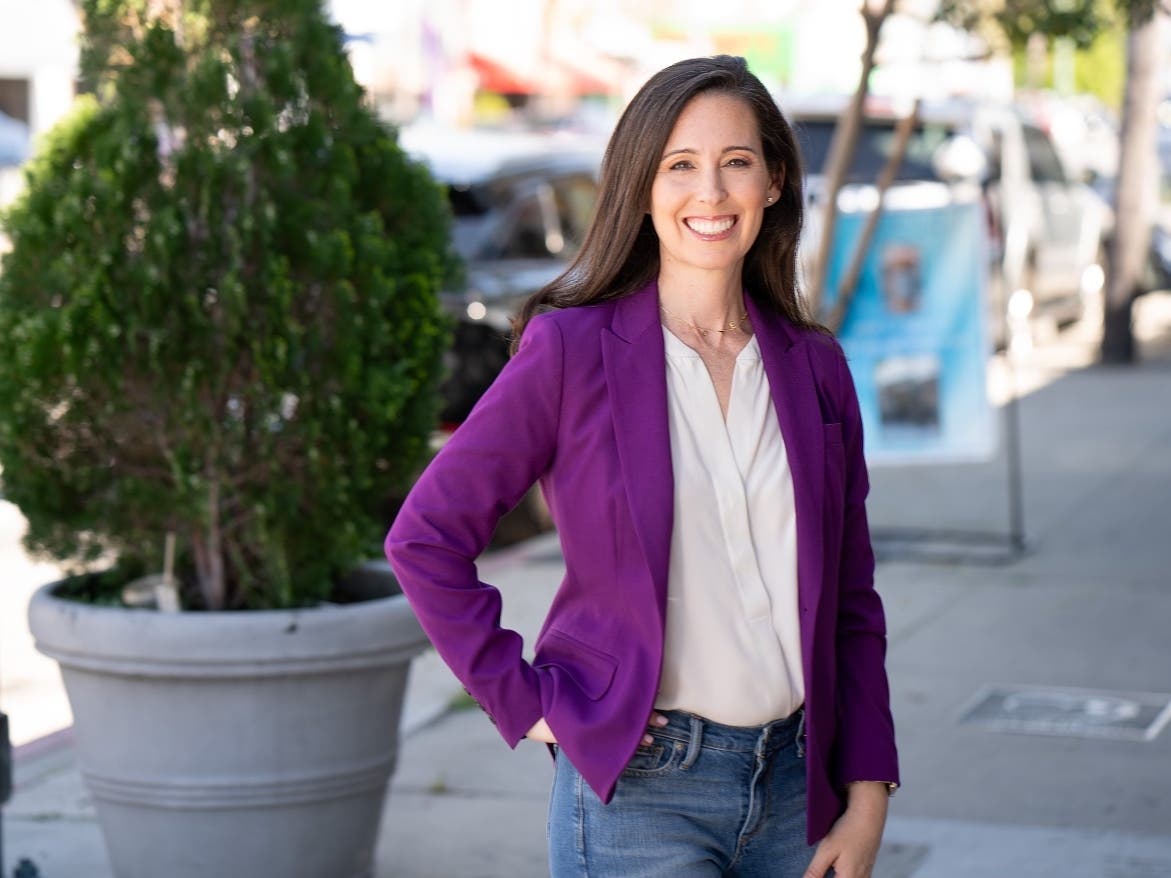
LOS ANGELES, CA — Barri Worth Girvan, 43, is vying to be elected to the Los Angeles City Council, representing the Third District.
The Third District seat, which covers part of the west San Fernando Valley, is currently held by Councilman Bob Blumenfield, who is not seeking reelection.
Girvan is facing off against Timothy K. Gaspar in the Nov. 3 general election.
Find out what's happening in Los Angelesfor free with the latest updates from Patch.
Learn more about Girvan' goals for Los Angeles:
What is your educational background?
I hold a bachelor of arts in communication with a minor in political science from UC San Diego and a master of arts in journalism from the Annenberg School for Communication at the University of Southern California.
Find out what's happening in Los Angelesfor free with the latest updates from Patch.
What is your professional background?
For more than two decades I have worked for the West Valley. I have held multiple high-ranking positions in the state Assembly and Senate offices, representing the Valley, in the administration of former Mayor Antonio Villaraigosa, and most recently I oversaw community affairs in the county Board of Supervisors. I have also served in nonprofit leadership at the Jewish Federation. I have worked directly with constituents, advocating for resources at every level, and I know how to deliver results.
Have you ever held public office, whether appointive or elective?
No. This is my first run for public office. While I have not held public office previously, I have served as an elected member of the Los Angeles County Democratic Party.
Los Angeles continues to devote significant resources to homelessness while facing heightened scrutiny over how homelessness money is spent. What specific oversight requirements and measurable outcomes should determine whether a homelessness program continues receiving city funding?
Los Angeles must restructure its homelessness governance and enforce strict accountability. After investing billions through measures H and HHH, outcomes remain stagnant due to fragmented authority and diffuse governance. I support dissolving the Los Angeles Homeless Services Authority (LAHSA) and replacing it with a streamlined, transparent entity directly accountable to the city with clear performance metrics.
To determine whether a homelessness program continues receiving city funding, we must implement aggressive, recurring audits of all government programs and nonprofit contractors. City funding must be strictly contingent on clear, measurable outcomes, including:
- Reductions in unsheltered homelessness and encampment resolution.
- Verified placements into interim and permanent supportive housing.
- Long-term housing retention rates.
- Successful connections to wraparound mental health, addiction, and medical services.
Programs that fail to meet these metrics should be restructured or defunded. At the same time, we need compassionate engagement paired with firm public safety standards, including consistent enforcement of municipal codes like 41.18 around schools, parks, and daycare centers, ensuring public spaces remain safe and accessible. Ultimately, we must address housing scarcity by expanding housing production — especially transit-oriented, affordable, and middle-class workforce housing — so fewer Angelenos fall into homelessness.
What should Los Angeles’ approach be to police staffing and funding, and what other public-safety programs or services should the city prioritize alongside law enforcement?
Public safety requires a comprehensive, balanced ecosystem that combines well-staffed law enforcement with robust civilian crisis response and community investment.
First, we must maintain sufficient LAPD sworn staffing to meet emergency response benchmarks, reduce response times, and focus officers on violent crime, serious property offenses, and core policing duties rather than routine social service calls.
Second, we must expand and fund alternative response programs — such as the city’s CIRCLE and SMART programs, which deploy trained mental health clinicians, social workers, and outreach specialists to non-violent mental health crises, homelessness-related calls, and quality-of-life issues. Redirecting these calls ensures individuals receive appropriate care while freeing up officers for critical safety needs.
Third, the city must prioritize proactive safety investments alongside law enforcement:
- Expanding community-centered policing, violence interruption initiatives, youth mentorship and restorative justice programs.
- Modernizing infrastructure, including street lighting, safe pedestrian crossings, and sidewalk repairs, which directly enhance neighborhood safety and deter crime.
- Utilizing technology like automated speed and red-light enforcement under AB 645 to make our streets safer without diverting sworn police resources.
By integrating smart law enforcement with alternative response and neighborhood investments, we build safer, stronger communities while upholding accountability and civil liberties.
Where and how should Los Angeles accommodate more housing while addressing concerns about affordability, displacement, neighborhood character and infrastructure? What specific city policy would you support to advance that approach?
Los Angeles must accommodate housing growth through a balanced approach that increases affordability and supply without overloading established single family neighborhoods or endangering residents in high fire severity zones.
Growth should be concentrated near transit, jobs, and existing infrastructure. In Council District 3, Warner Center is a prime model: We should fully embrace the Warner Center Specific Plan to expand capacity for walkable, mixed-use, mid-rise and high-rise development, alongside the G Line transit corridor. We must also prioritize missing-middle workforce housing —for teachers, nurses, tradesmiths, and civil servants — and streamline ADUs, duplexes, and adaptive reuse of commercial properties.
To address affordability and displacement, I support protecting tenants from illegal eviction, maintaining rent stabilization and reducing parking minimums in close proximity to public transit, which significantly drive up construction costs and delay housing delivery.
City leaders regularly have to make tradeoffs among public safety, homelessness programs, infrastructure and basic neighborhood services. When city revenues are limited, what services would you prioritize protecting, and where would you look for savings or efficiencies?
When city revenues are limited, City Hall must focus on fundamental core services and first order priorities. These include:
1. Public Safety & Emergency Response: Protecting sworn police and fire staffing levels, 911 dispatch responsiveness, and mental health crisis response teams.
2. Core Neighborhood Infrastructure & Sanitation: Protecting street and sidewalk maintenance, pothole repairs, streetlight maintenance, and tree trimming. Fixing broken roadways and sidewalks is not only a core service — it also reduces the millions of dollars the city pays out annually in legal liability settlements due to poor street conditions.
3. Parks, Recreation & Libraries: Protecting hours and operations at local parks, rec centers, and libraries, which are vital lifelines for working families and youth.
To save the city money that funds critical, core public services here is where I would start:
1. Structural Governance Reform: Dissolving LAHSA and replacing it with a streamlined, accountable city entity to eliminate administrative overlap, diffuse governance and wasteful overhead.
2. Departmental Operational & Budgetary Improvements: Auditing, restructuring or eliminating redundant, underperforming departments and commissions that fail to deliver measurable outcomes, and redirecting those funds to core service delivery.
3. Departmental Training and Oversight: Prioritize departmental training and oversight to avoid city liabilities and lawsuit payouts that are costing this city far too much and resulting in lack of budgetary resources to perform needed core city services.
Candidates' responses were lightly edited for style and clarity.
Get more local news delivered straight to your inbox. Sign up for free Patch newsletters and alerts.