Politics & Government
Meet Dylan Kendall, Candidate For Los Angeles City Council District 13
Dylan Kendall told Patch why she should be elected to the Los Angeles City Council. The primary election is on June 2, 2026.


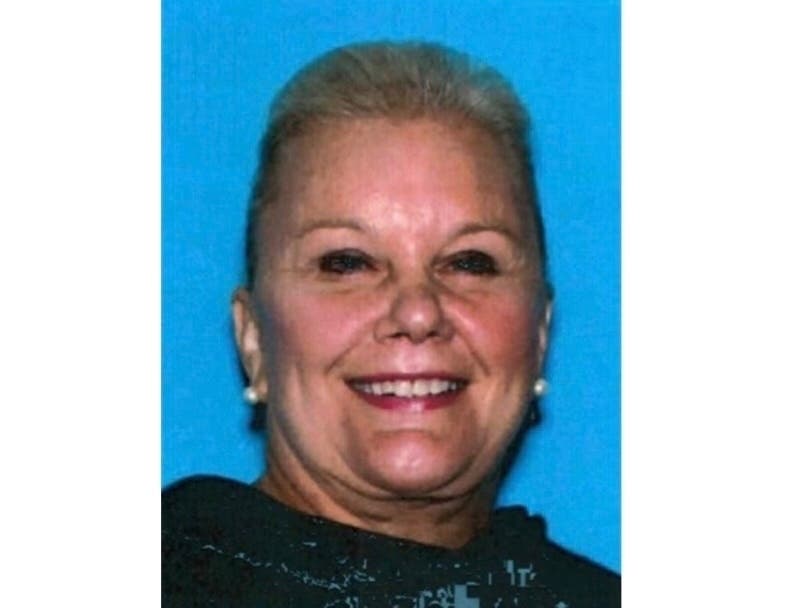
LOS ANGELES, CA — Dylan Kendall, 56, is vying to be elected to the Los Angeles City Council, representing District 13.
In the June 2 primary, incumbent Councilman Hugo Soto-Martinez will face three challengers: Kendall, Rich Sarian and Colter Carlisle.
Learn more about Kendall's goals for Los Angeles, with responses submitted by the candidate:
Find out what's happening in Los Angelesfor free with the latest updates from Patch.
What is your educational background?
Earned a bachelor's in cultural anthropology from UCLA at 28, putting herself through school by bartending. While at UCLA, founded the Open Museum of Los Angeles in response to the 10-year anniversary of the 1992 LA civil unrest. Went on to earn a master's in museum studies from the University of Leicester and was accepted as a Coro Fellow in public affairs.
Find out what's happening in Los Angelesfor free with the latest updates from Patch.
What is your professional background?
- Founder of Hollywood Arts (youth homelessness nonprofit), Dylan Kendall Home (internationally distributed consumer brand), Open Museum of LA, and Grow Hollywood (Hollywood's first Economic Development Corporation)
- Former Hollywood Chamber of Commerce VP, managing the Walk of Fame and Hollywood Sign
- Consultant to LA County and international NGOs
- Coro Fellow, BMW Foundation Responsible Leader, and Ashoka nominee
- Nine years teaching business skills inside California prisons
Have you ever held public office, whether appointive or elective?
No
What are the top three issues facing Los Angeles right now?
Los Angeles is grappling with several deeply connected challenges. Our sidewalks and public spaces have become difficult to navigate, eroding the street life that gives neighborhoods their character and keeps local economies alive.
Public safety has declined in ways that residents feel every day: in their commutes, on commercial corridors, and in the decisions small business owners make about whether to stay.
Our economy is under real strain: Hollywood has lost production, development is frozen, housing is harder to build, and commercial vacancies are spreading across neighborhoods that used to be thriving. And perhaps most significantly, Angelenos have lost confidence in city government's ability to deliver basic services and respond to their concerns.
What is one specific policy you would advocate for or introduce as a City Council member in your first year?
In my first year, I will introduce the Hollywood Economic Recovery Plan, a corridor-based revitalization strategy that begins on Hollywood Boulevard and is designed to be replicated across every commercial corridor in the district.
Hollywood Boulevard should be one of the most dynamic streets in the world. Instead, it is defined by vacancy, neglect, and missed potential. That is not inevitable, it is a policy failure, and policy can fix it.
The plan has three pillars. First, a dedicated small business support office within the council office that connects local businesses to permitting assistance, city contracts, and available incentives — cutting the bureaucratic friction that causes too many small businesses to give up before they open.
Second, a storefront activation program that puts vacant commercial properties to productive temporary use, generating foot traffic and neighborhood energy while permanent tenants are secured.
Third, a formal partnership structure with the film and entertainment industry to bring production back to Hollywood streets, soundstages, and studios, keeping jobs and economic activity rooted in the community that built them.
We will pilot the model on Hollywood Boulevard, then replicate and adapt what works — bringing neighborhood-directed, neighborhood-serving growth to every corridor in the district.
What specific actions should the City Council take to address homelessness, and how would you evaluate whether those efforts are working?
Before we can solve homelessness, we have to be honest about what we actually know and right now, the city cannot answer the most basic questions with confidence. Where is the money going? What are our service providers actually delivering? Are we measuring outputs, like beds filled and meals served, or outcomes, like people who are stably housed a year later? There is a profound difference between maintaining a problem and solving it, and for too long Los Angeles has funded the former while calling it the latter.
The first action I will take is to demand a full, transparent audit of homelessness spending in CD13 — provider by provider, program by program — with clear outcome metrics attached to every contract. If a provider cannot demonstrate that their work is moving people toward permanent stability, that contract gets restructured or it ends. We do not get to keep investing in processes that aren't producing results simply because the intention behind them is good.
I bring decades of experience running organizations where forward progress is impossible without honest accounting of the past. City government should be held to the same standard.
The measure of success is simple: fewer people living outside this year than last.
What is one specific change you would support through the City Council to improve public safety in your district or citywide?
Public safety is not a single problem with a single solution. It is the result of many interconnected systems and in CD13, nearly all of them are moving in the wrong direction.
Disorder on our streets has become normalized. Many encampments, including people with serious, often untreated mental illness, sit blocks from schools and family businesses. Streetlights go out and stay out for months. Our local LAPD divisions are understaffed, underappreciated, and stretched thin trying to keep up with the volume of calls. When 911 response times stretch beyond what is acceptable, public safety has already broken down.
The most important structural step the City Council can take is to restore LAPD staffing to levels that allow us to maintain visible patrols, reduce response times, and dedicate officers to specialized crime‑solving work — vice, narcotics, trafficking, and detectives who close cases instead of just responding to them.
I will advocate for a staffing plan that distinguishes between officers needed for patrol visibility, officers needed for 911 response capacity, and officers needed for investigative and specialized units. These are different functions and they all matter. A well‑staffed department does not have to choose between being present and being effective.
Public safety is what makes everything else possible. Without it, no economic recovery plan, no housing policy, and no vision for neighborhood revitalization can truly succeed.
How should the City Council balance housing development, neighborhood concerns, and state housing mandates in Los Angeles?
Los Angeles has a genuine housing crisis, but the current approach — blanket upzoning imposed from Sacramento without real planning for streets, infrastructure, or neighborhood character — is producing resistance rather than results. Statewide preemption rarely delivers the housing it promises, and it consistently erodes the community trust we need to build anything at all.
The better path is smarter, more targeted growth that brings neighbors along rather than steamrolling them. That means concentrating new housing along and near commercial corridors and transit-rich streets, where density makes sense and can be paired with the infrastructure to support it. It means converting the vacant offices and underused commercial buildings we already have into homes, using tools that exist right now and simply lack the political will to implement. And it means designing neighborhoods where people actually want to live: walkable, human-scaled, with ground-floor shops, parks, and the kind of everyday amenity that makes density feel like a gain rather than a loss.
CD13 can meet its state housing obligations without sacrificing what makes our neighborhoods worth living in. That requires a council office willing to do the hard, unglamorous work of coordinating across agencies, supporting community developers, and turning stuck properties into real homes — quickly, fairly, and with neighbors at the table.
Why are you a better choice than your opponents?
I am the only candidate in this race who has actually built something from nothing, multiple times, in this district, against the odds. I founded organizations when people said the ideas wouldn't work. I grew a business from my kitchen table to international distribution. I launched Hollywood's first Economic Development Corporation. I know how to manage staff, raise capital, navigate bureaucracy, and deliver outcomes. A council office is not primarily a legislative body, it is an operational one, and I have spent twenty years running operations.
But what sets me apart runs deeper than a resume. I am a single parent who put myself through UCLA bartending, and I raised my kids, who came to me through the foster care system, right here in CD13. When I took my grandson to school driving past gang graffiti, I witness what street disorder does to young people who are already vulnerable. I am not reading a policy brief. I am living it.
I have spent nine years inside California prisons teaching business skills to incarcerated men and women, because I believe in upstream solutions and the compounding cost of problems we refuse to prevent. I believe in second chances because we all need them.
No other candidate in this race has this combination of entrepreneurial experience, operational skill, and deep community roots to represent all the people in our district. I am not running to represent an ideology. I am running to do the job.
Get more local news delivered straight to your inbox. Sign up for free Patch newsletters and alerts.