Politics & Government
Meet Estuardo David Mazariegos, Candidate For LA City Council's District 9
Estuardo David Mazariegos told Patch why he should be elected to the City Council. The general election is on Nov. 3, 2026.


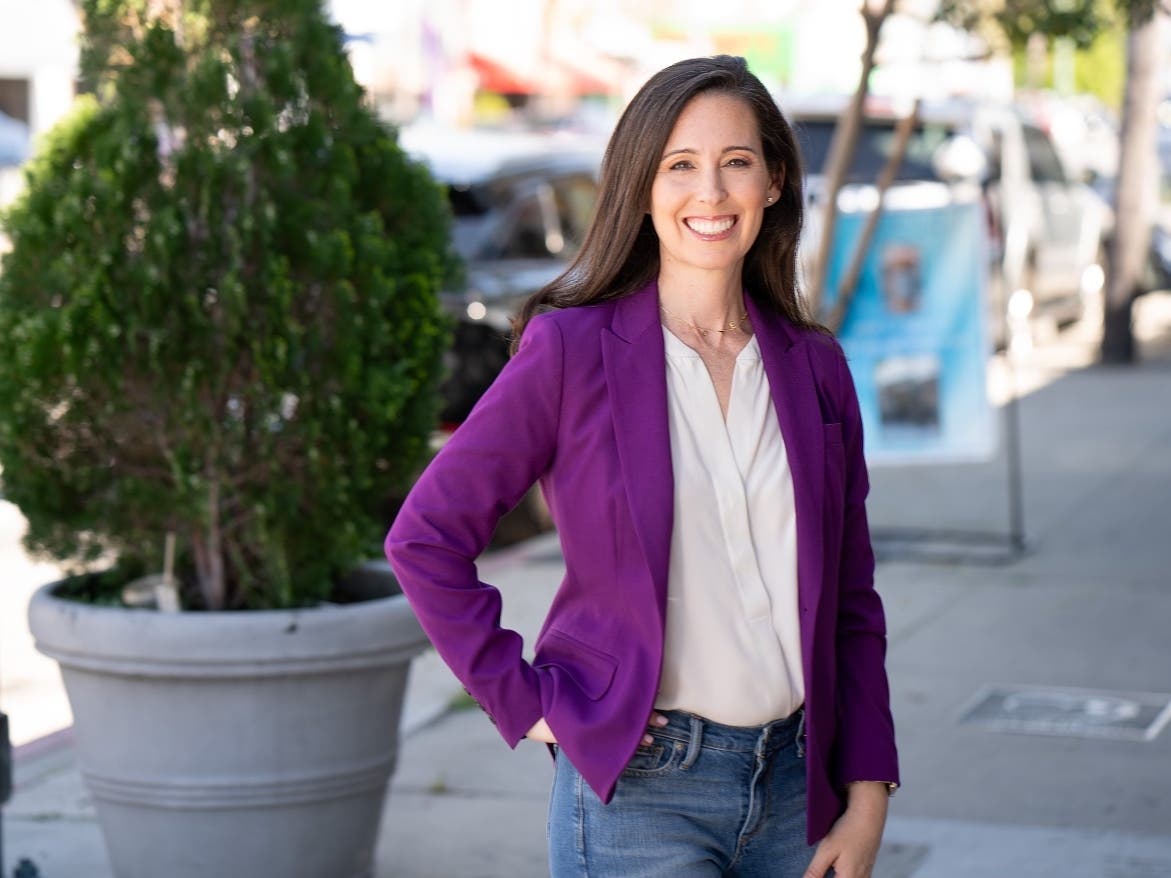
LOS ANGELES, CA — Estuardo David Mazariegos, 40, is vying to be elected to the Los Angeles City Council, representing the Ninth District.
The Ninth District seat, which covers South Los Angeles, is currently held by Councilman Curren Price, who has hit his term limit.
Mazariegos is facing off against Jose Ugarte in the Nov. 3 general election.
Find out what's happening in Los Angelesfor free with the latest updates from Patch.
Learn more about Mazariegos' goals for Los Angeles:
What is your educational background?
A.S. in HVAC technology, Los Angeles Trade-Technical College (LATTC); B.A. in labor studies, California State University, Dominguez Hills; M.A. in public administration, California State University, Los Angeles.
Find out what's happening in Los Angelesfor free with the latest updates from Patch.
What is your professional background?
Twenty-year community and labor organizer in South LA. Co-director of the Alliance of Californians for Community Empowerment (ACCE). Formerly lead organizer at ACORN and T.R.U.S.T. South LA; statewide external organizing coordinator at SEIU-USWW (janitorial campaigns); senior organizer at LAANE. board member of Liberty Community Land Trust and Steering Committee member of United to House LA (Measure ULA).
Have you ever held public office, whether appointive or elective?
No. This is my first time running for elected office.
Los Angeles continues to devote significant resources to homelessness while facing heightened scrutiny over how homelessness money is spent. What specific oversight requirements and measurable outcomes should determine whether a homelessness program continues receiving city funding?
In District 9, where two-thirds of families are severely rent-burdened, most community members are just one missed paycheck or medical emergency away from losing their homes. To end this crisis, we’re going to do the only thing that actually works — housing first. Proven reference points in Central Hollywood and Echo Park Lake demonstrate that when we lead with immediate housing navigation and voluntary, comprehensive wrap-around services rather than criminalization or sweeps, people get off the streets and stay housed.
To restore public trust and ensure every taxpayer dollar delivers results, I will overhaul municipal oversight by merging city and Los Angeles Homeless Services Authority contracting under a single, unified homeless services office with joint performance metrics.
Mandatory oversight requirements:
1. Independent Annual Audits: Mandate independent annual financial and operational audits of bed inventory, fund flows, and provider outcomes.
2. Public Transparency Dashboards: Partner with City Controller Kenneth Mejia to maintain real-time accounting dashboards tracking expenditures, service turnaround times, and housing placements across all 15 council districts.
Continued city funding must be tied to clear, performance-based benchmarks:
1. Housing Retention: Verified 12-month and 24-month retention rates in permanent supportive housing.
2. Transition Speed: Time elapsed from initial outreach to permanent housing placement (enforcing 120-day transition benchmarks for modular and interim sites).
3. Service Connections: Rates of connection to full-time case management, mental healthcare, substance recovery, and job navigation.
4. Inflow Prevention: Number of families kept housed through emergency rental assistance (ERAP) and municipal Tenant Right to Counsel.
Programs failing to meet retention and housing transition benchmarks will undergo corrective action plans or have funds reallocated to proven community-based providers.
What should Los Angeles’ approach be to police staffing and funding, and what other public-safety programs or services should the city prioritize alongside law enforcement?
True public safety is a care-first, proactive framework. Safety is not merely the presence of armed police; it is the presence of resourced neighborhoods — well-lit streets, repaired sidewalks, safe public parks, and thriving youth programs.
Approach to Police Staffing & Funding: I oppose expanding LAPD headcount. LAPD’s role should be narrowly focused on investigating serious violent and property crimes. Currently, relying on sworn officers for non-violent mental health crises, homelessness outreach, and routine traffic stops stretches officers beyond their training while over-policing Black and Brown neighborhoods. Furthermore, police misconduct settlements cost taxpayers tens of millions annually. I will champion requiring legal payouts and misconduct settlements to come directly out of the responsible department's budget to enforce internal accountability and protect the General Fund.
Public Safety Priorities Alongside Law Enforcement:
- Expand Unarmed Crisis Response: Fully fund and scale the Unarmed Model of Crisis Response (UMCR) and CIRCLE citywide. UMCR handles non-violent emergencies at a cost nearly 60% lower than equivalent LAPD responses.
- Community Violence Intervention: Reinvest in proven, non-carceral intervention models like Gang Reduction and Youth Development (GRYD), utilizing credible messengers to interrupt cycles of violence.
- Unarmed Civil Servant Divisions: Establish an unarmed civil servant traffic safety division to handle citations and pre-textual stops, reducing racial disparities, and create an unarmed property crimes division to conduct investigations and connect victims to compensation.
- Infrastructure Integrity: Protect public safety by replacing fragile streetlight copper wiring with tamper-resistant utility boxes and solar lighting, and fully implement the city’s Mobility Plan for self-enforcing street safety.
Where and how should Los Angeles accommodate more housing while addressing concerns about affordability, displacement, neighborhood character and infrastructure? What specific city policy would you support to advance that approach?
Housing is a human right, not a speculative commodity. Los Angeles must accommodate housing growth through deeply affordable and social housing models while aggressively halting tenant displacement in working-class communities.
Where and How to Accommodate Growth:
Eliminate Exclusionary Zoning in High-Resource Areas: Rather than over-concentrating market-rate luxury developments in rent-burdened neighborhoods like CD9 —which fuels speculative gentrification and displaces longtime Black and Brown families (such as on Flower Drive near USC)— LA must rezone higher-resource, wealthy neighborhoods to accommodate multifamily affordable housing.
Public & Decommodified Housing: Build 100% affordable and social housing on underutilized, vacant city-owned land, contaminated brownfield sites, and through adaptive reuse of commercial properties.
Expand Community Land Trusts: Partner with land trusts like Liberty CLT to acquire existing residential properties and preserve them as permanently affordable, community-controlled homes.
Specific City Policies Supported:
- Municipal Tenant Right to Counsel & 3% Rent Cap: Fully fund legal representation for tenants facing eviction and enforce a 3% cap on annual Rent Stabilization Ordinance (RSO) rent increases.
- Department of Tenant Protections: Create a dedicated city department to conduct proactive code enforcement against slumlords and aggressively enforce the Tenant Anti-Harassment Ordinance (TAHO) and Resident Protection Ordinance (RPO) — guaranteeing right-of-return and relocation payouts up to $100,000 for displaced renters.
- Maximize Measure ULA Funds: Direct ULA revenue toward social housing construction, emergency rental assistance for ICE-impacted and rent-burdened families, and tenant acquisition programs (TOPA/COPA).
City leaders regularly have to make tradeoffs among public safety, homelessness programs, infrastructure and basic neighborhood services. When city revenues are limited, what services would you prioritize protecting, and where would you look for savings or efficiencies?
When budget shortfalls occur, City Hall must never balance the budget on the backs of working families or public sector workers. We must protect core neighborhood services while eliminating fiscal waste and capturing alternative revenues.
Services to Prioritize Protecting:
- Basic Municipal Infrastructure: Sidewalk repairs, streetlight restoration and copper theft prevention, illegal dumping abatement, and tree canopy expansion in environmental justice corridors.
- Eviction Prevention & Homelessness Care: Emergency rental assistance, legal defense, dedicated district-level homelessness outreach teams, and non-carceral mental health services.
- Youth & Community Spaces: Fully staffed parks, extended library hours, and vocational partnerships with LA Trade-Tech.
Where to Look for Savings and Efficiencies:
- Cancel Wasteful Outside Contracting: Audit and reduce expensive city contracts with private consultants and outside contractors, bringing work back in-house to be performed more efficiently by municipal employees.
- Shift Police Misconduct Liabilities: Require LAPD misconduct settlements and lawsuit payouts — which drain hundreds of millions from the General Fund — to be paid out of LAPD's department budget, incentivizing internal risk management and saving General Fund dollars for neighborhood services.
- Expand Unarmed Response: Shift non-violent 911 calls from sworn police officers to unarmed crisis teams (UMCR), saving up to 60% per call response.
- Unify Homelessness Administration: Eliminate administrative redundancy by merging City and LAHSA contracting under a streamlined, unified homeless services office.
- Targeted Non-Worker Revenue: Implement a modest commercial surcharge on tickets, parking, and concessions at mega-events hosted at district venues (Coliseum, BMO Stadium, Crypto.com Arena) to create a dedicated local infrastructure fund for CD9.
Candidates' responses were lightly edited for style and clarity.
Get more local news delivered straight to your inbox. Sign up for free Patch newsletters and alerts.