Politics & Government
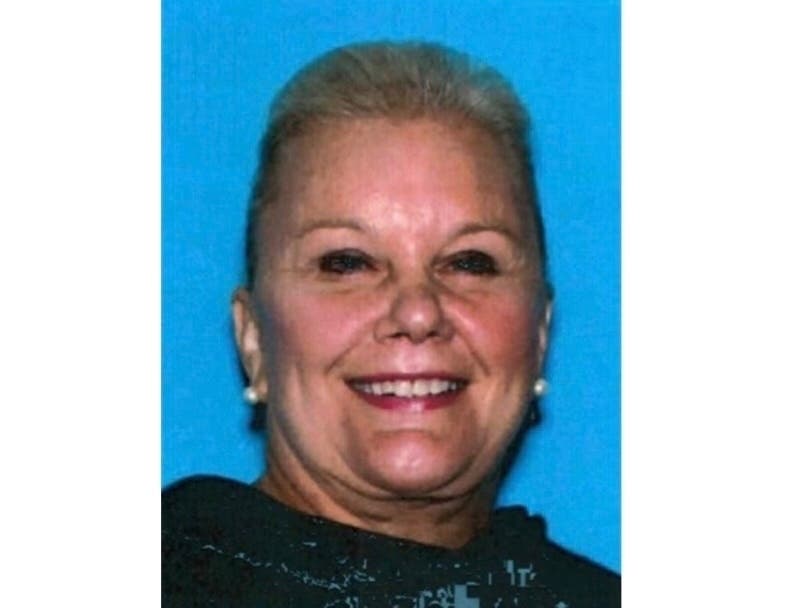
Meet Maria Lou Calanche, Candidate For Los Angeles City Council District 1
Maria Lou Calanche told Patch why she should be elected to the Los Angeles City Council. The primary election is on June 2, 2026.


LOS ANGELES, CA — Maria Lou Calanche, 57, is vying to be elected to the Los Angeles City Council, representing District 1.
In the June 2 primary, incumbent Councilwoman Eunisses Hernandez will face four challengers: Calanche, Raul Claros, Nelson Grande and Sylvia Robledo.
Learn more about Calanche's goals for Los Angeles:
Find out what's happening in Los Angelesfor free with the latest updates from Patch.
What is your professional background?
I earned a BA from Loyola Marymount University, an MPA from USC, and am completing a Doctorate in Public Administration. I served as a professor of political science at East Los Angeles College for over 18 years, mentoring hundreds of students from communities like ours. My education gave me a deep understanding of policy, governance, and the real-world challenges facing working families in Los Angeles.
Find out what's happening in Los Angelesfor free with the latest updates from Patch.
Have you ever held public office, whether appointive or elective?
I've spent decades in public service and community leadership. I served as a field deputy for Councilmember Alatorre, founded Legacy LA, a nationally recognized gang-prevention nonprofit and currently lead ExpandLA, a nonprofit network of 500+ youth-serving organizations countywide. I've also served on the LA Police Commission, the Housing Authority Commission, and chaired the city's Youth Development Task Force. I am also a former small business owner with expertise in land use.
What are the top three issues facing Los Angeles right now?
The three most pressing issues facing Los Angeles are public safety, homelessness and mental health treatment, and affordability.
Public safety requires adequate police staffing, expanded mental health co-response teams, and reclaiming our parks and public spaces for families. The homelessness crisis demands we stop recycling failed approaches.
We must invest in hospital beds, treatment programs, and mental health clinicians who deliver real care to those suffering from substance-use disorders. Every dollar must be tracked and accounted for.
Affordability is squeezing working families out of the city they built. We need new housing at all income levels, rent control enforcement, and connections to union apprenticeship programs and living-wage jobs.
LA deserves leaders who deliver solutions, not excuses. I have spent decades on the front lines and I am ready to bring that experience to City Hall on day one.
What is one specific policy you would advocate for or introduce as a City Council member in your first year?
In my first year, I will introduce a resolution directing the city to create a cadre of 100 reserve mental health clinicians — similar to reserve police officers — embedded within LAPD divisions and deployed through expanded co-response teams across Los Angeles.
The mental health crisis on our streets is not just a homeless crisis; it is a public health emergency demanding a coordinated response. Too many unhoused neighbors are suffering from untreated mental illness and substance-use disorders, cycling endlessly through emergency rooms, jails, and the streets with no real path to recovery. That has to change.
This does not have to break the city's budget. Reserve clinicians would work two to three shifts per month receiving a stipend, similar to the police reserve model — a cost-effective alternative to repeated emergency response calls and hospitalizations. By embedding clinicians into co-response teams, we divert individuals away from the criminal justice system and into treatment, saving money and saving lives.
The city cannot do this alone. I will use my Council seat to demand accountability from Los Angeles County and its Department of Mental Health — the agency with the infrastructure and mandate to serve this population. The city and county must work in partnership, not in silos, to put clinicians on the streets so every person in crisis gets the help they need.
What specific actions should the City Council take to address homelessness, and how would you evaluate whether those efforts are working?
Los Angeles has spent billions on homelessness with little to show for it. The problem is not a lack of funding but a lack of accountability, oversight, and a coherent strategy. Residents understood the urgency. Our city leaders failed to deliver. I will pursue a multi-pronged approach built around four immediate actions.
First, I will push to create a real-time bed tracking system so that city and county officials always know where shelter capacity exists across the region. Empty beds while people sleep on streets is a management failure we cannot continue to accept.
Second, I will advocate for the rapid expansion of emergency shelter beds to get people off the streets quickly while long-term housing solutions are developed.
Third, I will move immediately to hire 100 mental health clinicians deployed through co-response teams. Homelessness is inseparable from our mental health crisis and we must treat it as such.
Fourth, I will enforce existing laws — including ordinances governing parks, libraries, and schools — to ensure these spaces are safe for children and families.
On accountability: I will demand quarterly public reporting on shelter utilization, clinician deployments, and outcomes. Every dollar spent must be tracked and justified. No more waste, fraud, and abuse. No more excuses. Los Angeles residents deserve results and I will deliver them.
What is one specific change you would support through the City Council to improve public safety in your district or citywide?
As a member of the Los Angeles Board of Police Commissioners, I have seen firsthand what works and what does not when it comes to public safety. The answer is not a single silver bullet, but if I had to identify one transformative change, it is this: fully funding and expanding mental health co-response teams citywide.
Currently, the department has 17 mental health co-response teams for over 30,000 calls related to mental health each year. Too many calls for service involve individuals in mental health crises. Officers are being asked to do a job that clinicians are better equipped to handle, stretching our already depleted police force thin and leaving both officers and residents without the right tools for the situation.
By pairing mental health clinicians with law enforcement on appropriate calls, we reduce unnecessary use of force, connect people to treatment, and free up officers to focus on violent crime.
This is not a radical idea, it is a proven model. But in Los Angeles it remains dramatically underfunded and understaffed. I will fight to expand co-response teams in every division serving District 1 and push for citywide adoption.
At the same time, I support restoring LAPD staffing to levels that allow for true community policing officers who know their neighborhoods, build relationships with residents, and prevent crime before it happens. Public safety is the foundation everything else is built on, and I will treat it that way.
How should the City Council balance housing development, neighborhood concerns, and state housing mandates in Los Angeles?
Balancing housing development, neighborhood character, and state mandates requires real leadership that listens, builds consensus, and finds practical solutions rather than defaulting to ideological extremes. Los Angeles must build more housing. That is not negotiable. Our affordability crisis is pushing working families, seniors, and young people out of the city they built. But how and where we build matters.
Rapid densification of already dense neighborhoods without investment in infrastructure, transit, and parks is not a solution. It is a recipe for displacing the very communities we are trying to help. The City Council must serve as a bridge between state mandates and neighborhood realities. That means engaging residents early, not presenting them with done deals, and protecting historic neighborhood character while identifying appropriate corridors and transit adjacent sites for new development.
I support new housing at all income levels including market rate, affordable, and senior housing. Density done right, with community input, infrastructure investment, and strong tenant protections, strengthens neighborhoods rather than destabilizes them.
As a former land use consultant, I understand both the developer's timeline and the resident's concerns. District 1 deserves a councilmember who fights for them, not one who rubber stamps Sacramento's mandates or developer wish lists. I will be that voice.
Why are you a better choice than your opponents?
This race comes down to one question: who has actually delivered results for the communities of District 1? I am the only candidate in this race with over 30 years of hands-on experience across every level of government and community service.
I have worked inside City Hall as a field deputy, served on major city commissions including the LA Board of Police Commissioners and the Housing Authority Commission overseeing a $1.6 billion budget, chaired the city's Youth Development Task Force, and served on the LA County Tenant Protections Working Group. I did not just attend meetings, I shaped policy.
I built Legacy LA from the ground up! A nationally recognized youth development and gang prevention nonprofit now serving over 350 young people and families every year. I did not inherit an organization. I started it from scratch because my community needed it and no one else was going to do it.
As Executive Director of ExpandLA I built a network of over 500 nonprofit organizations countywide to expand access to afterschool programs for children regardless of zip code.
My opponents can talk about what they want to do. I have already done it. I understand how City Hall operates, I know how to build coalitions, and I know how to cut through bureaucracy to deliver results for real people. District 1 does not need another learning curve. It needs a Councilmember who is ready to work on day one. That is me.
Get more local news delivered straight to your inbox. Sign up for free Patch newsletters and alerts.