Neighbor News
Mikey Tableman on Chaos Controlled Podcast’s Season 3 and the Power of Honest Conversations
The nightlife boss and co-host opens up about breaking mental health stigmas and what's ahead for the podcast's boldest season yet
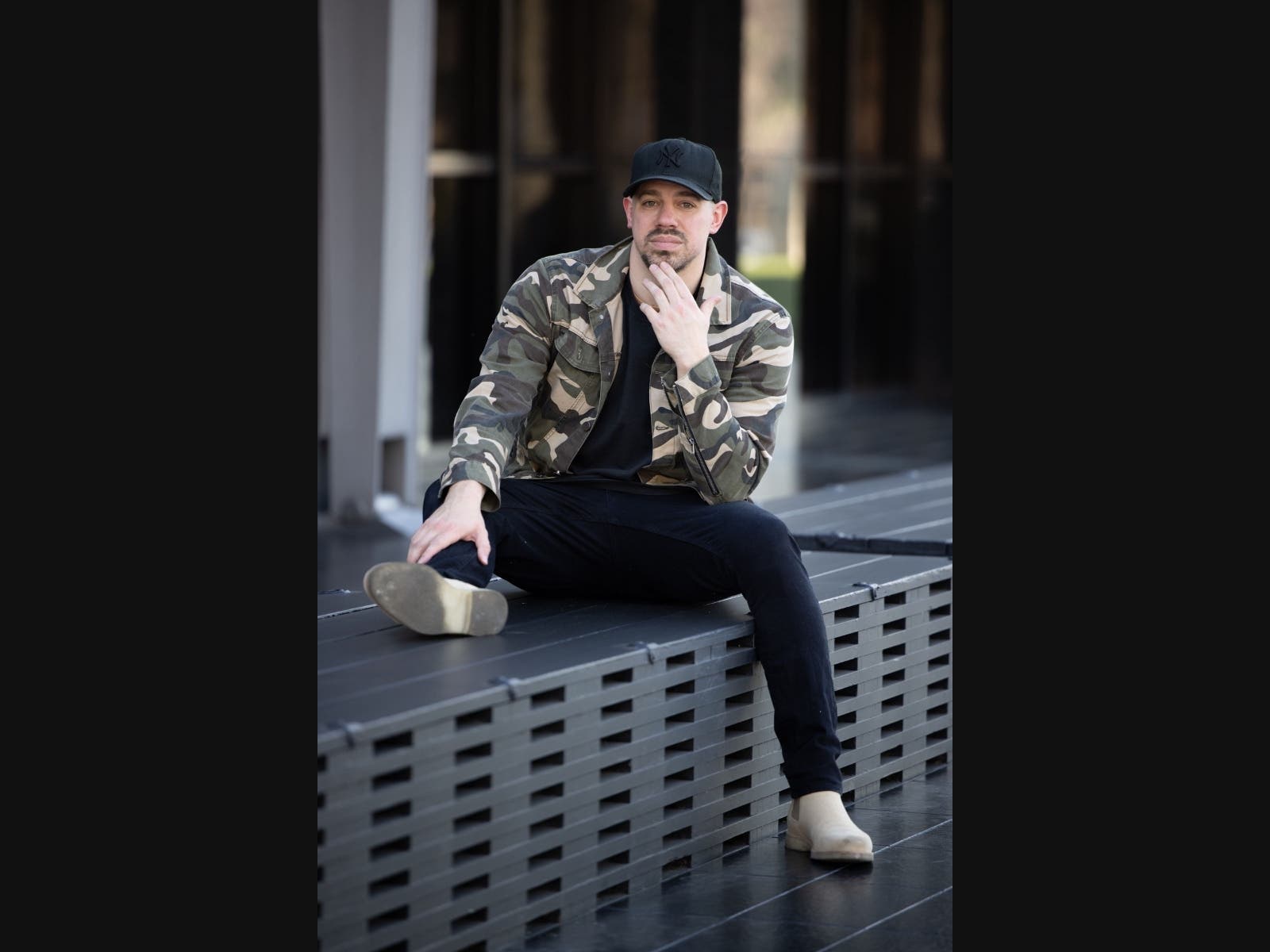
The Chaos Controlled Podcast has officially entered its third season, bringing with it a new lineup of guests and an even deeper commitment to breaking the stigma around mental health. Launched today across all major platforms, the podcast—hosted by nightlife boss and festival producer Mikey Tableman alongside actor Danny J. Gomez—has become a safe space for raw conversations about the struggles and triumphs that shape us. Known for its unfiltered honesty and willingness to sit with the difficult, Chaos Controlled invites listeners into dialogues that feel more like living-room conversations than interviews.
From its earliest episodes, the podcast stood out by focusing on topics many still find hard to discuss—particularly men’s mental health and the unspoken battles that often remain hidden behind masks of strength. Through vulnerability and authenticity, Tableman and Gomez have built a platform where artists, actors, and creators feel empowered to tell their truths. As Tableman puts it, the goal is simple but vital: to normalize the conversation and remind people that opening up is not only acceptable, but necessary for growth and healing.
Season 3 promises to be the most impactful yet, with a diverse roster of guests spanning film, music, and culture. The premiere kicks off with viral sensation and multi-hyphenate performer Josh Killacky, whose openness sets the tone for a season packed with insights, resilience, and powerful storytelling. Listeners can expect new episodes every Wednesday, where each dialogue balances the heavy with the hopeful—giving audiences tools, perspective, and a reminder that no one is alone in their struggles.
Find out what's happening in Los Angelesfor free with the latest updates from Patch.
What continues to set Chaos Controlled apart is its mix of vulnerability and connection. In an era where mental health is finally breaking into mainstream discourse, the podcast goes beyond buzzwords, offering intimate conversations that resonate long after the episode ends. With its influential lineup and heartfelt approach, Chaos Controlled is carving out its place not just as a podcast, but as a movement—one conversation at a time.
We sat down with co-host Mikey Tableman to discuss the podcast’s mission, the stories that have shaped him, and what audiences can expect from Season 3.
Find out what's happening in Los Angelesfor free with the latest updates from Patch.
A Mind’s Pursuit has grown into much more than a nonprofit. When you first started it, did you imagine it would become this full creative ecosystem?
Believe it or not, I actually did. I’ve always thought in these big, almost cinematic ways. From the moment the concept of A Mind’s Pursuit took shape, the ideas just started flowing out of me. I knew it was never going to be just a nonprofit; it was always meant to be a whole ecosystem of creativity, community, and conversation. There’s so much more we haven’t unveiled yet, projects that are still on my vision boards, outlined in my journals and ideas that I haven't even told the team yet. What you’re seeing now is only the beginning of the blueprint
Your work often turns deeply personal struggles into art. How did you first discover that spoken word and music could be a way to process your own battles?
It was actually a huge surprise to me. I didn’t start writing spoken word until the pandemic. I always loved poetry and one day I just decided tos sit down, write and try it. Then it all just poured out of me. Once I started, I couldn’t stop. It was like I had unlocked this new language I didn’t even know I was capable of speaking. Suddenly, all the heaviness I had been carrying didn't feel as tight. Spoken word and music became less of an art form for me and more of a lifeline, a way to process and translate everything I’d never had the words for before.
My Manic Maze is such a powerful title. What does that project represent to you personally, and how do you hope people connect with it?
My Manic Maze is me laying my whole heart out the highs, the lows, basically exposing all of the struggles to be vulnerable. It’s not just a title, it’s the inside of my head turning the chaos to my life's work of art. For me, it represents the journey of learning how to live with the messiness of mental health, of walking through the twists and turns of mania, depression, addiction, heartbreak, healing, and somehow finding beauty in all of it. What I hope is that when people hear it, read it, or see it, they feel less alone in their struggles. That they realize their hard times doesn't disqualify them from love, success, or peace. In fact, those struggles might just be the very thing that makes them powerful. My Manic Maze is personal, but it’s also universal. It’s me hoping to provide a light to help guide others through their own maze.
Addiction, anxiety, and survival are themes that can feel heavy, but your work carries so much hope. How do you find the balance between vulnerability and uplift?
This is something I’m still figuring out every day. Life isn’t clean-cut, it’s heavy and it’s hopeful all at once. I don’t ever want to shy away from the darkness, because that’s real. But I’ve learned the key is to actually let yourself feel it, acknowledge it, and let it run its course while still making sure I stay in control and proceed with the tools I have learned to keep me grounded. That’s where the balance comes in for me. Vulnerability doesn’t have to mean hopelessness; it can actually be the spark that drives you toward healing. I think people connect with my work because it doesn’t try to sugarcoat the struggle, but it also refuses to let the struggle have the last word.
Alchemy brings together different genres and communities. What kind of atmosphere are you trying to create in those live events?
With The Alchemy, the goal is to create a safe space where people can show up exactly as they are; honest, authentic, vulnerable. It’s an open invitation to everyone, no matter what you’re carrying or where you come from. I want it to feel like the kind of room where the walls drop, where art and music and storytelling become the glue that connects us. Different genres, different communities, all blending together into one atmosphere of acceptance. At The Alchemy, you don’t have to perform who you think you’re supposed to be, you can just be. And in that space, you realize you’re not alone in your struggle, and you’re not alone in your healing either.
"Chaos Controlled" is now entering Season 3. What conversations from the podcast have impacted you the most, and how have they shifted your own perspective?
What I love about Chaos Controlled is that I’m constantly surprised how every guest teaches me something new. The conversations always carry this genuine vulnerability, and I’m grateful we’ve built a space where people feel safe enough to go there. Some episodes that really stand out are Alexis Artin, where we dove deep into spirituality, and James Lafferty, when he opened up about life after One Tree Hill and what that transition was like. Those moments stay with me because they’re raw and real, the kind of truths you don’t usually hear in interviews. Now heading into Season 3, it’s honestly hard to narrow it down because this lineup is stacked with incredible voices. Each episode feels like its own masterclass in being human.
(Your upcoming children's book) "Little Mikey’s World" takes a very different angle — teaching emotional literacy to kids. What inspired you to start building something for a younger audience?
If you want to change a stigma, you’ve got to get to it before it starts. So many of us as adults look back and think, if we’d been taught these tools earlier, if we’d known the signs, maybe we could’ve avoided some of the hardship. That’s what inspired Little Mikey’s World. I can’t talk to kids the same way I talk to my peers, so I created a character they could actually relate to, who speaks their language. And honestly, it’s not just for them, it’s for me too. The inner child in me, my own ‘Little Mikey,’ who deserves to feel like he’s making a difference. It’s my way of healing some of that childhood trauma while giving kids something I wish I had growing up.
Spoken word is such an immediate, visceral art form. Do you approach it differently than when you’re producing music or podcast content?
I just write. Whenever I feel heavy or an idea hits me, I sit down and type like a madman. It’s pure word-vomit every thought, every feeling, just spilling it onto the page. There’s no polished process at that moment, it’s just me getting it all out. Later, I’ll come back and shape it into something people can connect with but the heart of spoken word for me is that raw, unfiltered release. With music or podcasting, there’s more structure, more production. Spoken word is different, it's immediate, it’s messy, it’s me in real time in the most authentic form I can portray.
Your story includes some dark and near-fatal moments. When you share that publicly, do you ever struggle with how much to reveal versus how much to protect for yourself?
No, not anymore. For a long time I did, because I carried a lot of shame around my past. But over time I realized that sharing it could actually help people who are stuck in the same dark places I’ve been. I truly believe I went through what I went through so I could speak on it and maybe light the way for someone else. It’s part of my story, part of who I am, and I’ve learned not to hide the honest parts of me, that honesty is the reason I’ve made it this far. Does it still hurt? Of course it does. But that doesn’t mean I stay quiet about it. Speaking my truth is how I heal, and how I hope others find healing too.
If someone walks away from your work — whether it’s a poem, a podcast episode, or a live event — what’s the one message you hope sticks with them?
I hope they walk away knowing they’re not alone. That whatever chaos, pain, or doubt they’re carrying doesn’t define them, it can be turned into something powerful. My whole mission is about showing people that struggle and beauty can exist in the same breath. If someone leaves one of my poems, a podcast, or an event with the feeling that their story matters and their voice deserves to be heard, then I’ve done my job. At the end of the day, it’s not about me, it's about reminding people that their darkest chapters can still lead to light, because you can't dim someone who learned to shine in the dark.