Neighbor News
Neighbor’s Tree Cut Down – What This Loss Means To Me
A large tree is cut down in a neighborhood. There is a bigger meaning here.

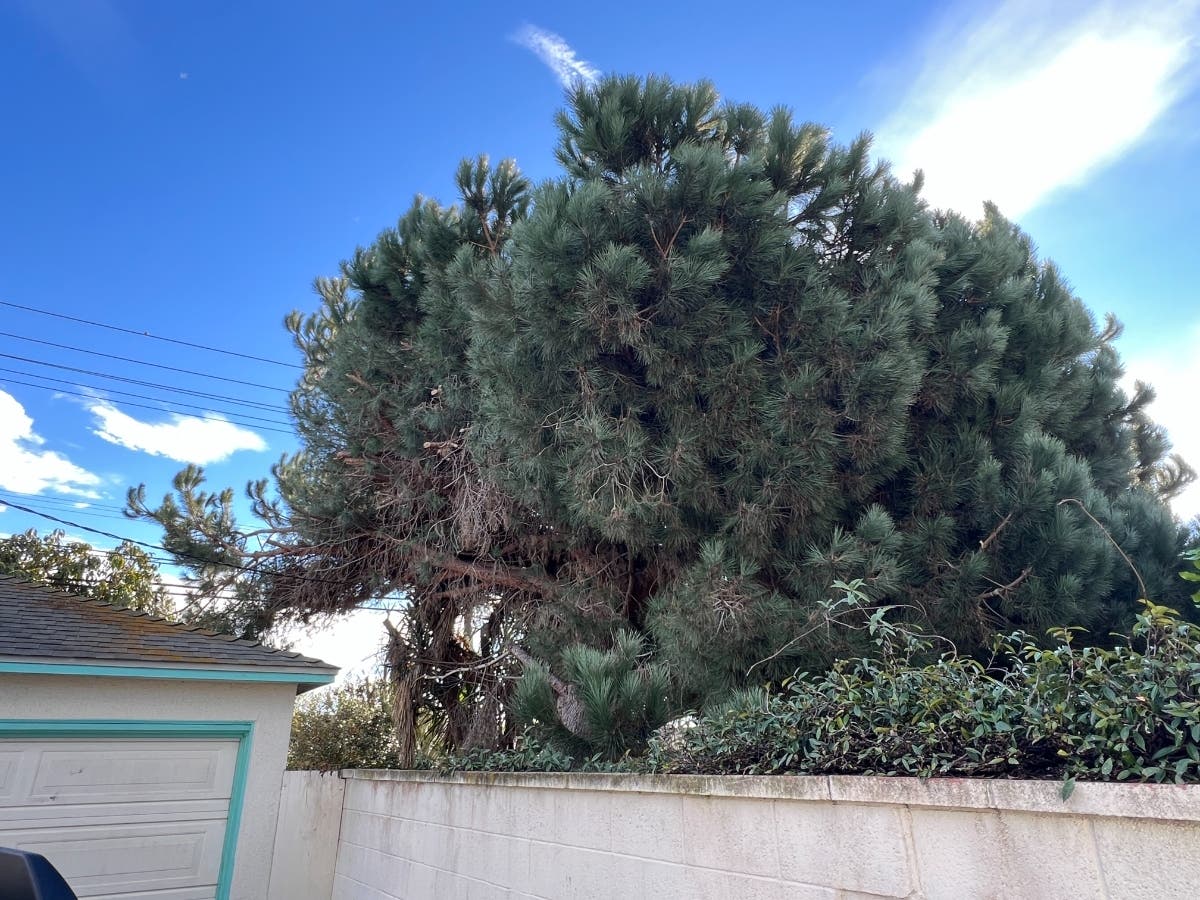


My neighbors cut down a huge pine tree in their back yard this week. It was falling over, apparently from being saturated from the last rain. I was hoping the tree could be saved, but no. Losing a tree of this size, probably 50-70 years old, is a big loss, not only to the homeowner but to the neighborhood as well. One of my greatest laments living in SOCAL for the past 39 years (I’m a transplant from the East Coast), is my observations that the urban and suburban forests of the West have been disappearing at an alarming rate. Why does this matter? Well, the shade a mature tree provides cannot be overestimated. It cools the air; provides pheromones that calm people (Ai definition: Forest bathing (Shinrin-yoku) utilizes plant chemicals called phytoncides—volatile organic compounds like terpenes (e.g., pinene, limonene) released by trees—as natural aromatherapy, boosting immune function (increasing “Natural Killer” NK cells in the immune system) and reducing stress hormones (cortisol) by inhaling the forest's fragrant aerosols, mimicking nature's defense system for human well-being…. In essence, forest bathing uses the tree's own defense chemicals (phytoncides) to strengthen human defenses, making it a form of botanical medicine and aromatherapy); and is teaming with bird, mammal and insect life. I get that people came from all over the planet to settle in SOCAL, I get that they brought their plants with them and those plants are now part of the iconic green tapestry of our area, but something has been lost and I wonder if we can ever get it back. Historically, there were, and in some neighborhoods still are, groves of native walnut trees; canyons full of Oaks; coastal habitats with dune lupine, lemonade berry, buckwheat; chaparral with sages and sunflowers; and water systems lined with sycamores, cottonwoods, and willows. We COULD bring all of this back. The symbolism of this one lone pine tree (which may or may not have been native - nevertheless, was clearly being used by people and wildlife alike) being taken down is that it probably will not be replaced with anything comparable. Every time a mature tree goes, we lose decades of growth that cannot be brought back. I think the thing that has bothered me the most is that when I’ve seen huge mature trees taken down over the past 4 decades there has been no concerted effort to replace that tree - or add more trees of that size - to neighborhoods. Many new developers swoop in with trending landscaping styles (usually to save money) that use mostly non-native, ornamental plants, and this is duplicated over and over, many times having no relation to what once was, and providing little, if any, ecosystem services. Again, why does that matter? If we want healthy neighborhoods there has to be a balance between people and nature, it is the definition of urban ecology (Ai definition: viewing urban areas as unique ecosystems where organisms, plants, animals, and built environments interact, aiming to integrate ecological sensitivity with urban planning for healthier human-nature coexistence.). In my professional life I sit on committees that promote urban ecology principles, I work for a university with a beautifully landscaped campus that provides habitat for iconic birds and other wildlife, but I still see new developments go in with no understanding of the history or place of the area, and that saddens me greatly. There is nothing more grounding than a sense of place. Let’s not lose the magic of California’s 10 major bioregions by wiping out and not replacing native flora that historically has grown here. You can do something about this. Speak up, ask your gardener about native plants, tell your contractor you want native trees and shrubs, pollinator plants, and water features that will give you a sense of place and peace. Your voice, repeated over and over, by home and business owners, will send a message. Planting is one thing, maintenance is another. Trees need to be maintained and I suspect my neighbor’s tree was not properly maintained over the years. Whether benign neglect or ignorance, trees are living things that need to be cared for. The second observation I have made in SOCAL is how trees are maintained. Wonder why many trees in SOCAL look like they are “coat-racked” on a regular basis? Somewhere along the line this hideous method of tree trimming has become a tolerated standard and accepted management practice – it’s one of the most egregious insults to nature that I’ve ever seen. Trees are meant to have canopies full of branches and leaves – you shouldn’t see through them. It’s ridiculous. Speak up. You need to ask for your trees to be trimmed and pruned gently - even demand it, because you will hear every excuse under the sun: “get your money’s worth, even if the tree is butchered, or else the tree will fall over in a high wind with a big canopy”, “we can’t come back for another 15 years” (especially if municipal tree management is budgeted with empty city coffers). That’s nonsense. I blame the tree industry for allowing this to get out of hand, it’s their line of work, they should be policing it. But you can too, if you want a neighborhood that thrives. Ask for it. As I continue to mourn the loss of my neighbor’s tree I feel compelled to share my thoughts with you, the reader. Please speak for the trees, for your neighborhoods, for nature and humanity. Let’s become the poster child for Urban Ecology in the West. Start small, replace a dead non-native plant with a native, keep mature tree groves healthy, enjoy your plants from around the world while at the same time paying tribute to where you live now – by planting natives. This is now a WORLD-WIDE movement, be part of the future of our planet!