Politics & Government
Newsom Calls For CA Divestment From Russia Amid Ukraine War
The California governor on Monday asked officials to divest Russian holdings to align with the federal government and other states.


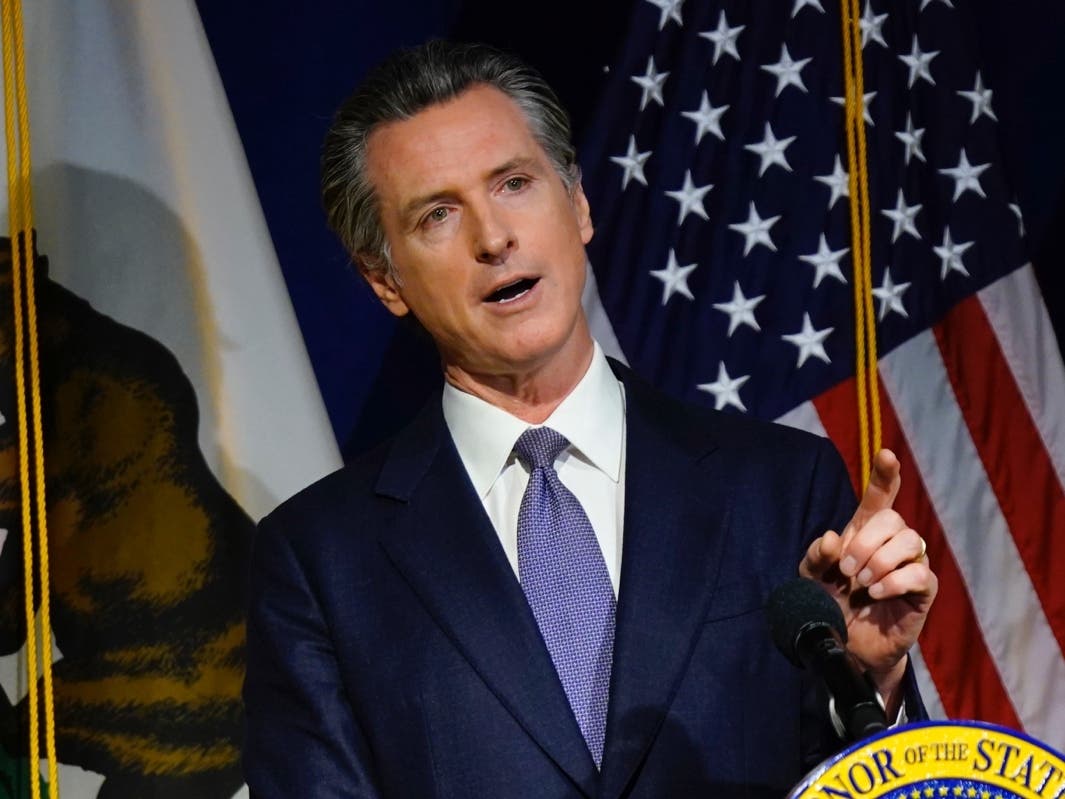
CALIFORNIA — Gov. Gavin Newsom called on California's largest pension funds and its university retirement system Tuesday to divest themselves of Russian holdings to weaken the country's economy after its invasion of Ukraine.
The move was an effort to align the state with the U.S. government and other states to strengthen economic sanctions against Russia.
Newsom also tasked officials with authorizing recommendations within 10 days on how to protect the state's investments amid the conflict in Ukraine — the first major land war on European soil in decades.
Find out what's happening in Los Angelesfor free with the latest updates from Patch.
The governor's letter came after a bipartisan coalition of California lawmakers announced plans to draw up a bill that would require state agencies to divest Russian assets.
The bill was expected to be formally introduced this week and would take effect immediately if the Legislature passes it and Newsom signs it.
Find out what's happening in Los Angelesfor free with the latest updates from Patch.
The governor's statements Tuesday suggested he would expedite that process.
"Russia’s brazen and lawless military assault on Ukraine demands our support for the Ukrainian people and exacting an immediate and severe cost upon the Russian government in response to its continuing aggression," Newsom said Tuesday. "California has a unique and powerful position of influence given the state’s substantial global investment portfolio."
Newsom's letter addressed the California Public Employees’ Retirement System, or CalPERS, which holds roughly $480 billion in assets; the California State Teachers’ Retirement System, or CalSTRS, which holds $320 billion in assets; and the University of California’s retirement system, which holds another $170 billion.
CalPERS, CalSTRS and the UC system combined hold $1.5 billion in Russian investments, according to Newsom's letter. The governor called on the funds to divest assets while protecting the income of retirees.
The bill, announced by state Senate Majority Leader Mike McGuire (D-Healdsburg), would call on businesses and state agencies to cut economic ties with Russia.
"The world is watching the atrocities taking place in Ukraine. It's sickening," McGuire's office said in a statement. "We must stand strong for the people of Ukraine. That's why we all must mobilize to stop Russia in its tracks. California has unique and remarkable economic power in this circumstance."
President Joe Biden's administration announced sweeping sanctions against Russia last week. But McGuire said he seeks to further weaken Russia's financial standing.
"As the fifth largest economy in the world, we must use this power for good. We can help stop this autocratic thug, Putin, by advancing this critical legislation and enacting our own financial divestments," he said.
New York, Georgia, Indiana, Pennsylvania, Connecticut, New Jersey, Virginia and North Dakota have all joined the effort to place sanctions on Russia.
Big tech platforms also moved to restrict Russian state media from using their platforms to spread propaganda and misinformation.
A wave of tech companies, some anchored in California, blocked the media channels such as RT from their platforms.
Google announced Tuesday that it will block the YouTube channels of Russian media outlets in Europe “effective immediately” but acknowledged “it’ll take time for our systems to fully ramp up.”
But RT and other Russian-state media accounts remained active on Facebook in the U.S.
Twitter announced Monday that it will add labels to content from the Kremlin’s websites after seeing more than 45,000 tweets daily from users sharing Russian state-affiliated media links in recent days. The company also said it would not recommend or direct users to Russian-affiliated websites in its search function.
Over the weekend, the Menlo Park-based company announced it will ban ads from Russian state media and remove a network of 40 fake accounts, pages and groups that published pro-Russian talking points.
The Associated Press contributed to this report.
Get more local news delivered straight to your inbox. Sign up for free Patch newsletters and alerts.