Politics & Government
Noncitizen Voting, LAPD Reform Back On Table As LA Reopens Charter Debate
The months-long review will consider major changes to how Los Angeles governs, polices and conducts local elections.
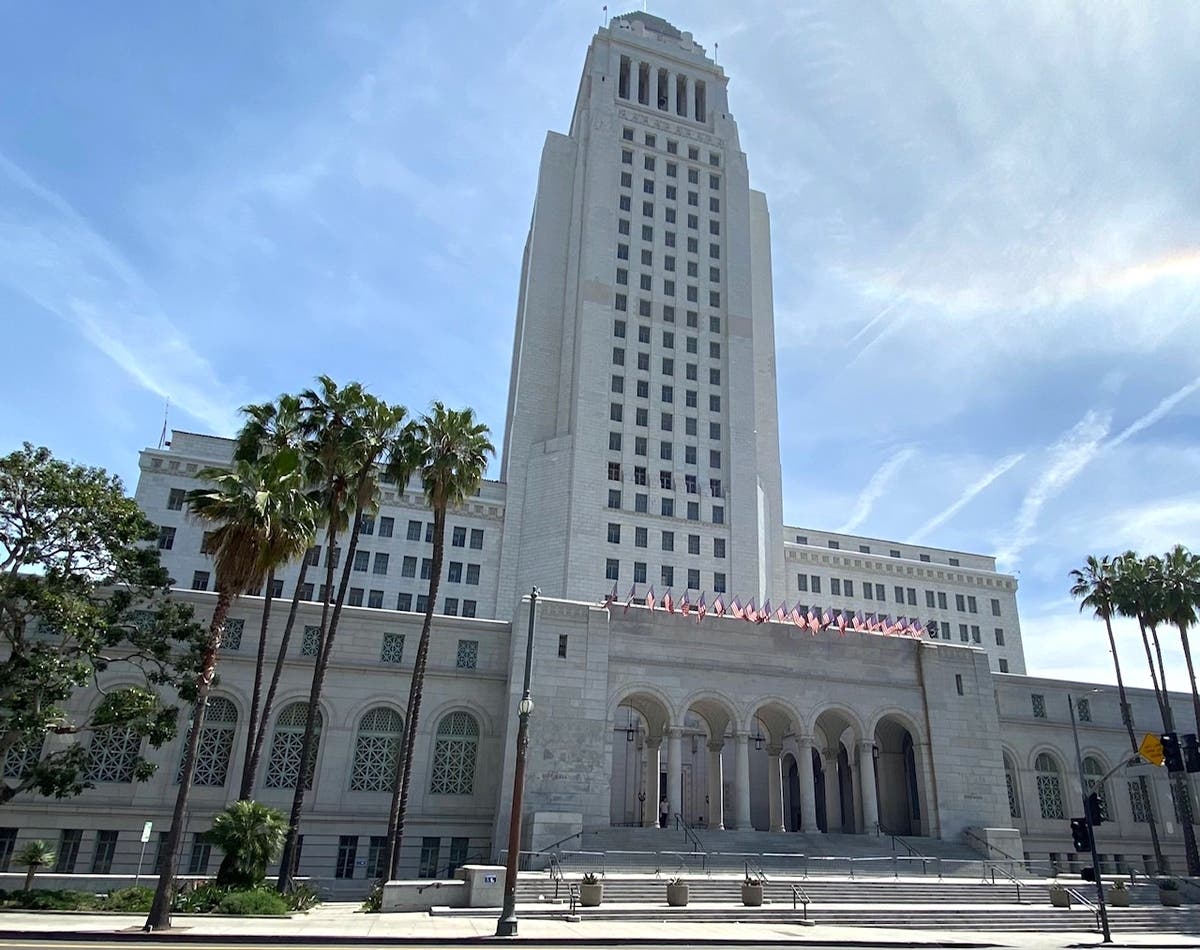
LOS ANGELES, CA — A City Council committee on Los Angeles charter reform convened its first meeting Wednesday, setting the stage for a months-long process to explore possible council expansion, police reform and a proposal to allow non-citizens the right to participate in local elections.
A panel of five City Council members is expected to discuss and ultimately pass on recommendations for charter amendments that were sidelined earlier this year. Council President Marqueece Harris-Dawson created the Ad Hoc Committee on Charter Review in August, and appointed colleagues Tim McOsker as chair of the committee and Heather Hutt as vice chair. Other members of the committee are Eunisses Hernandez, Nithya Raman and Katy Yaroslavsky.
"The City Charter is, in so many literal ways, our city's Constitution. It establishes how this local government is structured, where authority rests, and how our departments, commissions and elected officials and other institutions serve Los Angeles," said McOsker, who represents the 15th Council District, encompassing the Harbor Area and Watts.
Find out what's happening in Los Angelesfor free with the latest updates from Patch.
"But what's most important about the City Charter is that it is a document that is adopted or rejected by the people. It's not ours. It's not City Council's, it's all of ours collectively," McOsker added.
He said comments from residents and organizations indicate there's more work for the council to do on charter reform.
Find out what's happening in Los Angelesfor free with the latest updates from Patch.
"Some of these issues ... are deferred to require further study," McOsker said. "Other charter-related issues matters remain pending before the City Council right now, and there are some broader questions about how we can make our city government work better for Angelenos."
Speaking for himself, McOsker expressed interest in reform for civil service, personnel and police disciplinary systems. He added that he wants to look at ways to modernize city government, improve efficiency and strengthen accountability, as well as restoring good governance and public confidence in institutions.
He proposed sequencing the committee's work around four broad themes. The first would be discussions about separation of power, which would be conducted through November. From December to January, McOsker said the panel would examine delivery of services, followed by discussions about fiscal governance from February through April, and lastly a review of elections, representations and public trust from May through July.
McOsker said he aims to have final reports and proposed charter language no later than the summer recess of 2027, so that on its return the full council can spend August through October cleaning up and finalizing the recommendations.
Any proposals for charter reform are expected to go before voters in 2028.
"The idea is that we do not put ourselves in a position where this comes to the full City Council so late in the process that there's not a complete and adequate description of what we have done and why," McOsker said.
In June, the council advanced a number of City Charter amendment proposals, but held off on significant measures such as allowing non-citizen or so-called "residential" voting for city and Los Angeles Unified School District elections, as well as a proposal to empower the City Council with greater oversight of the Los Angeles Police Department, and grant the chief of police the ability to fire officers outright.
Other proposals that were punted consisted of City Council expansion, lowering the voting age from 18 to 16, ranked-choice voting, and a proposal to split the city attorney's role into an elected city prosecutor and an appointed city attorney.
The ad hoc committee was created months after the city completed a series of individual charter reform proposals. Los Angeles voters are expected to decide whether to approve them in the Nov. 3 election.
Among these proposals are the following:
- Charter Amendment LA, which seeks to amend the charter to establish a capital infrastructure plan, a two-year budget cycle, increase the authority of the director of public works, authorize elimination of or changes to the Board of Public Works, allow the city to engage in businesses enterprises, mortgage city-owned properties and amend contracting rules and procedures.
- Charter Amendment PL, which aims to amend certain planning and land use management policies such as replacing the seven Area Planning Commissions and their 35 commissioners with a single, new Neighborhood Appeals Commission with at least seven members, grant the City Planning Department and director of planning authority over quasi-judicial applications, make changes on an existing process for the City Council to assert jurisdiction in planning and land use matters, enact General Plan amendments automatically if the council fails to act within 75 days of approval by the mayor and City Planning Commission; and allow the council to change the floor-area restriction limitation by ordinance.
- Charter Amendment EE, which aims to make changes and clarify provisions for elections, ethics and governance, such as by prohibiting the executive director and ethics commissions from running for any city elected office or LAUSD Board of Education office for at least five years after leaving their positions, increasing campaign finance violations to $15,000 per violation, strengthening the independence of inspector generals for the fire and police departments, and allowing the council to meet at least once weekly rather than at least three days per week, among other things.
- Charter Amendment PRK, which seeks to increase a minimum budget allocation for the Department of Recreation and Parks from 0.0325% to 0.065% over 10-year phased-in period.
- Charter Amendment PRT, which would make changes to the city's proprietary departments such as the airports, the harbor and the DWP. For example, the proposal would allow the DWP and Harbor Department to provide leases for up to 66 years. Additionally, it would increase local residency requirements for the Board of Airport Commissioners, requiring that three of the seven members be residents in neighborhoods around LAX and at least two members reside in the area near Van Nuys Airport.
- Charter Amendment SC, which aims to clarify campaign finances rules for LAUSD Board of Education and mayoral candidates by restricting campaign contributions to $1,000, as well as to enact treasury and financial accountability requirements, among other things.
The City Charter reform process was spurred in response to the 2022 City Hall tapes scandal, in which former City Council President Nury Martinez was recorded using racist language and discussing ways to amass power in a 2021 call.
By Jose Herrera, City News Service