Arts & Entertainment
PEE-YEW! Corpse Flower Ready To Bloom At The Huntington Library
The Huntington Library is on watch for the rare bloom of its corpse flower famous for its stench of rotting flesh.


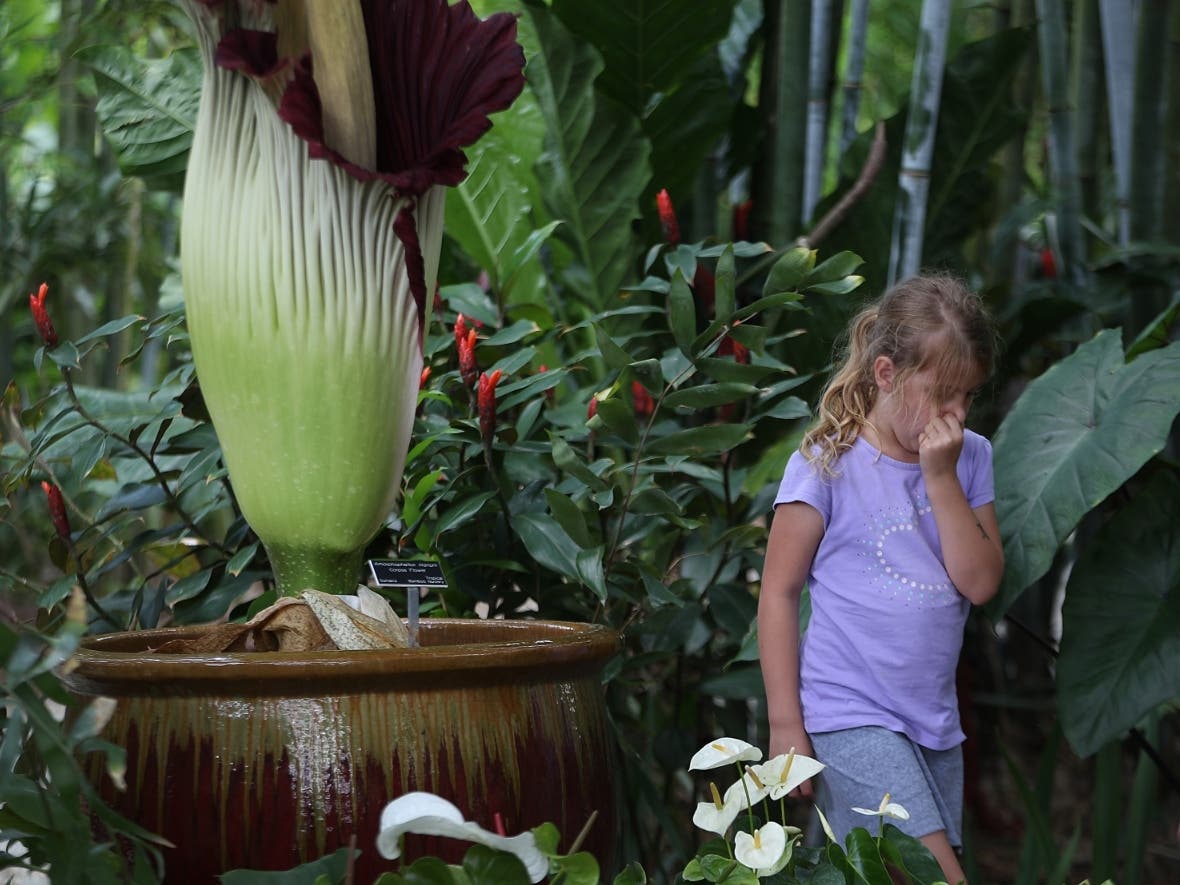
SAN MARINO, CA — You might not be able to see it in person, but you may soon smell it wafting on the air —the sickly sweet smell of the corpse flower.
For a second year in a row, another corpse flower is about to bloom at The Huntington Library, Art Collections and Botanical Gardens in San Marino. Because of the pandemic he Huntington's indoor spaces remain closed, so you won't be able to get a whiff up close. However, its progress can be viewed online in what the Huntington calls a virtual #BloomWatch.
The rare flower only blooms about once or twice a decade. Officially, an Amorphophallus titanum, also known as the corpse flower and #StinkyPlant, has been called the world's largest flower, but is technically an "inflorescence," or a cluster of flowers. It can reach more than 8 feet in height when it blooms, opening to a diameter of 4 feet. It gets its moniker from its sickly sweet scent, which has been likened to the smell of rotting flesh
Find out what's happening in Los Angelesfor free with the latest updates from Patch.
The corpse flower about to bloom was 24 inches tall Thursday, two inches taller than Wednesday. A daily growth chart is posted on the website.
A different corpse flower bloomed at The Huntington in July of 2019. When in one of its ultra-rare blooms, its odor attracts insects that pollinate the flowers deep inside.
Find out what's happening in Los Angelesfor free with the latest updates from Patch.
According to Huntington spokeswoman Lisa Blackburn, the blooming plant produces two key gases — dimethyl disulfide and dimethyl trisulfide — that also are present in decomposing animals and vegetables.
What prompts a particular plant to start the blooming process largely remains a mystery, Blackburn said, but the corpse flower tends to bloom during hot weather.
When a corpse flower was first displayed at the Kew Royal Botanic Gardens in the late 19th century, at least one Victorian woman was said to have swooned when she got a whiff of the bloom.
The flower was first displayed in the United States in 1937 at the New York Botanical Garden.
City News Service and Patch Staffer Paige Austin contributed to this report.
Get more local news delivered straight to your inbox. Sign up for free Patch newsletters and alerts.