Neighbor News
The Quiet Power of Music and Movement in California Schools
From San Diego to Sacramento, educators are finding that music, dance, and creative play teach children what worksheets never could.

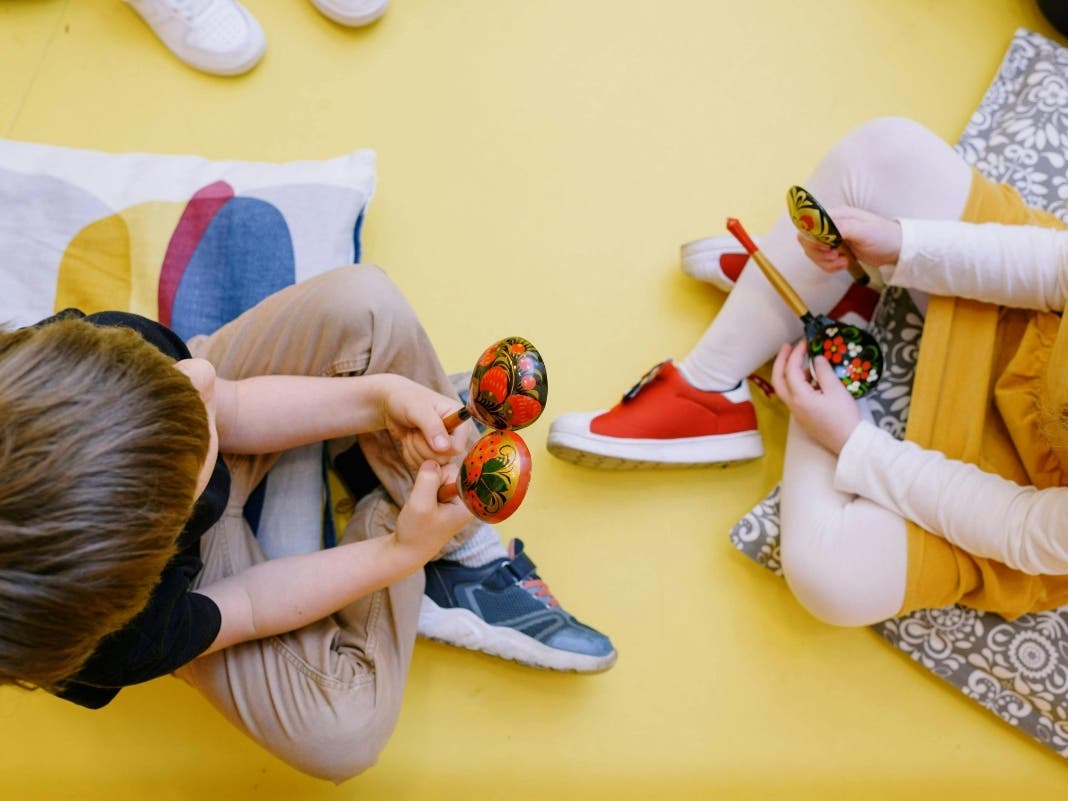
The first time I watched a roomful of second graders figure out a rhythm together, it looked like total chaos.
About twenty kids were sitting on the floor with bucket drums between their knees, sticks flying everywhere, half of them giggling while the other half stared at the instructor like she had lost her mind.
Then she played a four-beat pattern and raised a closed fist, and the room went quiet.
Find out what's happening in Los Angelesfor free with the latest updates from Patch.
She played it again, and a few students echoed it back. By the third time, the whole group had locked in, and the rhythm was steady and tight.
In the very back row was a boy, whom the site coordinator had warned was “a handful,” grinning like someone who had just been let in on a secret. That moment stayed with me because it captures something that is happening in classrooms and after-school programs across California right now.
Find out what's happening in Los Angelesfor free with the latest updates from Patch.
Schools and community organizations throughout the state are turning to music, movement, and the creative arts to address a challenge that traditional academics were never built to solve: helping young people develop the emotional awareness and self-control they need to navigate their inner lives.

The Problem No Worksheet Can Fix
Social-emotional learning (SEL) is one of those terms that sounds like it was coined in a conference room, but the idea behind it is both old and simple:
- Can a child recognize what they are feeling?
- Can they calm themselves down when things go sideways?
- Can they listen to someone who sees things differently, or work through a disagreement without shutting down?
These are not soft skills. They are the foundation everything else rests on, and a growing body of research shows that many young people are struggling with them in ways educators have not seen before.
In California, youth behavioral health surveys have consistently found that roughly one in three adolescents report persistent feelings of sadness or hopelessness.
School counselors from Chula Vista to Stockton describe growing waiting lists and a noticeable rise in students who have trouble with basic peer interaction, even among children who show no other signs of concern.
More counseling staff, more referrals, and more open conversations about mental health became valuable and necessary. But many educators have noticed a gap in the approach.
Not every child who is struggling will sit in a chair and put words to what they are going through, especially the younger ones who may not have the language for it yet. The scale of the need has outpaced what most school systems can realistically offer through conventional support.
What a Drum Circle Actually Teaches
There is real science behind what experienced music educators have understood for a long time.
Research published in journals like Frontiers in Neuroscience has shown that group music-making synchronizes brain activity among participants and activates regions of the brain tied to empathy and emotional regulation all at once.
When a child plays a drum alongside their peers, sings within a group, or learns to listen for the exact moment their note fits into a larger piece, they are practicing, physically and immediately, the same skills that SEL programs try to teach through discussion and role-play.
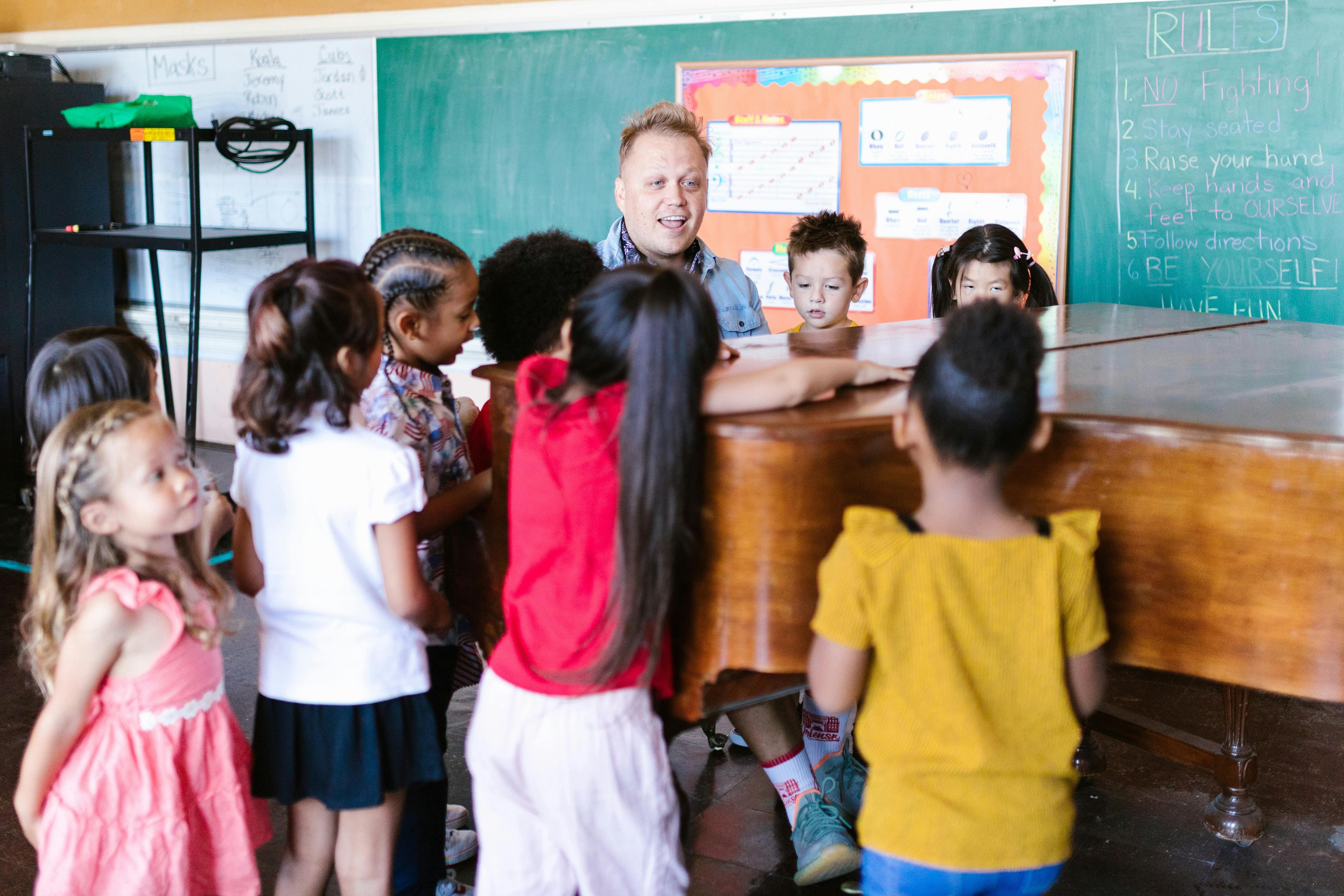
How this plays out in practice matters more than the theory. In percussion programs across California, elementary students learn call-and-response patterns where the instructor plays a rhythmic phrase, and the group echoes it back.
It sounds simple, but it is actually a demanding exercise in active listening, impulse control, and group awareness. As students advance, they learn to hold individual rhythm parts within a larger ensemble arrangement, each small group maintaining a different pattern while the whole locks together into something cohesive.
Some programs weave in percussion traditions from around the world, including West African drum ensembles where several interlocking parts combine to form a single groove, teaching students through direct experience that their contribution only makes sense in relation to everyone else's.
The strongest programs also use carefully designed games and competitions to reinforce listening, memory, and quick thinking without students ever feeling like they are sitting through a lesson. The learning happens underneath the fun, almost invisibly, which is a big part of why it works.
Dance as an Emotional Language
Movement-based programs reach many of the same outcomes through a completely different door.
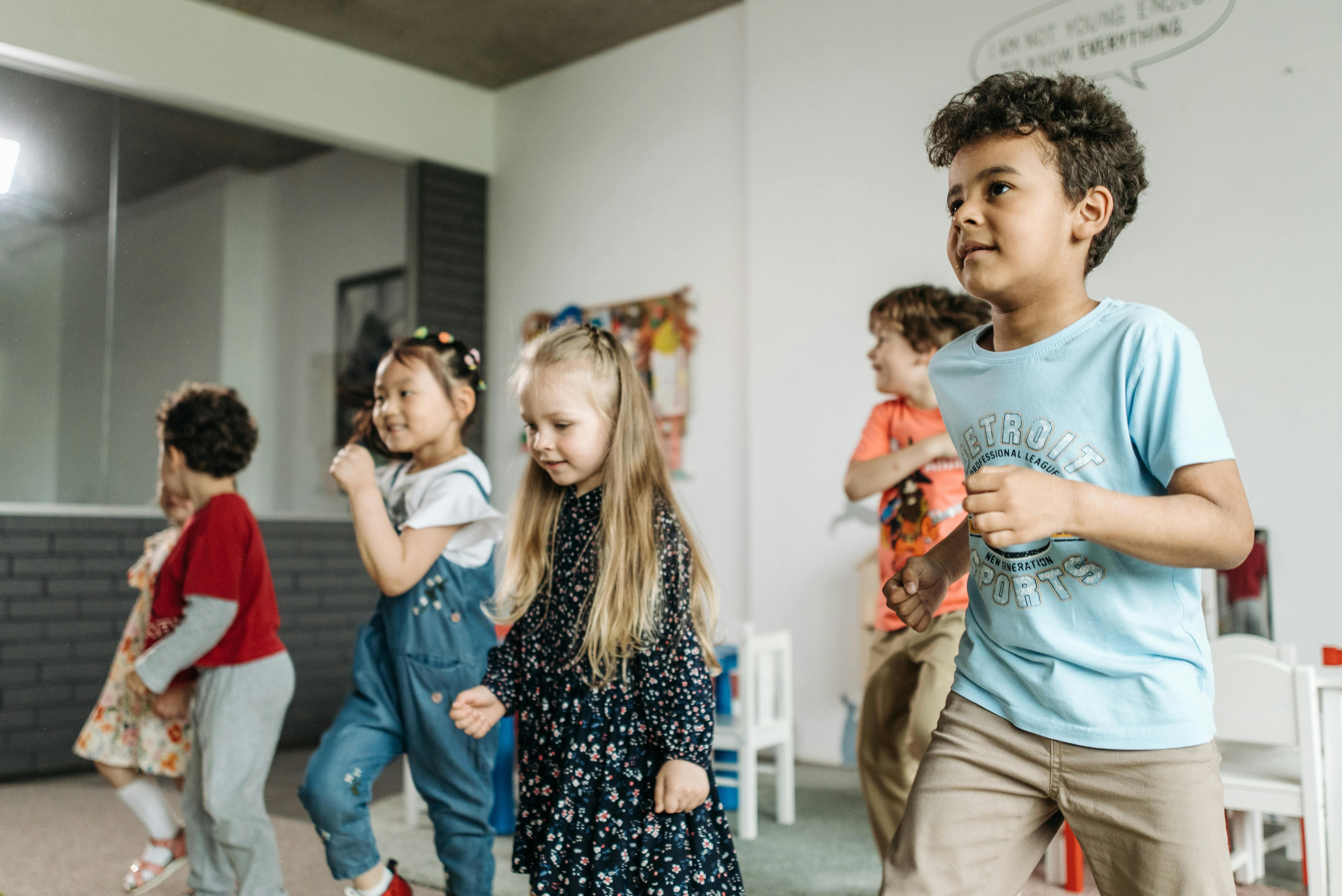
In creative dance classes at California elementary schools, students start each session with a structured warm-up before moving into partner and group activities that build coordination, rhythm, spatial awareness, and social skills all at once.
Some exercises place students face-to-face and ask one to lead while the other mirrors every movement in real time, requiring a level of sustained focus and sensitivity to another person that few other classroom activities can match.
Others pass a movement phrase from one student to the next, so the whole group can watch how a single idea transforms through twenty different interpretations.
The contrast is usually hilarious, but students are also absorbing a real lesson in observation, memory, and how communication shifts every time it passes through someone else's perspective.
For the youngest children, particularly those in transitional kindergarten through second grade, the most effective programs focus almost entirely on movement and music-based play, using the child's body as the main instrument of expression.
At this age, the line between having fun and building emotional skills is basically invisible. A four-year-old who learns to freeze her body when the music stops is practicing the same kind of self-regulation that will matter in every classroom she walks into for years to come.
Middle School: Where the Stakes Rise
If elementary programs build the foundation, middle school is where that foundation gets tested. The social world of sixth, seventh, and eighth grade is famously complicated, and emotional skills that seemed solid at eight can feel shaky by twelve.
Digital music production has turned out to be a particularly effective way to reach this age group. In enrichment programs running across multiple California districts, middle school students learn to build original songs using professional digital audio tools, layering loops, recording their own vocals, and mixing completed tracks into polished products.
The tools are intuitive enough that a student with no prior experience can create something that sounds like a finished song within the first session, which matters at an age when kids are quick to write off anything that does not feel relevant.
What makes this work meaningful goes beyond creative expression alone. It is the process the work requires: making choices, trying things that do not pan out, rethinking an approach, and eventually committing to a finished piece shared with others.
What the Best Programs Have in Common
Research from the Collaborative for Academic, Social, and Emotional Learning, known as CASEL, has identified a clear set of traits shared by the most effective SEL programs.
A meta-analysis of over two hundred studies found that programs that are sequenced, active, focused, and explicit in their approach produced meaningful gains in academic performance, social behavior, and emotional well-being.
In arts-based settings, those principles tend to show up in predictable ways: programs run over multiple weeks, building skills in a thoughtful order rather than offering one-off experiences; they are led by educators who understand how children develop, not just the art form itself; and they are built around a clear arc that typically leads to a performance or showcase where students present what they have created to peers, teachers, and family members.
Families looking for California school music enrichment programs are increasingly learning to ask the questions that matter:
- How often does my child participate?
- Is there a real curriculum behind the instruction, or is this mostly unstructured time with instruments?
- Does it build toward something meaningful?
A child who learns a song over several weeks is also learning patience. A child who improvises a dance in front of peers is learning to trust her instincts. A child who performs for forty people after two months of rehearsal is building a kind of courage that no pep talk can replicate.
What Families and Communities Can Do
None of this requires waiting for a policy change or a new funding cycle.
Families who want to support their children's emotional growth through the arts can start by searching for California school music enrichment programs, after-school arts workshops, or community classes that build social-emotional goals into their teaching on purpose.
The organizations that take this work seriously tend to be open about their approach and structure their curricula around clear outcomes, rather than treating emotional growth as a nice side effect of artistic activity.
At the district level, community members can advocate for sustained arts funding and push back against the stubborn idea that creative programming is a luxury. The research is clear and has been for a long time.
For many children, especially those growing up in communities where stress and limited resources are part of everyday life, arts-based learning is not a supplement to emotional development. It is the most direct and effective path into it.
A Different Kind of Readiness
There is a big conversation happening in education right now about what it truly means for a child to be "ready," whether for kindergarten, for middle school, or for whatever comes next
Increasingly, the people closest to this work are arriving at a shared conclusion. Readiness cannot be measured by reading levels and test scores alone. It also has to include whether a child can manage frustration, work with someone who thinks differently, recover from a setback, and ask for help when they need it.
These are learned skills, not traits you are born with, and for a growing number of California's young people, from San Diego to Sacramento, they are being built one rhythm, one movement, one creative act at a time.
The California Arts Council provides research, program directories, and guidance for families and educators who want to learn more about how creative programming supports whole-child development across the state.
Back in the classroom with the bucket drums, the session is winding down. The instructor has the students holding three separate rhythm parts at once now, each group keeping its own pattern while the collective sound has a tightness and cohesion that none of them could produce alone.
The “handful” in the back row is playing the offbeat part, the hardest of the three, and he is completely locked in.
His classroom teacher, watching from the doorway with her arms folded, catches my eye and mouths, "Always." By that, she means this is who he is when someone gives him the right context to show up in.