Politics & Government
Rapidly Melting Snowpack Raises Specter Of DWP Water Restrictions
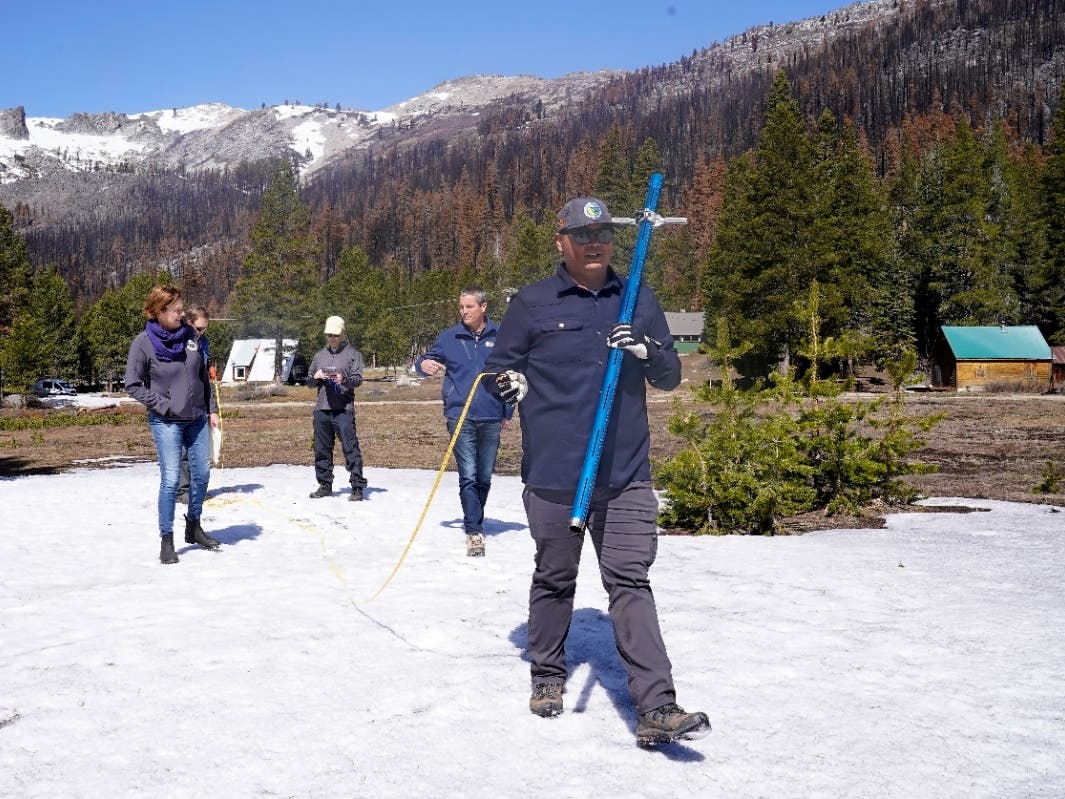
Within two weeks, the snowpack in the Eastern Sierra fell from 41% of normal to 22 percent, according to the Department of Water and Power.


LOS ANGELES, CA — While urging Angelenos to conserve water during the warm spring and summer months, Los Angeles Department of Water and Power officials warned water restrictions may be on the horizon Wednesday.
Three years into the Golden State's extreme drought, water officials are, once again, alarmed by the rapidly melting snowpack across the state. In April, the state saw unusually early and rapid snowmelt.
On April 1, the snowpack was 41% of normal, however on Tuesday, less than two weeks later, readings from the DWP's Eastern Sierra snow measuring stations showed it had melted to 22% of normal, the equivalent of 4.9 inches of water content.
Find out what's happening in Los Angelesfor free with the latest updates from Patch.
Statewide, residents and businesses have failed to conserve water significantly despite the governor's urging. During the last major drought, state and local officials turned to restrictions on water usage, namely limiting landscape irrigation to ensure conservation. Now, water officials in the region are, once again, assessing drought response actions that may include significant outdoor watering restrictions for impacted areas, according to the DWP.
"We've had three consecutive record-dry months during the third year of dry conditions," DWP General Manager and Chief Engineer Martin Adams said. "That, combined with the early-season snowmelt and the anticipated limited availability of State Water Project supplies, has put the city's water supply in a critical situation. This is a time for all of us to be vigilant in saving water wherever possible."
Find out what's happening in Los Angelesfor free with the latest updates from Patch.
The DWP conducts snow surveys from February to April at six locations in the Eastern Sierra where snowmelt feeds into the Los Angeles Aqueduct, one of four major water sources for Los Angeles. Along with the aqueduct and local groundwater, the DWP receives water from the State Water Project and the Colorado River Aqueduct, both water supplies purchased from the Metropolitan Water District of Southern California.
The DWP said its April snow survey results mirror the state snowpack levels, which remain well below average. The dry conditions combined with low reservoir levels throughout California led to the state's recent decision to cut water allocations from an already low 15% to 5% from the State Water Project, which comes into the DWP's water system via the MWD.
Water officials in the region are assessing drought response actions that may include significant outdoor watering restrictions for impacted areas, according to the DWP.
The utility is one of the few water agencies across the state to mandate water use restrictions continually since 2009. It has remained in Phase 2 of the City's Water Conservation Ordinance, in place since 2009, which limits outdoor watering to three days a week, along with other permanently prohibited uses of water.
DWP officials said they may need to go to higher restrictions in the coming months to respond to the latest supply conditions.
City News Service and Patch Staffer contributed to this report.
Get more local news delivered straight to your inbox. Sign up for free Patch newsletters and alerts.