Politics & Government
Renters Rally At City Hall Against 'Unfair' Ratio Utility Billing System
"It's another way for landlords to be able to extract profit from tenants," one organizer said.
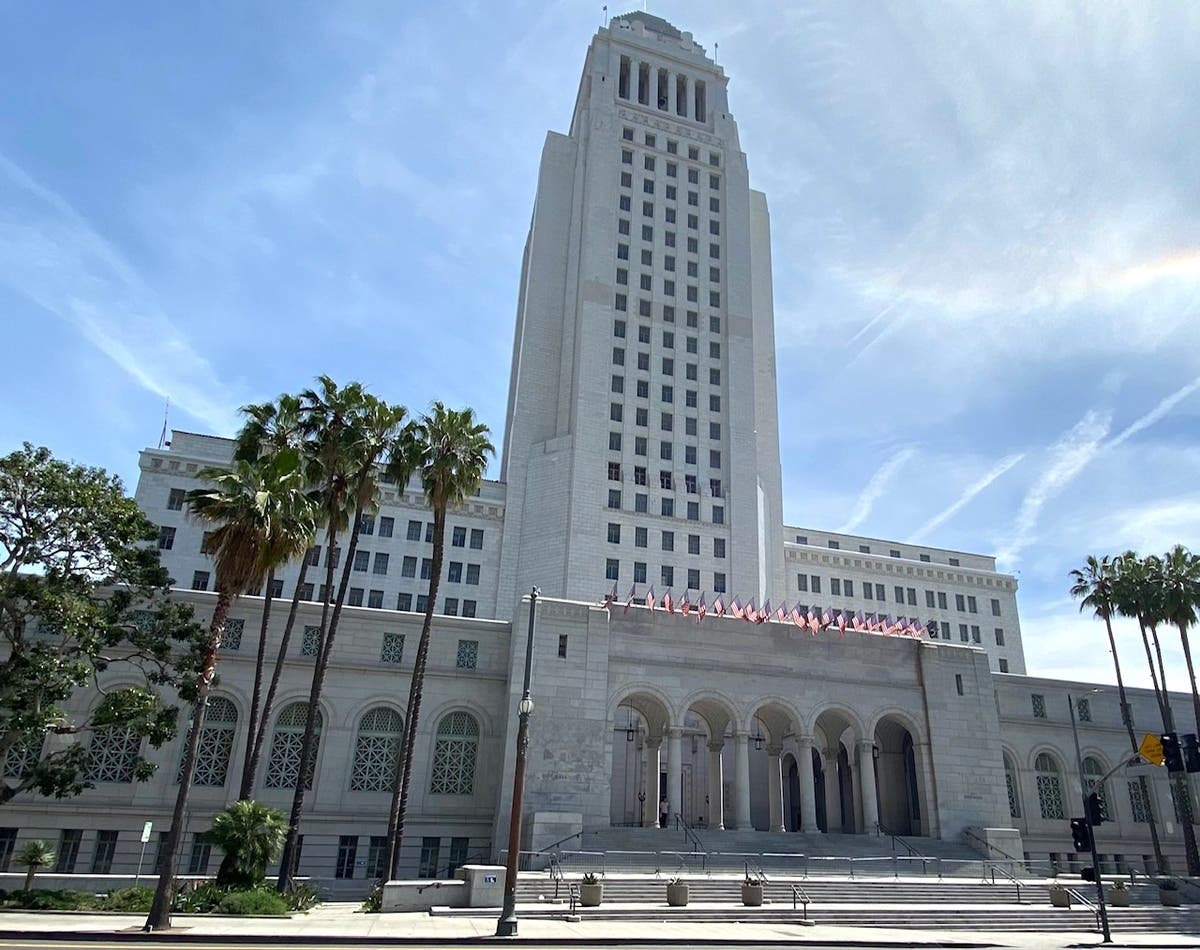
LOS ANGELES, CA — A broad coalition of tenants Monday urged elected officials to ban landlords from using a billing system they said is leading to higher rents.
Tenants, some of whom are members of the Debt Collective, a national organization that organizes people to fight for debt cancellation, rallied at City Hall Monday morning to raise awareness and request the City Council to outlaw ratio utility billing system, also known as RUBS.
"It's another way for landlords to be able to extract profit from tenants, and they do this by basically disaggregating utilities, services and associated costs like garbage disposal, etc.," Rene Moya, tenant power coordinator for the Debt Collective, told City News Service in a telephone interview.
Find out what's happening in Los Angelesfor free with the latest updates from Patch.
"They disaggregate those costs from rent. They unilaterally decide to do this from rent, and then start charging the tenants independently of that," Moya added.
He described the process in which landlords decide the fee as "opaque."
Find out what's happening in Los Angelesfor free with the latest updates from Patch.
"Landlords receives master bills from the public service providers, the utilities, and then comes up with a formula through a third-party service that then charges the tenants for the utilities themselves," Moya said.
Moya told CNS this billing system is something very difficult for tenants, as for some it could mean an increase in rent between $200-$400 month.
"That is basically an undeclared rent increase that landlords have suddenly gifted themselves," Mayo told CNS. "We don't think it's right. In fact, we know it's also illegal by the very words of the L.A. Rent Stabilization Ordinance, and we believe it's also possibly illegal under state law."
The group is urging the City Council to make it explicit for landlords to stop this practice.
In December 2025, the Los Angeles Housing Department published a report recommending the ban of RUBS for rent-stabilized apartments. The City Council's Housing and Homelessness Committee, which would oversee any action on the matter has yet to do so.
LA Public Press — which has covered the billing system and ways tenants have organized to challenged landlords using it — reported in June that there was no scheduled date for the matter to come before the committee.
According to the report, a citywide RUBS ban would provide renters "greater financial predictability" and safeguard them from "excessive" rent increases.
Daniel Yukelson, executive director and CEO of the Apartment Association of Greater Los Angeles, told CNS in an email response that his organization supports the use of RUBS, and that there is nothing new about its methodology. It has only become "more sophisticated and precise," Yukelson added.
He argued that RUBS provides a fair allocation of utilities that are paid for by owners for the benefit of tenants, and it's based on factors such as occupancy and the size of the rental unit or square footage.
"I strongly encourage the tenant detractors who are concerned about RUBS to argue for transparency regarding the RUBS formula and NOT abolishing RUBS altogether," Yukelson wrote in his email.
"Apparently, there is some disconnect between the RUBS lease addendum tenants are signing which spells out in excruciating detail how RUBS methodology works, and their ability to understand a well written document."
Yukelson argued that tenants are usually made well aware that RUBS is being utilized and should budget accordingly. He continued that tenants may feel as they are paying more because there are variations in amounts charged by utilities and passed through from month to month.
"Using RUBS as some ploy for increasing rent is a complete fallacy. First, RUBS is based on actual costs and less than 100% of those costs is allocated," Yukelson said in his email.
"Also, RUBS cannot be implemented in a rent stabilized jurisdiction like Los Angeles unless the total RUBS cost along with any rent increase for the year falls below the maximum rent `cap' for the year. In other words, if a tenant pays $1,000 per month in Los Angeles, the maximum increase is $30 (3%), so between RUBS and rent increase combined, no more than $30 per month can be charged," Yukelson added.
Moya challenged that notion, describing RUBS as a variation or a form of junk fees.
"Rent under LA city law for the Rent Stabilization Ordinance has always defined the cost of anything associated with living in a building, including utilities, as part of rent," Moya told CNS.
Moya argued some landlords will charge renters unreasonable fees. He urged renters across the city who may experiencing similar issues with RUBS to form a tenants association, and reach out to organizations such as the LA Tenants Union or the Debt Collective for support. He encouraged renters to demand their landlord to provide transparency on how they calculate their bills.
"...You specifically have the right, also as tenants, against, different forms of discrimination and retaliation," Moya told CNS. "Do not let a language barrier, an immigration barrier, a fear of communicating your issues or your concerns — do not allow those things to prevent you from organizing and coming together with your neighbors."
City News Service