Obituaries
Singer, Songwriter And Rebel David Crosby Dies at 81
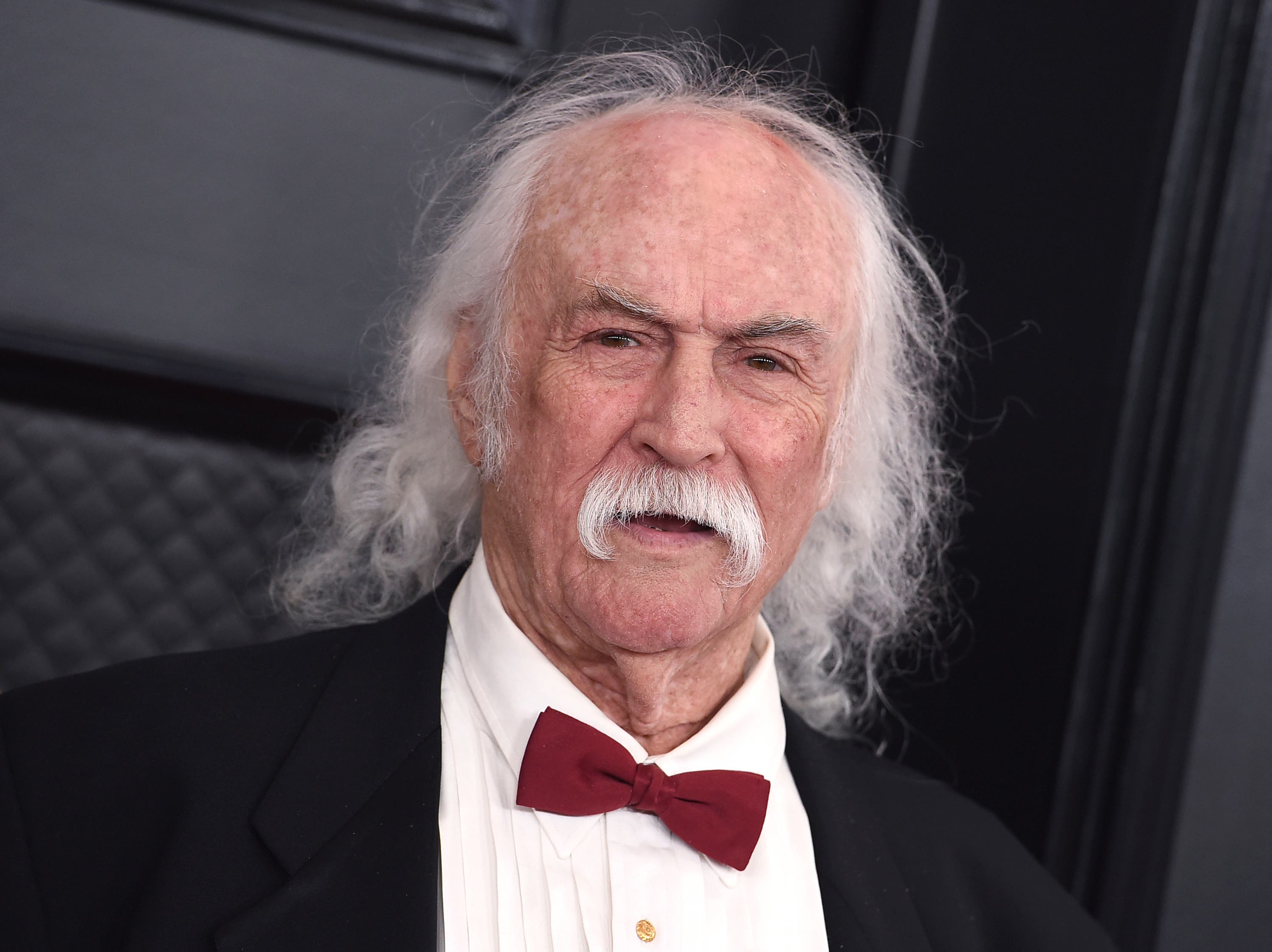
David Crosby, folk icon and co-founder of the Byrds and later Crosby, Stills & Nash, has died, his wife announced Thursday.

LOS ANGELES, CA — David Crosby, who came of age musically in Los Angeles' 1960s folk music scene and went on to co-found the iconic bands the Byrds and later Crosby, Stills & Nash, has died at age 81, his wife announced Thursday.
While he only wrote a handful of widely known songs, the witty and ever opinionated Crosby was on the front lines of the cultural revolution of the ’60s and ’70s — whether triumphing with Stephen Stills, Graham Nash and Neil Young on stage at Woodstock, testifying on behalf of a hirsute generation in his anthem “Almost Cut My Hair” or mourning the assassination of Robert Kennedy in “Long Time Gone.”
He was a founder and focus of the Los Angeles rock music community from which such performers as the Eagles and Jackson Browne later emerged. He was a twinkly-eyed hippie patriarch, the inspiration for Dennis Hopper’s long-haired stoner in “Easy Rider.” He advocated for peace, but was an unrepentant loudmouth who practiced personal warfare and acknowledged that many of the musicians he worked with no longer spoke to him.
“Crosby was a colorful and unpredictable character, wore a Mandrake the Magician cape, didn’t get along with too many people and had a beautiful voice — an architect of harmony,” Bob Dylan wrote in his 2004 memoir, “Chronicles: Volume One.”
Crosby, a guitarist, singer and songwriter, was with the Byrds from 1964 to 1967. He originally performed with Jim McGuinn — later known as Roger McGuinn — and Gene Clark in a group known as Jet Set. They later added drummer Michael Clarke and bassist Chris Hillman and became the Byrds. The band made a name for itself in 1965 with a chart-topping cover of Bob Dylan's "Mr. Tambourine Man."
The group enjoyed more success over the next two years, with hit albums including "Fifth Dimension" and "Younger Than Yesterday."
But Crosby's often-brash personality and outspoken political views created tension in the group. The troubles peaked during the 1967 Monterey Pop Festival, where Crosby peppered a concert with his radical political views, then sat in with Buffalo Springfield for that band's set, aggravating his Byrds compatriots.
He was tossed out of the band later that year after a series of disputes over song selection and the group's musical direction.
But just months later, Crosby met up with Stephen Stills — formerly of Buffalo Springfield — and the pair later teamed up with Graham Nash.
Crosby, Stills and Nash's first meeting is part of rock folklore: Stills and Crosby were at Joni Mitchell’s house in 1968 (Stills would contend they were at Mama Cass'), working on the ballad “You Don’t Have to Cry,” when Nash suggested they start over again. Nash’s high harmony added a magical layer to Stills' rough bottom and Crosby’s mellow middle and a supergroup was born.
Their eponymous debut album was an instant success that helped redefine commercial music. The songs were longer and more personal than their individual prior outputs, yet easily relatable for an audience also embracing a more open lifestyle.
Their spirited harmonies and themes of peace and love became emblematic of the late 1960s and early 1970s. Their version of the Mitchell song “Woodstock” was the theme for the documentary about the 1969 rock concert during which the group made only its second live appearance together. Crosby had produced Mitchell’s first album, “Song to a Seagull,” in 1968, and for a time was her boyfriend (as was Nash).
The following year, Neil Young was added to the band, and its first album "Deja Vu" reached number one on the Billboard chart. Their follow-up live album "4 Way Street" also topped the charts.
The group sputtered, thanks in part to Crosby's escalating drug use, which increased dramatically after his girlfriend, Christine Hinton, was killed in a 1970 car accident. The band members went their separate ways, and while they reunited for a concert tour in 1974, their efforts to reconcile their differences in the recording studio proved fruitless.
Despite his addiction issues, Crosby released his highly successful debut solo album "If I Could Only Remember My Name" in 1971.
Crosby's drug problems led to a 1983 conviction in Texas, where he was caught in a nightclub with a drug pipe and handgun. He wound up serving five months in prison. He kicked the addiction in 1985 and 1986 during the prison stretch in Texas. The conviction eventually was overturned.
“I’ve always said that I picked up the guitar as a shortcut to sex and after my first joint I was sure that if everyone smoked dope there’d be an end to war,” Crosby said in his 1988 autobiography, “Long Time Gone,” co-written with Carl Gottlieb. “I was right about the sex. I was wrong when it came to drugs.”
Crosby's drug use left him bloated, broke and alienated.
Crosby underwent a liver transplant in 1994 after decades of drug use and survived diabetes, hepatitis C and heart surgery in his 70s.
He lived years longer than even he expected and in his 70s enjoyed a creative renaissance, issuing several solo albums while collaborating with others including his son James Raymond, who became a favorite songwriting partner.
“Most guys my age would have done a covers record or duets on old material,” he told Rolling Stone in 2013, shortly before “Croz” was released. “This won’t be a huge hit. It’ll probably sell nineteen copies. I don’t think kids are gonna dig it, but I’m not making it for them. I’m making it for me. I have this stuff that I need to get off my chest.”
In 2019, Crosby was featured in the documentary “David Crosby: Remember My Name,” produced by Cameron Crowe. Crosby was a two-time inductee in the Rock and Roll Hall of Fame — as a member of both the Byrds and CSN&Y.
City News Service and The Associated Press contributed to this report.