Business & Tech
SoCal Grocery Workers Vote To Strike Amid Ongoing Negotiations
Workers at Ralphs and Vons, Pavilions, and Albertsons are asking for more pay. They authorized a walkout if negotiations falter.


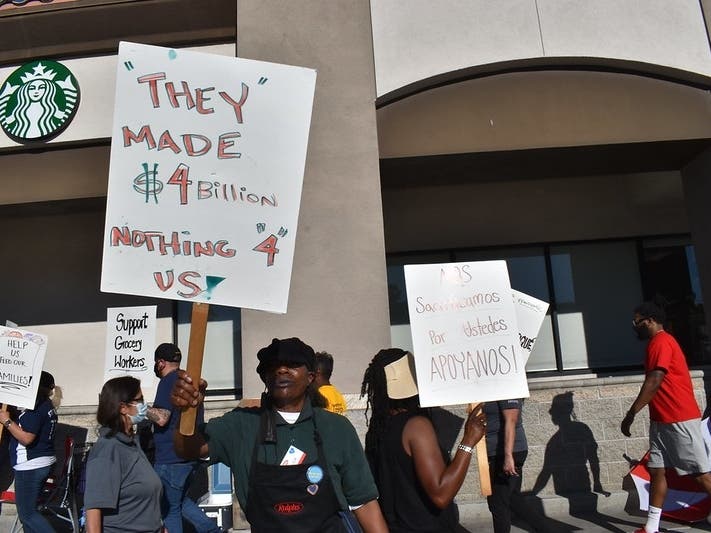
LOS ANGELES, CA — Workers at grocery chains across Southern California including Ralphs and Vons, Pavilions, and Albertsons voted to authorize a strike, union officials confirmed Sunday morning.
The vote comes with both sides slated to resume negotiating this week. The vote doesn't guarantee a walkout, but it ups the stakes as union representatives and store owners attempt to iron out a new labor contract weeks after the current contract expired.
The United Food and Commercial Workers International Union's nearly 48,000 workers began voting on Monday. The workers contend that grocery chains are enjoying record profits as inflation soars, and they are asking for significant pay raises and increased staffing. The strike vote involved workers from Central California to the Mexico border at more than 500 stores.
Find out what's happening in Los Angelesfor free with the latest updates from Patch.
"Over the past week, you and your fellow Ralphs, Albertsons/Vons/Pavilions members have made your voice heard by overwhelmingly voting to authorize your bargaining committee, made up of your union and fellow co-workers, to call for a strike if needed," the statement said.
Early Sunday, a statement was released on behalf of all seven UFCW Locals that participated in the weeklong voting process.
Find out what's happening in Los Angelesfor free with the latest updates from Patch.
"Through the past two years of the pandemic, it was the hard work and sacrifice of our members that helped these ... companies earn billions in profits," it said in part. "As we continue at the bargaining table, all of our Local Unions are committed to getting a contract that reflects everything these essential grocery workers have contributed to their employers, their customers, and their communities."
Representatives of the supermarket chains have not commented on the union vote. Before the vote, Ralphs issued a statement saying, "We have three very clear objectives; to put more money in our associate's paychecks, keep groceries affordable for our customers and to maintain a sustainable future for our business. By working together, we win together."
The company statement added: "a strike authorization vote doesn't mean a strike will happen, but it does create unnecessary concern for our associates and communities, at a time when we should be coming together in good faith bargaining to find solutions and compromise. At Ralphs we remain focused on settling a deal with the UFCW."
Workers have authorized a strike before without walking out. In 2019, negotiations continued for months after employees authorized a strike, and eventually, both sides came to an agreement without a walkout.
However, Southern Californians remain haunted by memories of the 2003-04, Southland grocery strike that lasted 141 days. Customers spent months either avoiding their neighborhood grocery store or crossing picket lines to shop. However, the landscape has changed around the grocery industry since then with online shopping a viable option for shoppers looking to avoid those chains or to continue shopping at them without physically crossing the picket lines.
That 2003-04 walkout cost the supermarket chain an estimated $2 billion and the workers $300 million in lost wages. Though the stakes are high, the two sides appear to be, once again, far apart this time around.
Sticking points include pay raises and safety protections, Manny Estrada, a pharmacy clerk at a Grover Beach Vons store and a member of the Local 770 bargaining committee recently told Patch.
According to Estrada, the union is asking for $5 raises over time, but the grocery stores capped their offer at 60 cents.
"Sitting in the room and looking at these people who I am employed by, it's shocking to see that there is no empathy on their end," Estrada said. "Our average worker made $29,000 for the year. We have a Kroeger CEO who is making $22 million a year. He makes 437 times the average grocery worker."
Union officials announced earlier this month that contract talks had stalled. A three-year-old labor contract between the unionized grocery workers and Southern California supermarkets expired March 7, raising fears of a possible strike. Grocery employees are continuing to work under the terms of the previous contract.
"Bargaining committees composed of front-line grocery workers and union leaders came prepared with proposals that would fairly increase wages and improve store conditions to reflect the needs of workers in a pandemic and post- pandemic world," the union said in a statement earlier this month. "The corporations representing the stores offered pennies, a proposal that would ultimately be a pay cut due to inflation."
Ralphs has said its latest proposal includes investments in wages of more than $141 million over the next three years, while not increasing healthcare costs for associates.
"We will continue to do everything we can to balance investments in wages and overall well-being of associates while keeping food affordable for our customers," Robert Branton, vice president of operations at Ralphs, said in the statement. "Our current offer adds to our associates' paychecks, while providing them with premium healthcare coverage and a company funded pension -- which many of our competitors do not offer."
Ralphs says it pays an average hourly wage of $19 an hour, with more than half of associates having been with the company for more than 10 years, and more than one-third having been with Ralphs for more than 20 years. Ralphs also provides healthcare benefits and a pension for retired associates.
"Ralphs has always been and continues to be a workplace where our associates come for a job and stay for a career," Branton said.
Union officials said they are also seeking bolstered safety standards and "adequate scheduling and hours." According to the union, the grocery stores' offer of a 60-cent-per-hour wage increase hardly addresses the cost of living increases nor the burden of being a frontline worker during the pandemic.
"Frontline grocery store workers continue to bear the brunt of the COVID pandemic and post-pandemic effects," according to the union. "More than 10,000 UFCW 770 employees have been infected with COVID, many more lost co- workers, friends and family members. Supermarket employees are overworked, underpaid and undervalued while grocery companies stack huge earnings -- Kroger alone made $4 billion in profits in 2021."
Union leaders have accused the supermarket chains of committing unfair labor practices including conducting unlawful surveillance of workers who are protesting and refusing to implement wage increases as required under the previous contract.
The current contract negotiations are scheduled to resume Wednesday.
City News Service and Patch Staffer Paige Austin contributed to this report.
Get more local news delivered straight to your inbox. Sign up for free Patch newsletters and alerts.