Traffic & Transit
Traffic Bottlenecks: LA Has 4 Of the Nation's Worst
Some of LA's busiest transition roads are chokepoints for long lines of big rigs spanning out from the nation's largest port.


LOS ANGELES, CA — Southern California is the traffic capital of the world, so it should come as no surprise that it dominates the 2022 Top 100 Truck Bottlenecks List released this week.
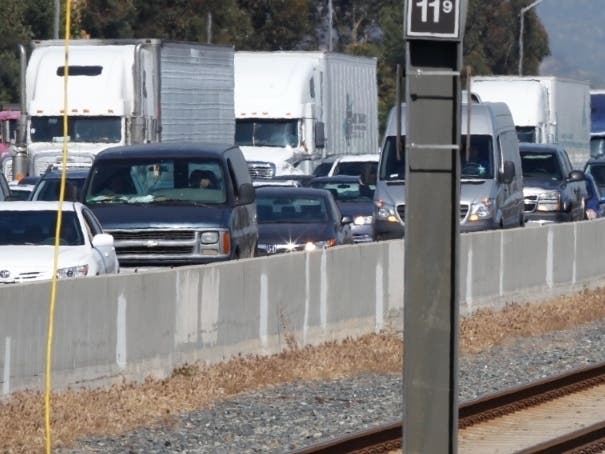
Anyone who's idled on the Long Beach (710), Orange (57), Artesia (91), I-10 and I-110 freeways behind a line of big rigs, knows the special pain of living within 50 miles of the nation's busiest port. In all, Southern California has six transition roads among the nation's worst truck bottlenecks.
They are:
Find out what's happening in Los Angelesfor free with the latest updates from Patch.
- Los Angeles, CA: SR 60 at SR 57 coming in at number 7;
- San Bernardino, CA: I-10 at I-15 coming in at number 9;
- Corona, CA: I-15 at SR 91 coming in at number 35;
- Los Angeles, CA: I-110 at I-105 coming in at number 59;
- Los Angeles, CA: SR 91 at SR 55 coming in at number 90;
- Los Angeles, CA: I-710 at I-105 coming in at number 91.
This list of California freeway chokepoints does more than just identify longstanding traffic nightmares for locals and truckers. It also points to some of the problem spots contributing to some of the supply chain issues plaguing America and contributing to historic inflation levels.
The Port of Los Angeles is the nation's largest port, and the pandemic era backlog at the port has created a national economic crisis visible in the line of cargo ships off the coast, the logjam of railcars headed out across the country and the steady stream of big rigs streaming out of the port in an effort to ease the problem. The Biden-Harris Supply Chain Disruptions Task Force, the U.S. Department of Transportation, the Port of Long Beach have vowed to devote resources to get goods flowing out of the region more quickly.
Find out what's happening in Los Angelesfor free with the latest updates from Patch.
The list of bottlenecks is compiled each year by the American Transportation Research Institute to measure the level of truck-involved congestion at more than 300 locations across the national highway system.
ATRI compiles the congestion impact ranking using GPS data from more than 1 million freight trucks, along with several customized software applications and analysis methods, and terabytes of data from trucking operations.
The data also is used to support the U.S. Department of Transportation’s Freight Mobility Initiative, institute officials said.
In addition, the analysis that was pulled from 2021 data found that traffic levels across the country rebounded as more Americans returned to work and demand for consumer goods and services bounced back following the early months of the pandemic. The result was bottlenecking in supply chains, ATRI President and CEO Chris Spear said.
“ATRI’s bottleneck list is a roadmap for federal and state administrators responsible for prioritizing infrastructure investments throughout the country,” Spear said. “Every year, ATRI’s list highlights the dire needs for modernizing and improving our roads and bridges. We have seen, most recently in Pittsburgh, that the cost of doing nothing could also cost lives. It’s time to fund these projects and get our supply chains moving again.”
Get more local news delivered straight to your inbox. Sign up for free Patch newsletters and alerts.