Weather
SoCal Rain Records Crushed By Tropical Storm Kay
Kay was the closest a Pacific hurricane has come to California in 50 years, and the heatwave is what allowed such a powerful storm to land.


LOS ANGELES, CA — In addition to the chaos and havoc Tropical Storm Kay unleashed upon Southern California over the weekend, the storm shattered rainfall records bringing much-needed precipitation to wide swaths of the drought-stricken landscape. Ironically, the Golden State can thank the record heat for the record rainfall.
The chance of Southern California receiving even a half-inch of rain in September typically stands at about zero, but Tropical Storm Kay dropped 0.63 of an inch of rain in San Diego on Friday. In fact, the storm shattered nearly 50-year-old September rain records across Southern California, according to AccuWeather.
Sand Diego saw more than five times the previous rainfall record set in 1976. Palmdale Airport recorded 0.46 inches of rain, doubling the record for the date of 0.23 inches set in 1976. Mt. Laguna east of San Diego measured 5.60 inches of rain.
Find out what's happening in Los Angelesfor free with the latest updates from Patch.
The Golden State hasn't experienced a Pacific tropical storm such as Kay in decades, according to meteorologists.
"Kay marked the closest approach to Southern California from the Pacific in the last 50 years. The next to last point tracked by the National Hurricane Center on Sept. 10 was 130 miles offshore from San Diego, making it the closest pass to the city from the ocean side since records began in 1949," AccuWeather reported.
Find out what's happening in Los Angelesfor free with the latest updates from Patch.

Though the hurricane was downgraded to a tropical storm on Saturday, it still caused havoc in the region, knocking out power to thousands of people. Kay brought record winds in excess of 110 mph to the mountains of San Diego and mudslides to the Lake Hughes area in Los Angeles County, trapping more than 50 people in their flooded vehicles Monday morning.
The muddy water poured into vehicles while washing others clear off the road even as people sat atop the hoods of their vehicles holding on for their lives, the CHP reported. The trapped travelers were spread out along a miles-long stretch of the road in torrential rain. Rescue crews in helicopters used night vision technology to rescue victims.
One woman told the CHP her two children were on top of her vehicle that slid off the road.
There is a reason Tropical Storm Kay remained so powerful as it made landfall, according to experts.
San Diego State University Professor Dr. Pat Abbott told AccuWeather the extended heat wave in Southern California played a role.
“Our ocean water comes down from Alaska, and that cold water drains the energy out of these tropical storms and hurricanes," Abbott said. "Now, right now, we're just going through an extended heat wave, heat period, so we have ocean temperatures out here above 80 degrees. That provides some energy that allows these tropical storms to come farther north."
Weather forecasters predicted unsettled weather would continue through the evening Monday, bringing a chance of thunderstorms to the mountains of Southern California before returning to normal on Tuesday.
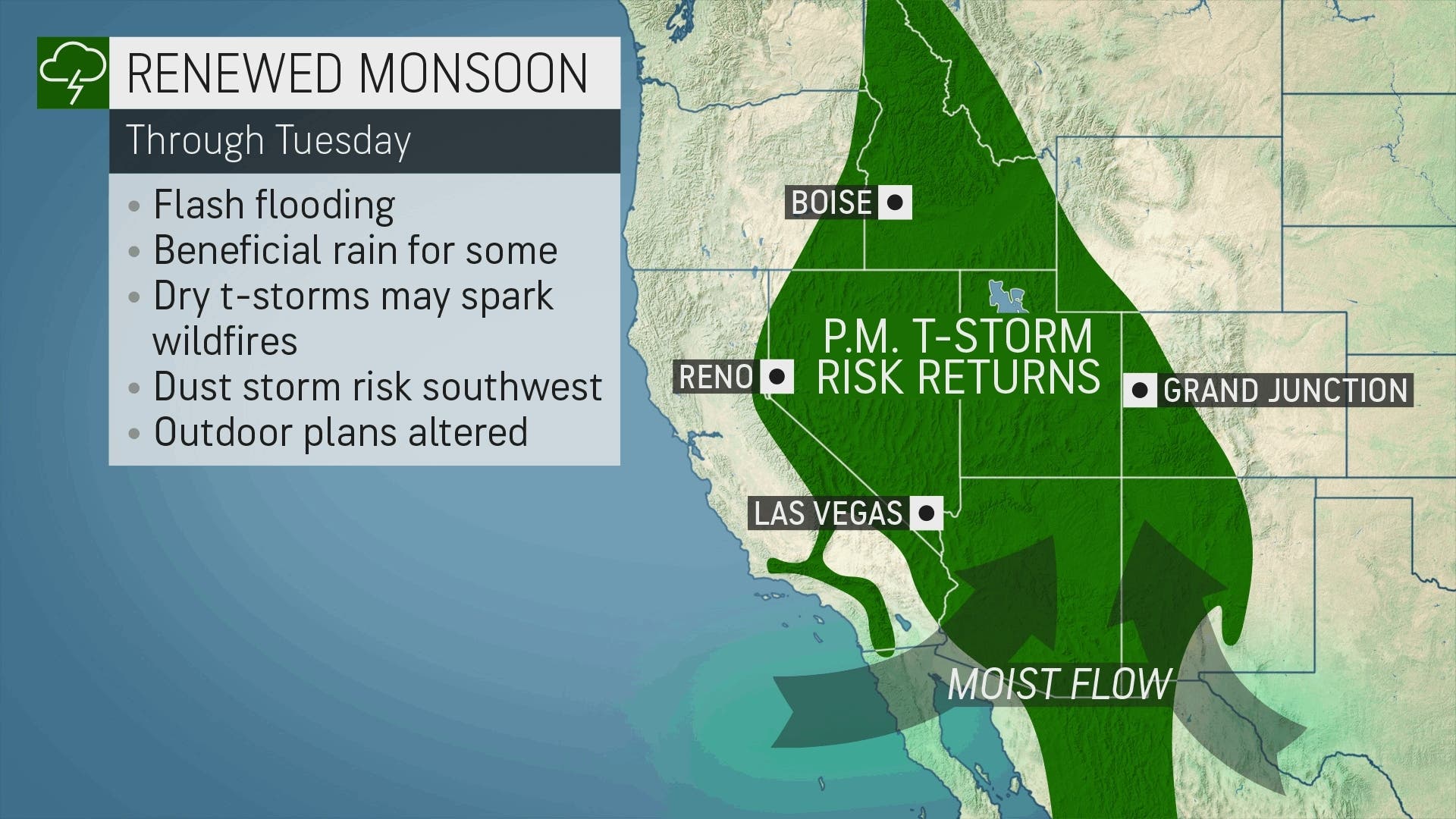
"This pattern will give way to a cooler and more typical marine layer pattern starting Tuesday and continuing into the weekend," according to the National Weather Service. "Temperatures will drop to below normal levels for Wednesday and Thursday, with a small warm-up possible thereafter."
City News Service contributed to this report.
Get more local news delivered straight to your inbox. Sign up for free Patch newsletters and alerts.