Schools
UCLA Wrongly Admitted 'Well-Connected' Students, Audit Finds
At least 64 students were wrongly admitted to UCLA, UC Berkeley, UC San Diego and UCSB on a basis of their family's social status or wealth.


CALIFORNIA — A California state audit revealed Tuesday that the University of California wrongly admitted at least 64 wealthy or well-connected students over the last decade. At least 22 students were falsely designated as student athletes despite several coaches' assertion that they lacked talent to compete.
California Auditor Elaine M. Howle reported that the nine-campus system allowed "inappropriate factors" influence admissions, directly identifying administrative malpractice from 2013-14 through 2018-19 at UCLA, UC Berkeley, UC San Diego and UC Santa Barbara.
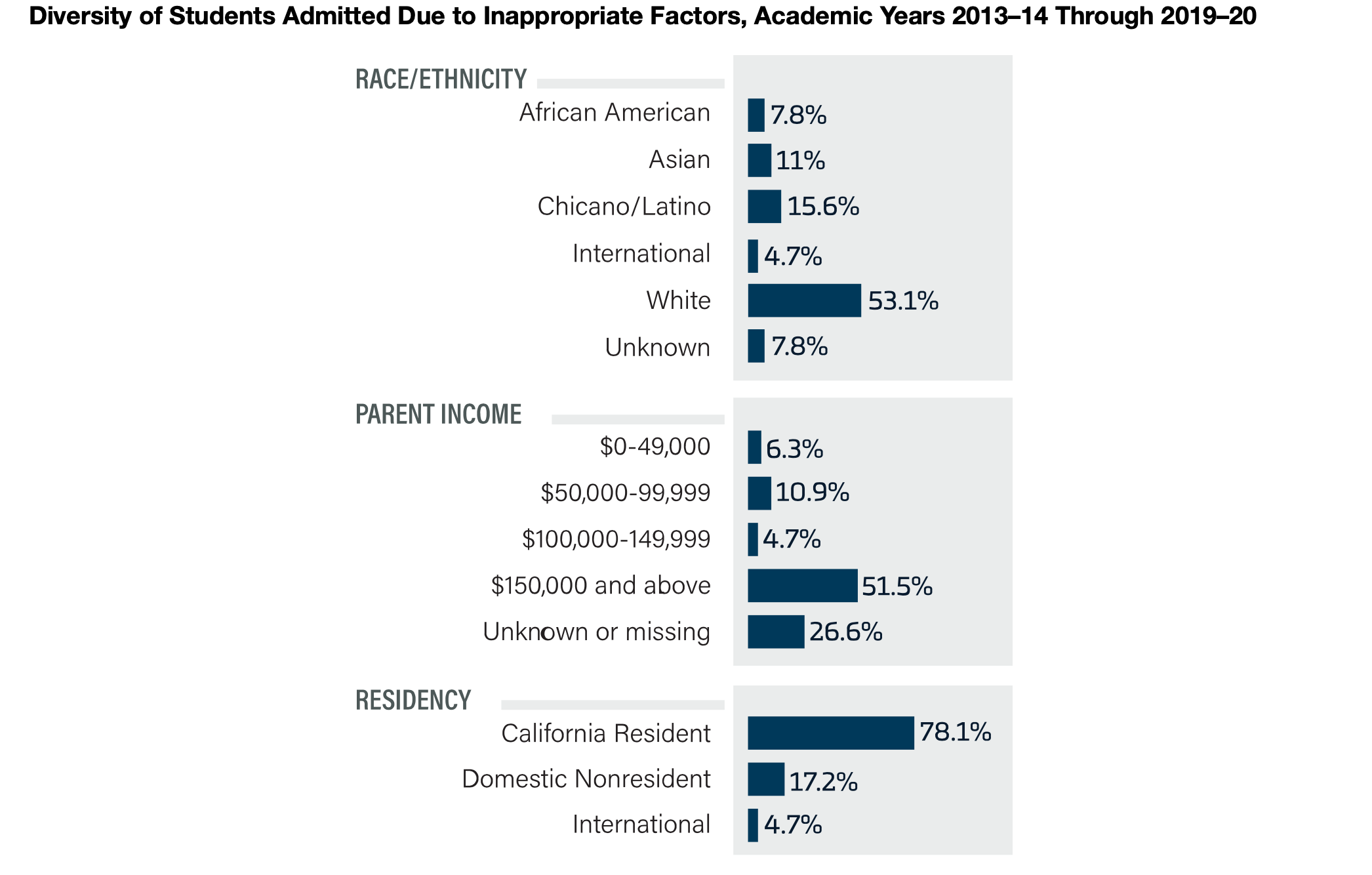
At these campuses, the majority of the fraudulently admitted students were white California residents with an annual family income upwards of $150,000.
Find out what's happening in Los Angelesfor free with the latest updates from Patch.
On UCLA's campus, at least four students were admitted under the false "student athlete" guise.
The report revealed email conversations between a UCLA sports coach and the school's development office, responsible for fundraising and more importantly in this case, donor relations.
Find out what's happening in Los Angelesfor free with the latest updates from Patch.
The UCLA coach advocated for a particular applicant's admission on behalf of a donor.
"Although we found the applicant participated in high school in the sport for which they were recruited, we found that they were significantly less qualified than other recruits to the team, and they did not meaningfully participate on the team for UCLA," Howle wrote in the report.
The Tuesday audit was particularly leveled at UC Berkeley for wrongfully admitting at least 42 applicants over the last several years based on their connections to donors, and staff while the campus denied admission to more qualified applicants.
One student in particular was accepted as an athlete based on a large donation made to the Berkeley's athletic department. Despite the coaches' repeated assessment that the student "lacked the talent to compete."
"These applicants were less qualified than many others for whom the campuses denied admission," Howle wrote. "In fact, some of these applicants received the lowest possible scores on their applications."
Howle further condemned UC Berkeley for failing to demonstrate campus leadership and "foster a culture committed to the university’s principles of fairness in admissions decisions."
The audit comes in response to last year's highly publisized national college admissions scandal, which triggered widespread outrage and a public call to end the wrongful and disparaging admissions.
And despite the university's efforts to create an internal audit, the state found that the system has failed to put a stop to such heavily biased admissions.
“By admitting 64 noncompetitive applicants, the university undermined the fairness and integrity of its admissions process and deprived more qualified students of the opportunity for admission,” Howle wrote in a letter to Gov. Gavin Newsom and legislative leaders.
The UC system's president, Michale V. Drake responded to a draft of the audit in August, assuring that the system would take "prompt action" to address the issue and noted that many of the recommendations are similar to other internal audits, many of which he said were implemented.
"I have zero tolerance on matters of integrity, and will do everything I can to ensure inappropriate admissions do not happen on any of our campuses," Drake responded in a letter to Howle.
This is the second effort conducted by the Golden State to spotlight the university system's disproportionate admission process. In 2016, the state auditor scrutinized the university for increasing the number of out-of-state students.
“Over the past 10 years, the university began denying admission to an increasing number of residents to the campuses of their choice,” Howle wrote in the audit, adding, "we believe that legislative intervention...is necessary to ensure that a university education once again becomes attainable and affordable for all California residents who are qualified and desire to attend."
The UC criticized the 2016 audit and deemed it "false and misleading."
Last year's national college admissions scandal led to criminal charges against more than 50 people last year, including dozens of affluent parents, college staff, coaches a founder of a for‑profit college counseling and preparation business.
The scandal found that at least 30 students were wrongly admitted to more than 10 different universities. And the UC system admitted two of these students.
SEE ALSO: Judge Bans UC System From Use Of ACT And SAT Scores In Admissions
A former UCLA men's soccer coach pled guilty to accepting bribes to falsely designate two applicants as athletes, one of whom the university accepted. Another applicant whom UC Berkeley admitted had submitted fraudulent standardized test scores to UC Berkeley.
In response to the large scale federal investigation, the university authored an internal audit of its systemwide and campus‑specific admissions processes, which was published in February. The audit found many pitfalls within the university's admission process, especially relating to athletic recruits.
Former UC President Janet Napolitano ordered the audit herself last year.
“Any student admitted through fraud is one too many,” Napolitano said at the time, according to the Los Angeles Times.
However, the university system failed to eradicate the issue entirely and fell short on bolstering integrity within the admissions process.
The state auditor also heavily criticized the freshman admissions process across the campuses, citing one suspicious factor used to admit students labeled "special talent." This factor is among 14 other measures that help administrators determine whether a student is accepted.
The "special talent" label is typically reserved for assessing prospective student athletes and often the label exempts the applicant from having to meet certain benchmarks for grade point averages and test scores.
The audit revealed that UC San Diego received 99,000 freshman applications and admitted less than one‑third of them. UC Berkeley received 87,000 and admitted 16 percent, while UCLA received 111,000 and admitted 12 percent. After selecting applicants for admission, the campuses offer some applicants a place on a waitlist.
The system also has minimum eligibility requirements for students to ensure that incoming students are "well prepared to succeed at the university." But the system's policy also allows for some flexibility — up to 6 percent of enrolled applicants do not need to meet any specific requirements.
In response, the UC system said it will implement several changes to its admissions process based on the recommendations of the state's second audit. The recommendations are listed here.
Get more local news delivered straight to your inbox. Sign up for free Patch newsletters and alerts.