Arts & Entertainment
'Whalefall' Review: A Survival Thriller About What Remains After Loss
Austin Abrams anchors Brian Duffield's unexpectedly moving thriller that transforms survival into a meditation on loss.


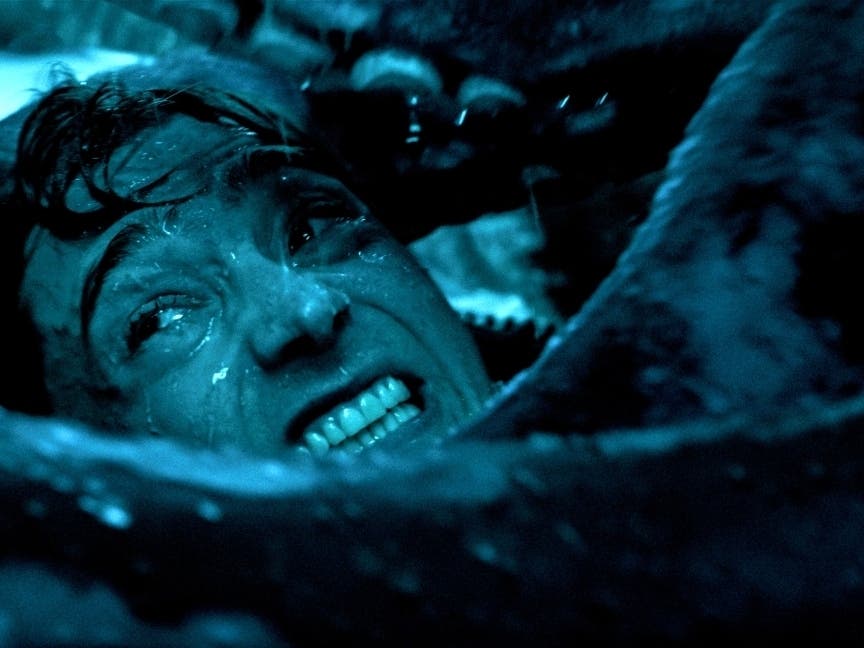
LOS ANGELES, CA — As “Whalefall” plunges into the abyss, a young man descends into memories he can no longer shun, where a desperate struggle for survival becomes inseparable from grief.
Adapted from the novel by Daniel Kraus, who co-wrote the screenplay with director Brian Duffield, the film transforms an improbable survival scenario into a meditation on what endures beyond loss, elevating an unlikely premise into something genuinely affecting even when its ambitions occasionally strain the pacing.
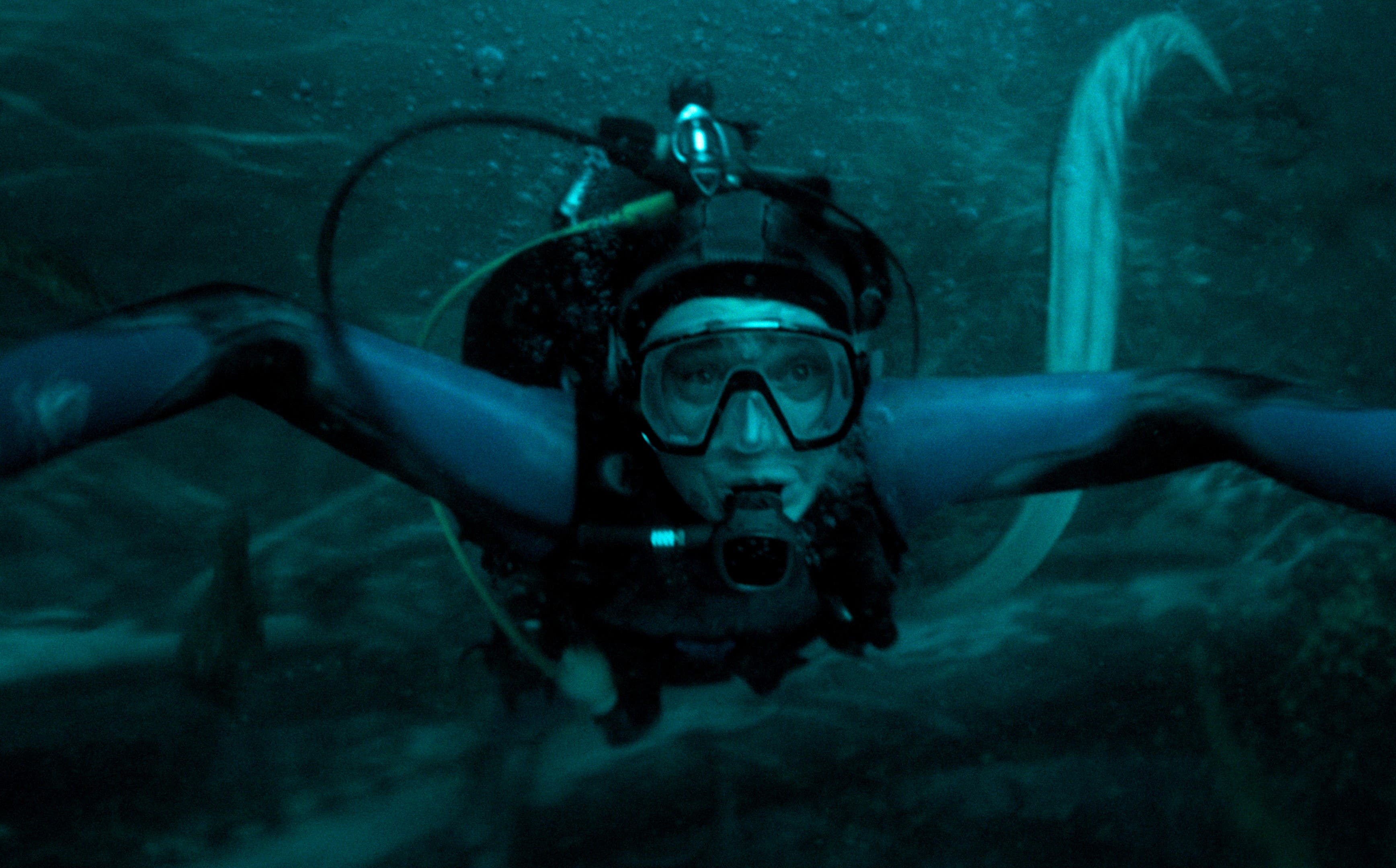
Following the suicide of his father, Mitt Gardiner (Josh Brolin), Jay Gardiner (Austin Abrams) descends into the waters off Monterey Bay in search of his remains, hoping to recover some fragment of the man whose absence continues to haunt him. Instead, a chance encounter between a sperm whale and giant squid leaves him trapped inside the whale's belly with dwindling oxygen and little hope of escape. What begins as a recovery mission soon becomes something more personal as Jay confronts the grief, anger and longing he has never fully resolved.
Find out what's happening in Los Angelesfor free with the latest updates from Patch.

As the film oscillates between visceral thrills and emotional gravitas, Abrams anchors the narrative with a measured resolve that steadily frays under pressure. With much of the film spent in isolation and his face often obscured by a scuba regulator, he relies on physical expression to carry the emotional weight of the narrative, his labored breaths, clenched teeth and muffled cries puncturing the composure he struggles to maintain.
The film's organizing metaphor lies in the phenomenon from which it takes its name. A whale fall occurs when a whale dies and its carcass sinks to the ocean floor, becoming a source of sustenance for entire ecosystems. Duffield and Kraus employ the concept as a framework through which death becomes the catalyst for examining what remains after loss and how one life continues to shape others long after it has ended.
Find out what's happening in Los Angelesfor free with the latest updates from Patch.
That idea finds its clearest expression in Mitt Gardiner. Brolin remains a constant presence through a series of flashbacks that gradually reveal Mitt as both mentor and source of resentment. Gruff, demanding and emotionally volatile, he carries himself with the hard-edged certainty of a man who believes toughness is best forged through pressure rather than affection. As the ordeal intensifies, Jay begins to hear his father's voice in the guttural reverberations of the whale's body, ultimately realizing that the lessons keeping him alive are inseparable from the man who taught them.

Visually, Duffield, cinematographer Aaron Morton and production designer Ramsey Avery transform the whale into a living, breathing environment rather than a mere obstacle. Bathed in cold blue-gray hues and illuminated by pockets of bioluminescent color, its cavernous interior oscillates between haunting beauty and body horror. Pulsing walls, undulating tissue and toxic digestive chambers constantly remind viewers that Jay is trapped inside a living organism, lending a tactile immediacy to the ordeal that mirrors Jay's growing sense of disorientation.
Though the film's repeated shifts between Jay's ordeal and flashbacks of Mitt occasionally disrupt its momentum, the juxtaposition ultimately serves a larger purpose, underscoring Duffield's ambition to make emotional reckoning integral to Jay's survival. As Jay's oxygen dwindles and his mental state deteriorates, the boundaries separating memory from reality begin to blur, revealing how the convergence of past and present ultimately leads him toward the understanding he seeks.
That convergence speaks to Duffield's larger ambitions for the material. He approaches the film with a keen sense of tension while never losing sight of the emotional core driving the narrative. Even at its most suspenseful, the film remains concerned less with whether Jay survives than with who he becomes if he does.
By reframing closure as an act of understanding rather than recovery, “Whalefall” locates renewal not in reclaiming the dead, but in making peace with what they leave behind. Jay's journey into the ocean begins as a search for his father's remains, yet it is within the whale's depths that he discovers something more valuable: a fuller understanding of the man he could neither entirely embrace nor wholly reject.
Much like the ecological phenomenon from which it draws its title, “Whalefall” suggests that death is not an endpoint but the beginning of something new. From grief emerges understanding; from understanding, acceptance; and from acceptance, the possibility of life beyond loss. What survives death, the film ultimately argues, is not merely memory, but the lessons passed from one generation to the next.
Get more local news delivered straight to your inbox. Sign up for free Patch newsletters and alerts.