Health & Fitness
What's Going Around In CA? Stomach Bugs, COVID, Respiratory Virus
Respiratory syncytial virus continues to spike statewide as coronavirus cases climb and influenza claimed its second fatality this season.


LOS ANGELES, CA — Once again, the coronavirus pandemic has Californians on edge with confirmed cases of the new Omicron variant in the northern and southern parts of the state. As the 2021-22 cold and flu season arrives, Golden State residents have another array of viruses to blame for their symptoms.
The fact is that health officials expect to see a rise in COVID-19, influenza, colds and stomach bugs in the coming weeks. Though COVID-19 has proven to be much more dangerous than all the other seasonal viruses making the rounds, doctors and hospitals already have their hands full treating patients afflicted with the usual seasonal culprits.
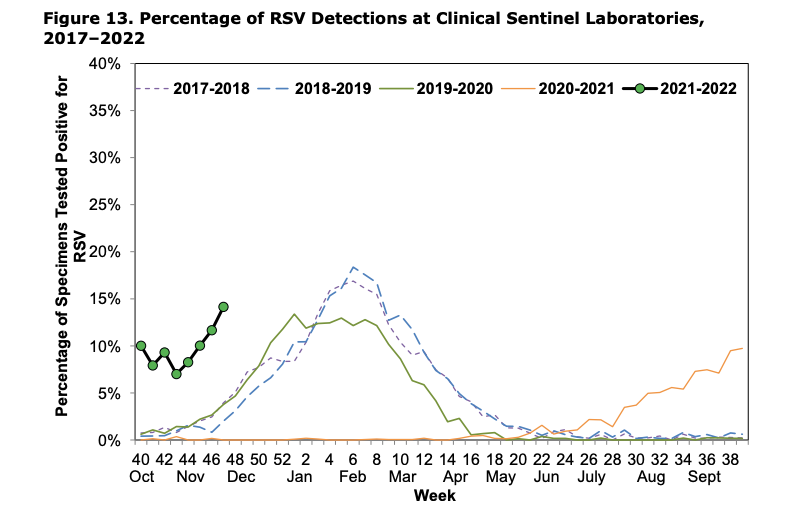
On Friday, the California Department Of Public Health confirmed the state's second flu death of the season, and the respiratory syncytial virus continues to infect people at rates rarely seen so early in the season. Tests in the state for respiratory syncytial virus came back positive in roughly 14.2 percent of cases over the last two weeks, a fifty percent increase in two weeks. In some parts of the state, such as Redding, tests for the virus came back with a whopping 40 percent positivity rate, ABC7 KRCR reported.
Find out what's happening in Los Angelesfor free with the latest updates from Patch.
(California Department of Public Health)
Because the virus tends to be most acute in infants and younger children, some of the same hospitals slammed with adult cases of the coronavirus are struggling to make room for pediatric and adult cases of RSV. Parts of the state are also experiencing outbreaks of gastroenteritis, commonly known as the stomach flu but not to be confused with influenza.
Find out what's happening in Los Angelesfor free with the latest updates from Patch.
At Children’s Health of Orange County, pediatrician and Immediate Past President of The American Academy of Pediatricians Orange County Chapter Dr. Kate Williamson has seen an uptick in cases of RSV, influenza and gastroenteritis.
"At the end of the day, it kind of doesn't matter what species it is when it comes to stomach bugs because the treatment is the same. Most people don't get hospitalized for tummy bugs unless they get dehydrated," said Williamson. "The most important thing is how is your child is doing. It is much more important than what do they have."
As for colds, RSV and COVID-19, most young patients with mild coughs and a runny nose without a fever or breathing problems will probably recover quickly enough at home.
For children with symptoms of a respiratory bug, the question is whether it's safe for them to go to school or be around cousins for the holidays, Williamson said. Parents should know that fever usually indicates the height of contagiousness, and it's just not worth the risk of bringing a sick child around relatives this year, she added.
"Make sure that your child is vaccinated for any of the diseases we have vaccines for because vaccines are the best way to keep your children protected this year," Williamson said.
That's especially true for the coronavirus, despite the myth that children aren't at risk from COVID, she said.
"COVID is a risk for kids. Kids tend to get less of the serious illness than adults do, but less is not zero," Williamson said. "Unfortunately, any pediatrician I know has had a (COVID) patient sick for weeks to months."
Children experiencing long COVID grapple with fatigue, headaches and muscle aches, she added.
Gov. Gavin Newsom also urged parents to protect their children by getting them vaccinated.
“This disease is not taking the winter off. It’s coming back in force, and you’re seeing that all across this country,” Newsom said last week.
“We should anticipate that we are going to see an increase in cases,” he added.
It's a major concern for health officials in counties with low COVID-19 vaccination rates in children and adults. Health officials remained on edge about the prospect of a "twindemic" of flu or COVID-19 outbreaks. But it's RSV and COVID-19 that kept pediatricians and emergency rooms busy this week. Hospitals in the Central Valley were already overwhelmed. It's a dire situation that doesn't bode well for the winter, when COVID-19, flu and RSV cases can be expected to peak.
Some places might be “doing all right, but that may not last. Once this thing kicks off, it goes exponential,” Dr. Eric Topol, director of the Scripps Research Translational Institute in La Jolla, told the Los Angeles Times.
According to the New York Times coronavirus tracker, COVID cases are up 13 percent in California over the last two weeks.
When it comes to RSV, both infants and older people are most susceptible to severe bouts of RSV leading to hospitalization. There is currently no vaccine to prevent RSV or antiviral drug to treat it.
RSV symptoms often mirror coronavirus symptoms, and the virus typically overlaps with flu season. But this year, it began spreading throughout the summer and remained unusually high for November.
As with influenza, the spread of RSV was low last year, meaning most toddlers had no exposure to it and don’t possess the antibodies to combat infection.
The virus’s head start during cold and flu season and its seeming severity may be a result of the pandemic. It may also be a harbinger of a severe cold and flu season that could slam the Golden State over the winter; it’s too soon to tell.
Over the last 18 months, the pandemic has repeatedly disrupted typical flu and cold season patterns.
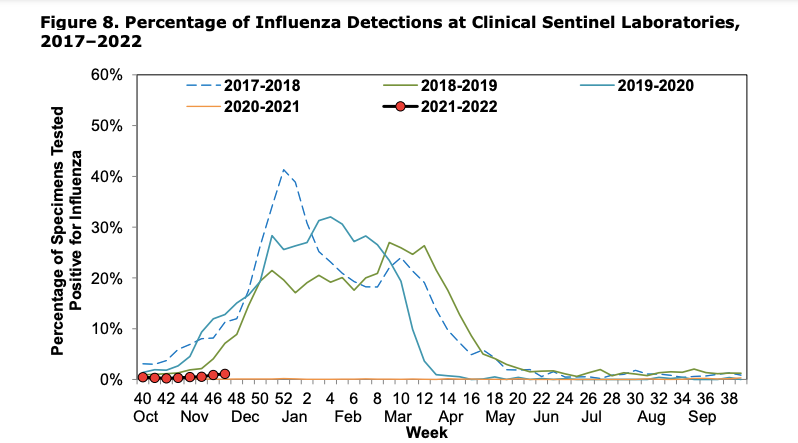
Last year, as public health officials braced for a "twindemic" of COVID-19 and flu hospitalizations, the flu season was the mildest in California’s recorded history. But not all the same factors that suppressed influenza last winter were likely to be at play this year, since schools and businesses have reopened.
Influenza has begun spreading at very low levels in California, according to the state health department’s weekly tabulation of confirmed cases. About 1.1 percent of laboratory tests were coming back positive for flu statewide, about double the rate two weeks ago.
California recorded its first flu death in Los Angeles County last month.
In California, flu season typically runs October through May, and flu activity usually begins to increase in late November or December, according to the California Department of Public Health. The 2020-21 influenza season was unusually mild, but health officials expected the flu to make a comeback this winter.
“This low flu activity was likely due to the widespread implementation of COVID-19 preventive measures like masks, physical distancing and staying home,” Centers for Disease Control and Prevention Director Rochelle Walensky told reporters. “Because of so little disease last year, population immunity is likely lower, putting us all at risk of increased disease this year.”
The same phenomenon may be behind the severity and spread of RSV.
As with RSV, the overall population didn’t have much influenza exposure last year, so people would have built up less natural immunity to it.
But thanks to the pandemic, people have made good hygiene more routine with thorough hand-washing, mask-wearing and staying home when sick. Just as these habits helped slow the spread of the coronavirus, they can slow the spread of influenza and RSV.
The state's health department urged Californians to get vaccinated for both flu and COVID-19. Appointments for both vaccines can be made through https://myturn.ca.gov/.
Get more local news delivered straight to your inbox. Sign up for free Patch newsletters and alerts.